Aluminum Foil in Dishwasher Toxic
Using Aluminum Foil in the Dishwasher
Many people wonder if it’s safe to put aluminum foil in the dishwasher — some say it helps clean silverware, while others worry it might be toxic.
The truth is: aluminum foil can be used safely, but only in small amounts and under proper conditions.
- When aluminum foil is safe in dishwashers
- Why people use it for cleaning
- The possible risks and safe alternatives
Is It Safe to Put Aluminum Foil in the Dishwasher?
Yes, but with caution. Aluminum foil itself is not toxic, but certain conditions inside a dishwasher can cause chemical reactions or discoloration.
| Condition | Effect on Aluminum Foil | Safety Level |
|---|---|---|
| Normal wash cycle (≤ 150°F / 65°C) | Safe, minor color changes possible | ✅ Safe |
| High-temperature wash (> 180°F / 82°C) | May oxidize or darken | ⚠️ Use carefully |
| Contact with stainless steel | Can cause black spots or corrosion | ⚠️ Not recommended |
| Acidic detergents | Can damage the foil surface | ❌ Avoid |
Key takeaway:
Avoid placing bare aluminum foil near stainless steel or heating elements, as they can react and cause stains or release small amounts of aluminum oxide.
Why Do Some People Put a Ball of Aluminum Foil in the Dishwasher?
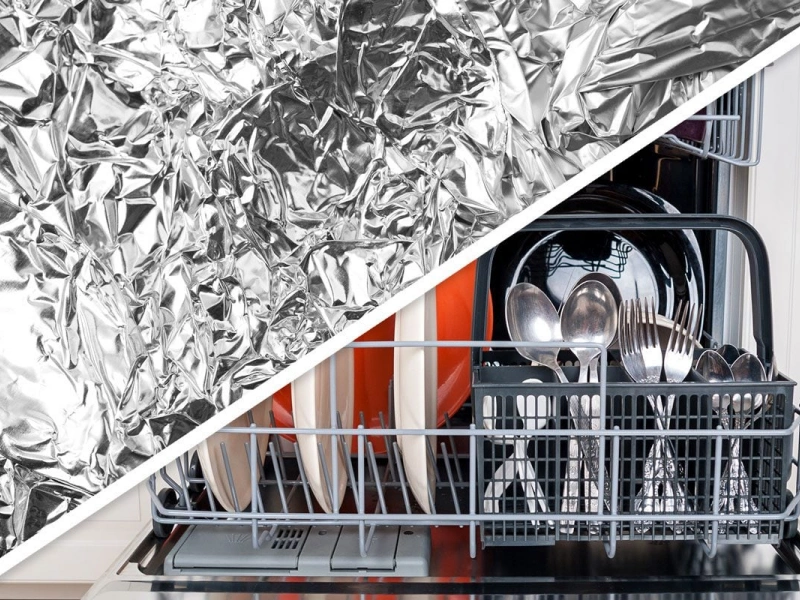
This trick has gone viral online — many users claim that adding a ball of aluminum foil to the dishwasher helps make silverware shine.
Here’s how it works:
- The foil ball interacts with dishwasher detergent and the ions in the water, reducing tarnish buildup on silver.
- The electrochemical reaction helps remove oxidation from silver and stainless steel surfaces.
How to do it safely:
- Roll a small ball of aluminum foil (about the size of a golf ball).
- Place it in the cutlery basket, not near heating elements.
- Run your dishwasher as usual.
Result: Your silver utensils come out shinier with less tarnish.
Note: This method should not be used with colored, coated, or non-metallic utensils, as it can cause damage or discoloration.
At What Temperature Does Aluminum Foil Become Toxic?
Aluminum foil does not become toxic at normal dishwasher temperatures.
It only poses a risk when overheated (above 400°F / 200°C) — which never happens in a dishwasher.
| Temperature Range | Effect on Aluminum | Dishwasher Relevance |
|---|---|---|
| 100–150°F (40–65°C) | No change | Normal washing |
| 180°F (82°C) | Slight oxidation possible | Hot wash cycles |
| 400°F (200°C) | May release oxide layer | Cooking ovens only |
| 1200°F (650°C) | Melts | Industrial use only |
So, using aluminum foil in your dishwasher is not toxic, as long as it stays within household appliance temperature ranges.
What Happens If I Put Aluminium in the Dishwasher?
When aluminum foil or aluminum pans are put into a dishwasher:
- They may darken or turn dull grey due to detergent and water reaction.
- Small black spots may appear where aluminum touches stainless steel racks.
- In rare cases, flaking can occur, but this is not dangerous.
To minimize these effects:
- Use mild dishwasher detergent (avoid citrus or bleach-based ones).
- Place foil or aluminum dishes on the top rack.
- Run a short cycle instead of heavy-duty wash.
Possible Reactions Between Aluminum and Dishwasher Detergent
| Chemical in Detergent | Effect on Aluminum | Recommended Action |
|---|---|---|
| Sodium silicate | Causes dull appearance | Use neutral pH detergent |
| Phosphates | May corrode aluminum surface | Avoid phosphate-rich detergents |
| Chlorine bleach | Highly reactive | Never mix with aluminum |
| Citric acid | Causes pitting and discoloration | Use sparingly |
Always read the label of your dishwasher detergent before using it with aluminum.
How to Clean Aluminum After Dishwasher Use
If your aluminum foil or tray turns dull after washing:
- Mix baking soda and warm water into a paste.
- Gently scrub with a soft cloth.
- Rinse thoroughly and dry immediately.
This helps remove oxidation and restore shine safely.
When You Should Not Use Aluminum Foil in the Dishwasher
Avoid using foil if:
- You have stainless steel racks (may cause galvanic reaction)
- You’re washing decorated or anodized aluminum pans
- You’re using strong acid-based detergent
- The foil is too thin (can tear and clog the filter)
If you want the same cleaning effect, you can use:
- Dishwasher-safe cleaning tablets
- Lemon and baking soda soak
- Silver polish cloths
Alternative Uses for Aluminum Foil
Even if it’s not ideal for every dishwasher use, aluminum foil has many other applications:
| Use | Description |
|---|---|
| Baking | Line trays or wrap food for even heating |
| Grilling | Prevents food from sticking |
| Food Storage | Keeps leftovers fresh |
| Air Fryer Cooking | Simplifies cleaning |
| Heat Insulation | Reflects and retains heat |
If you need reliable aluminum foil for kitchen or industrial use, WORTHWILL ALUMINUM provides high-quality foil in different grades and thicknesses.
Recommended Aluminum Foil Specifications
| Type | Thickness (µm) | Width (mm) | Use Case |
|---|---|---|---|
| Household foil | 10–12 µm | 300–450 | Dishwasher, baking |
| Heavy-duty foil | 15–20 µm | 300–600 | Grilling, air fryer |
| Industrial foil | 25–50 µm | 600–1200 | Packaging, insulation |
Aluminum Foil in Dishwasher Toxic: Is It Safe or Harmful?
Putting aluminum foil in the dishwasher is not toxic when done properly. The main concern is surface discoloration or reaction with detergent, not toxicity.
To use foil safely:
- Keep it away from stainless steel
- Avoid harsh chemicals
- Use moderate temperatures
For food-safe, durable aluminum foil, choose WORTHWILL ALUMINUM — a trusted manufacturer offering customizable foil thickness and size for both home and industrial applications.


Leave a Comment
You must be logged in to post a comment.