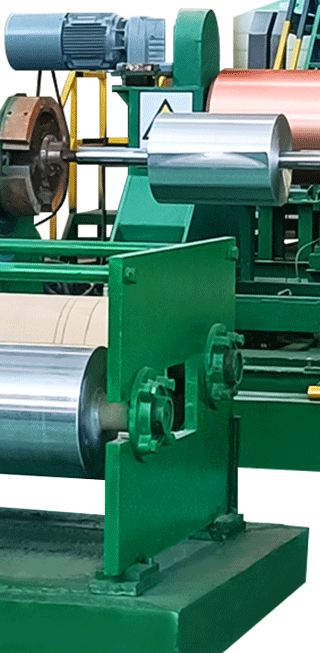
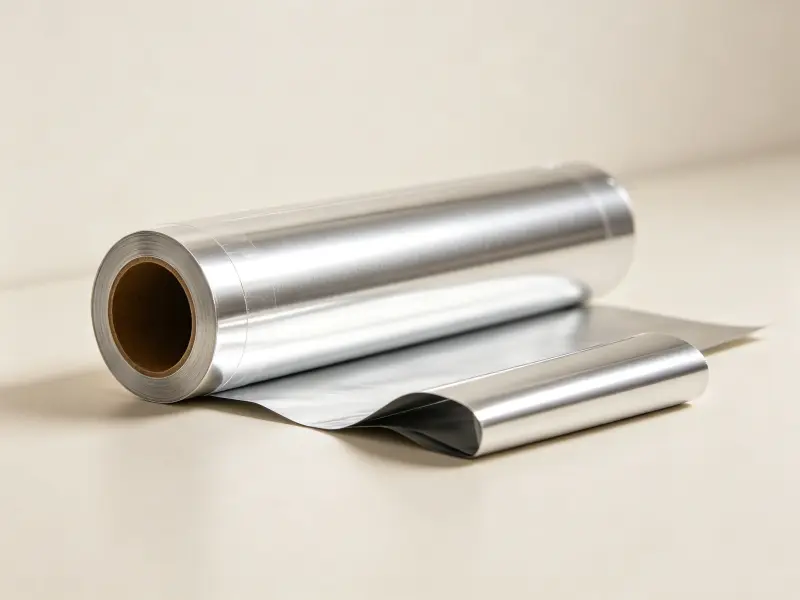
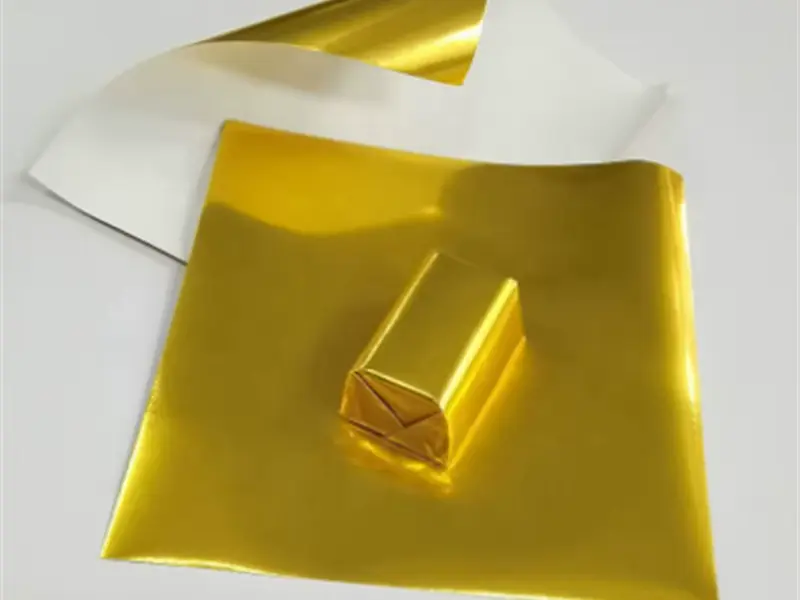
Colored aluminum foil is a versatile kitchen product that combines the durability of aluminum with vibrant colors. It is designed for both functionality and aesthetics. It is perfect for a wide range of culinary and crafting applications.
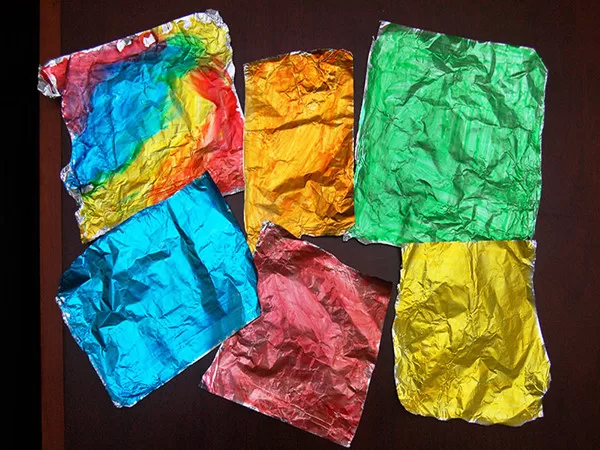
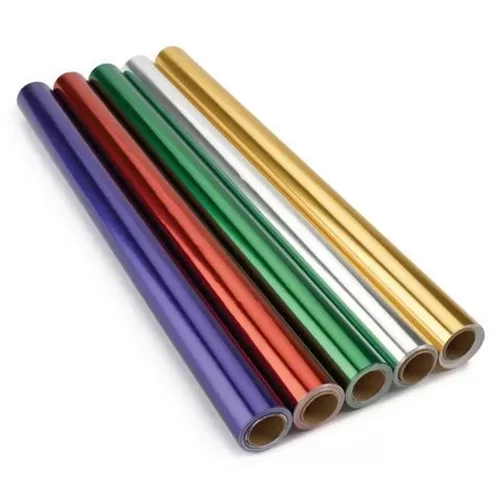
Benefits
- Aesthetic Appeal
Colored aluminium foil adds a decorative touch to your food presentations. Whether you’re wrapping gifts or preparing party platters, the bright colors enhance visual appeal. - Versatility
This foil is suitable for various uses, including baking, grilling, and food storage. It can be used in both professional kitchens and home cooking. - Durability
Like standard aluminium foil, colored aluminium foil is strong and resistant to tearing. It maintains its integrity, keeping your food secure and fresh. - Non-Stick Options
Many colored aluminium foils come with a non-stick surface, making them ideal for baking delicate items like cookies and pastries. - Easy to Use
Colored foil is easy to cut and shape, allowing for creative uses in the kitchen and beyond.
How to Use Colored Aluminum Foil
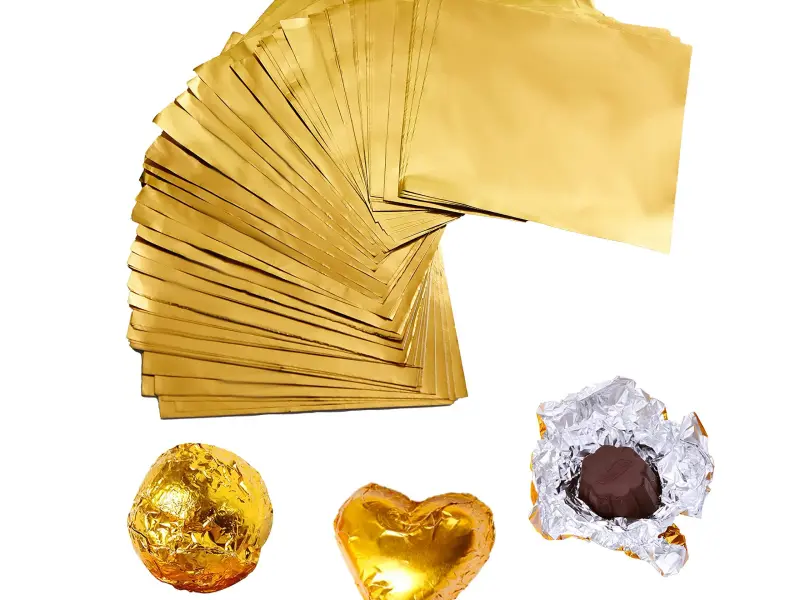
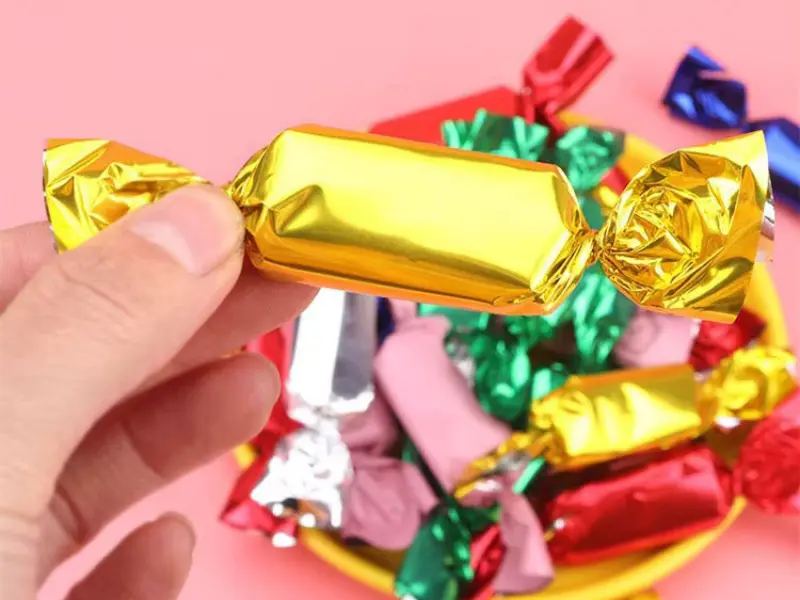
- Food Wrapping: Use colored foil to wrap sandwiches, snacks, or leftovers. The bright colors make your lunch stand out!
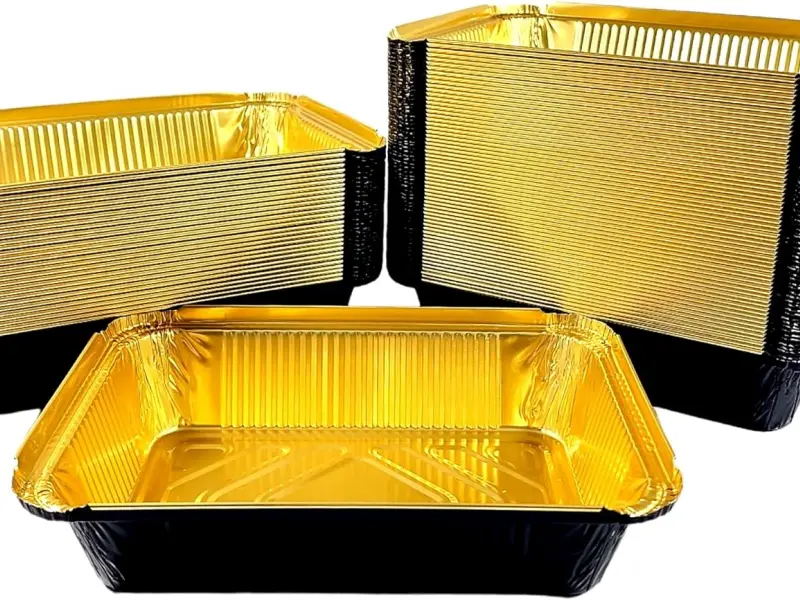
- Baking: Line baking trays with colored aluminum foil for easy cleanup and an attractive presentation.
- Gift Wrapping: Use it as a unique and colorful wrapping paper for gifts, adding a fun touch to any occasion.
- Craft Projects: Colored foil is perfect for various craft projects, from decorations to homemade cards.
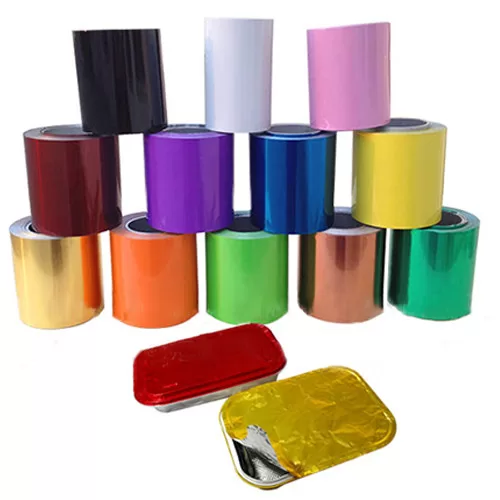
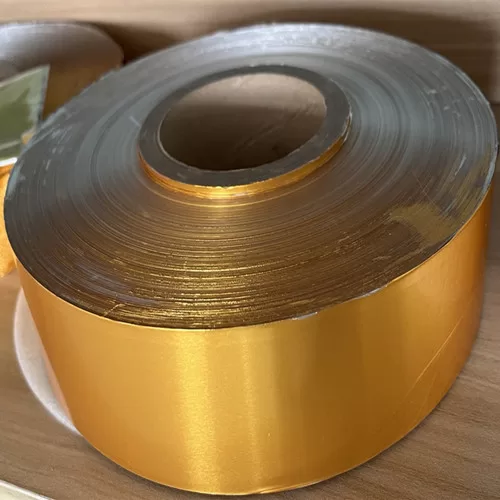
Where to Buy Colored Aluminum Foil
You can purchase colored foil at most grocery stores, specialty kitchen supply shops, and online retailers. Look for reputable brands to ensure you get high-quality products.
Enhance Your Culinary Creations
Colored aluminum foil is a fantastic addition to any kitchen. Its vibrant colors and versatile uses make it perfect for cooking, baking, and crafting. Whether you want to make your meals more appealing or explore creative projects, colored foil is the ideal choice. Discover the endless possibilities it offers for your culinary creations today!
Colored Aluminum Foil For sale
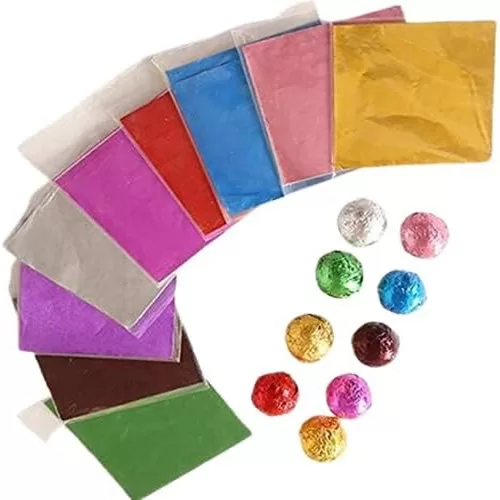
Colored aluminum foil is aluminum foil with a colored surface. It combines the light weight of aluminum with the visual appeal of different colors and finishes. It has uses in packaging, decoration, insulation, printing, labeling, crafts, and many industrial applications.
Unlike plain aluminum foil, colored foil gives buyers more choices in appearance. The surface can be produced in many colors, gloss levels, and coating systems. Depending on the application, buyers can choose a soft foil, semi-hard foil, or harder material.
The right specification depends on the final use. Thickness, alloy, temper, color, coating, width, and surface quality all affect the performance of the material.
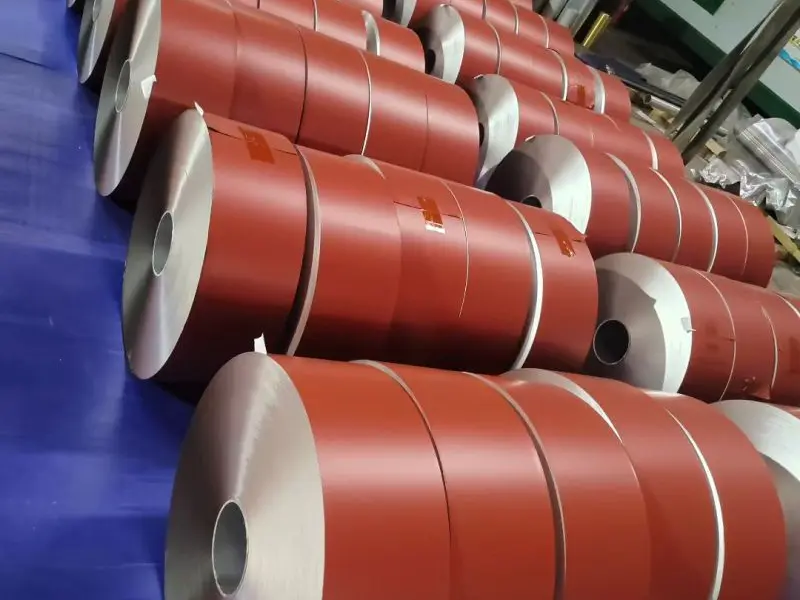
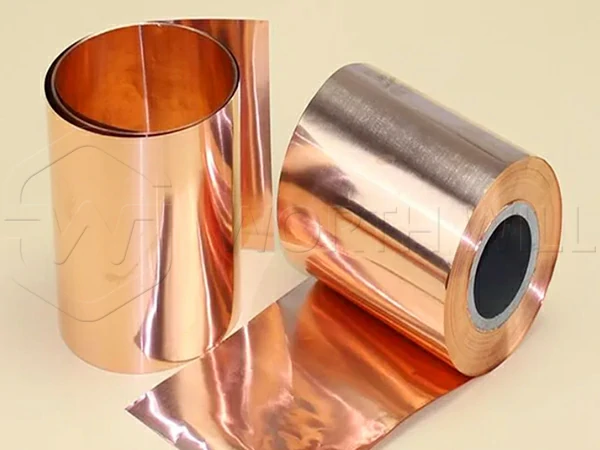
For wholesale and industrial orders, colored aluminum foil has supplied in customized widths and roll lengths.
What Is Colored Aluminum Foil?
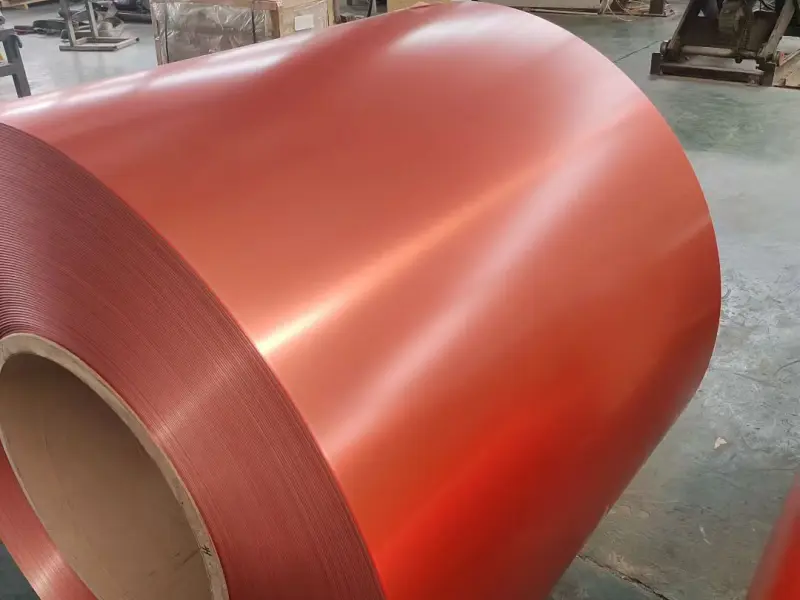
Colored aluminum foil is normally made from aluminum foil that receives a surface coating or color treatment. The coating has applied to one side or both sides, depending on the customer’s requirements.
The aluminum base provides good formability, low weight, and corrosion resistance. The colored surface provides a decorative or functional finish.
A typical production flow is:
Aluminum Coil → Rolling → Annealing → Cleaning → Surface Treatment → Color Coating → Curing → Slitting → Inspection → Packing
The exact process can change according to the alloy, coating system, color, and final application.
Colored Foil vs Plain Aluminum Foil
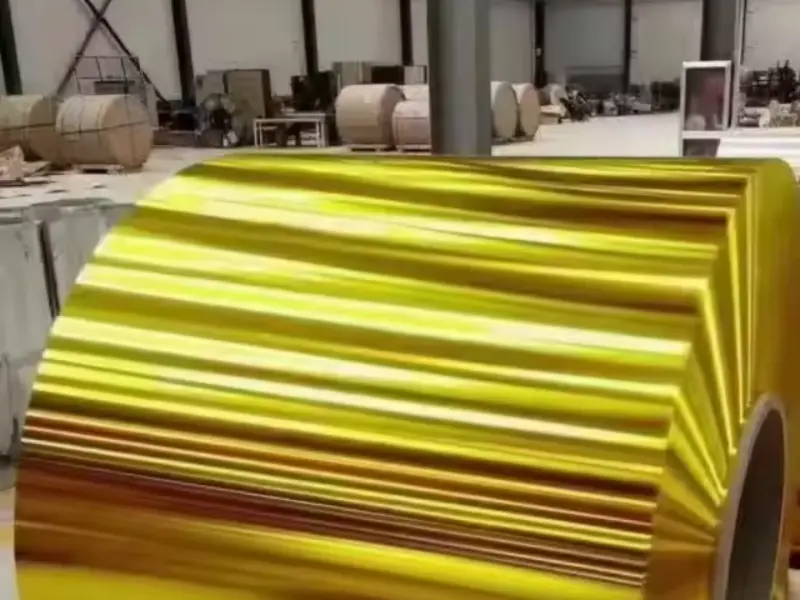
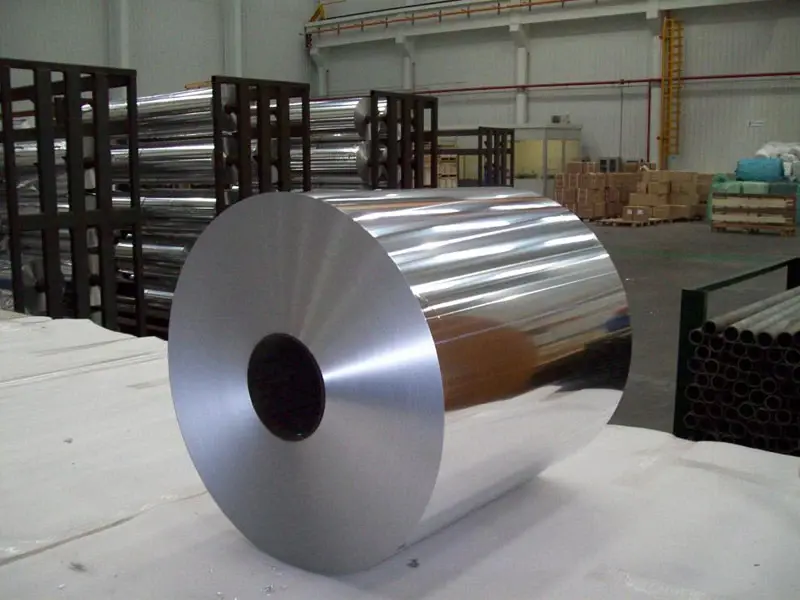
| Feature | Colored Aluminum Foil | Plain Aluminum Foil |
|---|---|---|
| Surface | Colored or coated | Mill finish |
| Appearance | Many colors | Silver metallic |
| Decoration | Excellent | Limited |
| Printing | Suitable for some applications | Depends on surface |
| Insulation use | Available | Very common |
| Packaging | Available | Very common |
| Custom color | Possible | Not applicable |
| Surface protection | Depends on coating | Natural oxide layer |
Colored foil is a good choice when appearance is important in addition to basic aluminum foil performance.
Main Types of Colored Aluminum Foil
There is no single standard type for every application. Buyers usually select the product based on thickness, alloy, temper, coating, color, and surface finish.
0.02 mm Colored Aluminum Foil
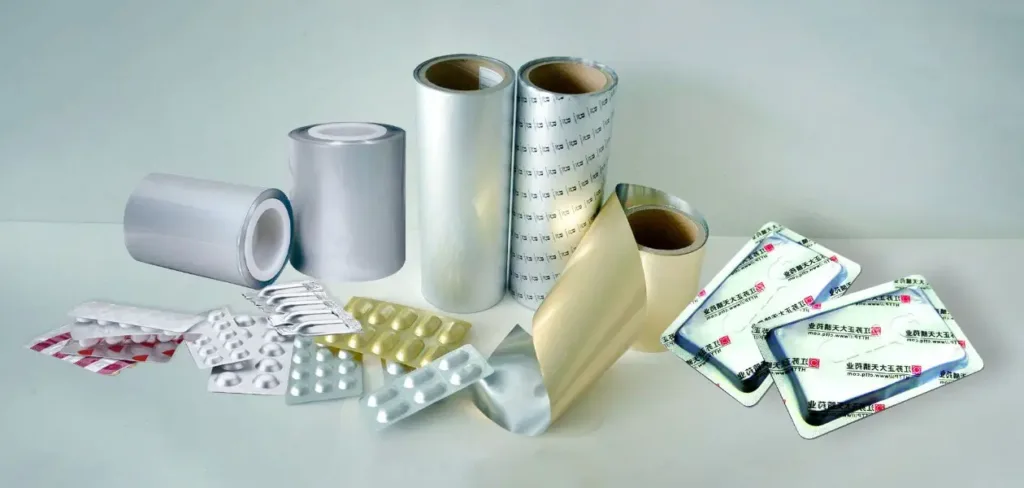
Very thin foil is suitable for lightweight applications where flexibility is important. It has supplied in narrow rolls for special packaging, decoration, and processing.
0.03 mm Colored Aluminum Foil
A 0.03 mm option provides slightly more body than ultra-thin foil. It has uses where the foil needs to remain flexible but still provide better handling during production.
0.05 mm Colored Aluminum Foil
0.05 mm is a practical thickness for many decorative and industrial applications. It provides a balance between flexibility and handling strength.
0.08 mm Colored Aluminum Foil
This thickness is more suitable when the customer needs a stronger foil structure. It has considered for insulation, decorative components, and other applications where the material receives more handling.
0.10 mm Colored Aluminum Foil
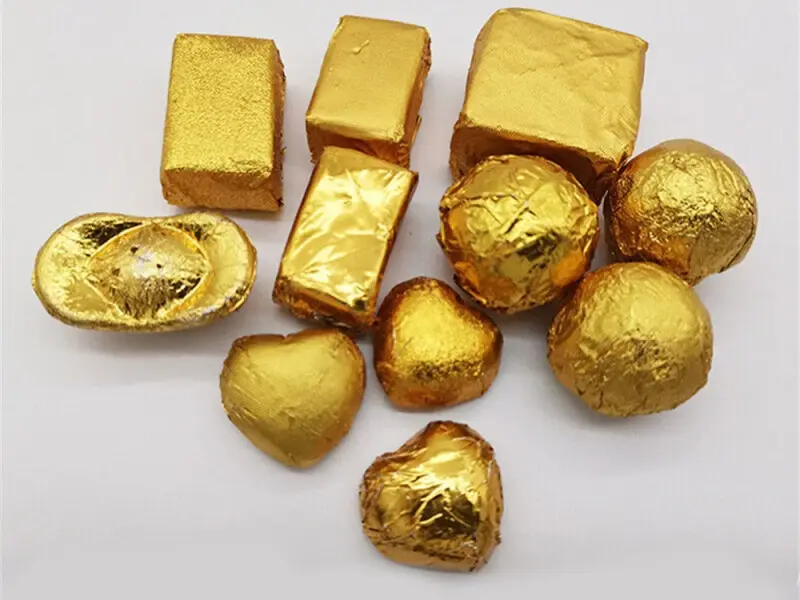
0.10 mm colored foil is closer to thin aluminum sheet in terms of handling. It has uses for panels, signs, decoration, craft products, and some industrial applications.
0.15 mm and Thicker
For applications requiring more rigidity, thicker colored aluminum material can be produced. At this point, buyers may also compare aluminum foil with colored aluminum sheet or strip.
| Thickness | General Character | Typical Direction |
|---|---|---|
| 0.02 mm | Very flexible | Lightweight processing |
| 0.03 mm | Flexible | Packaging and decoration |
| 0.05 mm | Flexible and easy to handle | Decorative applications |
| 0.08 mm | More body | Insulation and industrial use |
| 0.10 mm | Semi-rigid | Signs and panels |
| 0.15 mm | Stronger | Fabrication |
| 0.20 mm+ | Rigid compared with foil | Panel and industrial use |
The available thickness range has confirmed according to the coating system and production requirements.
Common Aluminum Alloys for Colored Foil
The alloy is an important part of material selection. Different alloys provide different levels of formability, strength, and corrosion resistance.
1050 Aluminum Foil
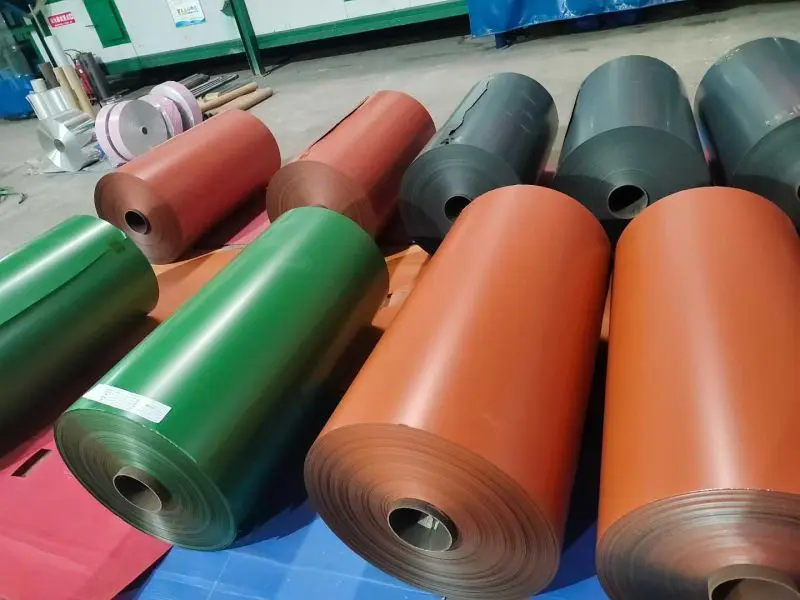
1050 is a high-purity aluminum alloy. It has good electrical and thermal conductivity and is easy to form.
It can be considered for decorative foil, insulation-related products, and applications where high aluminum purity is useful.
1060 Aluminum Foil
1060 aluminum contains a high percentage of aluminum and offers good corrosion resistance and formability.
It is often selected when the product needs a clean aluminum base and easy processing.
1070 Aluminum Foil
1070 has a higher aluminum content than many general-purpose alloys. It is mainly considered for applications that require high purity and good conductivity.
3003 Aluminum Foil
3003 is an aluminum-manganese alloy. It provides better strength than many 1xxx series materials while maintaining good formability.
It can be useful when the final product needs a stronger aluminum base.
3105 Aluminum Foil
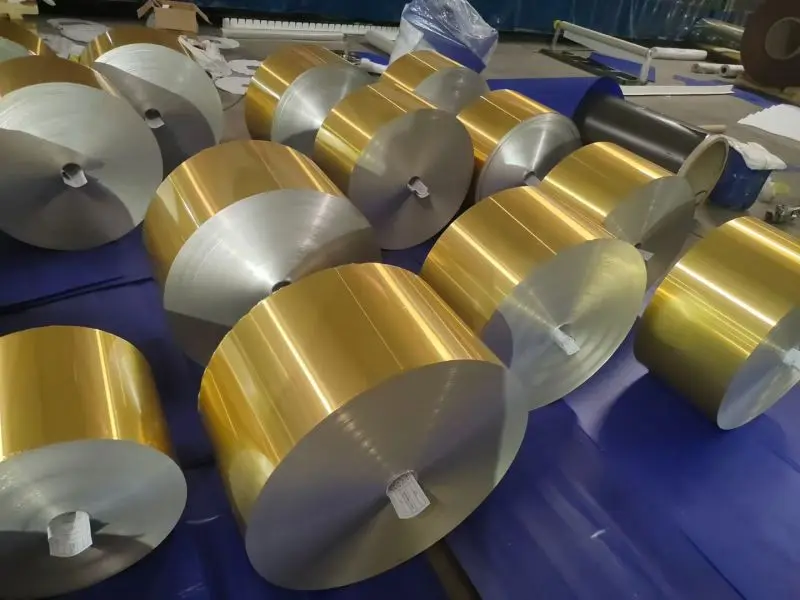
3105 offers a useful balance of strength, formability, and corrosion resistance. It can be considered for coated products and building-related applications.
| Alloy | Main Advantage | Suitable Direction |
|---|---|---|
| 1050 | High purity | Insulation and decoration |
| 1060 | Formability | General coated foil |
| 1070 | High aluminum content | Conductive applications |
| 3003 | Better strength | Industrial applications |
| 3105 | Strength + formability | Building and decoration |
The best alloy should be selected according to the final processing method rather than choosing only by alloy number.
Temper and Material Condition
The temper determines how soft or hard the aluminum foil is.
Common conditions include O, H12, H14, H16, and H18, although the available temper depends on alloy and thickness.
O Temper
O temper means annealed aluminum. It is soft and highly formable.
It is useful when the foil needs to be bent, shaped, wrapped, or formed during production.
H12 and H14
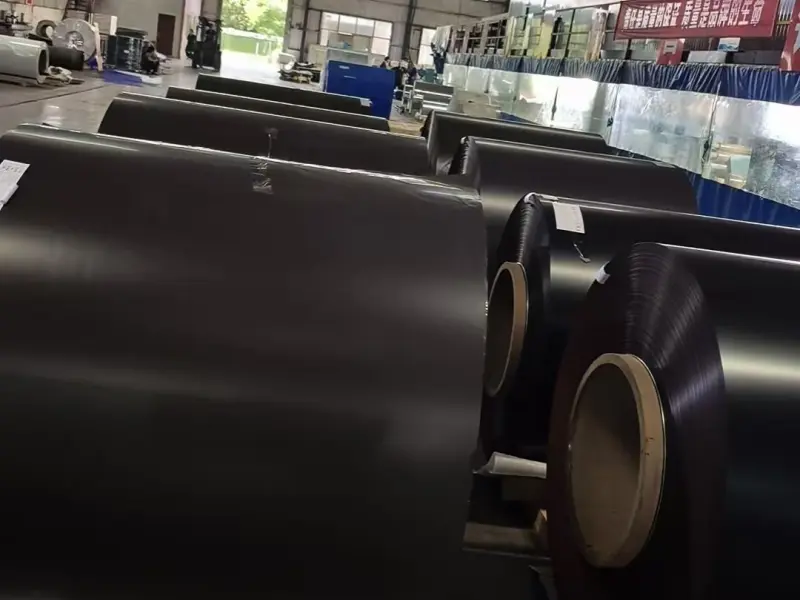
These tempers provide more strength than fully annealed material.
They may be suitable when the customer needs better handling performance without making the material too hard.
H16 and H18
These conditions are harder. They provide greater resistance to deformation but have lower formability compared with O temper.
| Temper | Relative Hardness | Formability | Typical Requirement |
|---|---|---|---|
| O | Low | Excellent | Deep forming |
| H12 | Medium-low | Good | General processing |
| H14 | Medium | Good | Semi-hard applications |
| H16 | Medium-high | Moderate | Better rigidity |
| H18 | High | Lower | Firm material |
For coated foil, the final coating process can also affect how the finished material behaves during forming.
One-Side Colored and Two-Side Colored Foil
Not every project needs color on both surfaces.
One-Side Colored Aluminum Foil
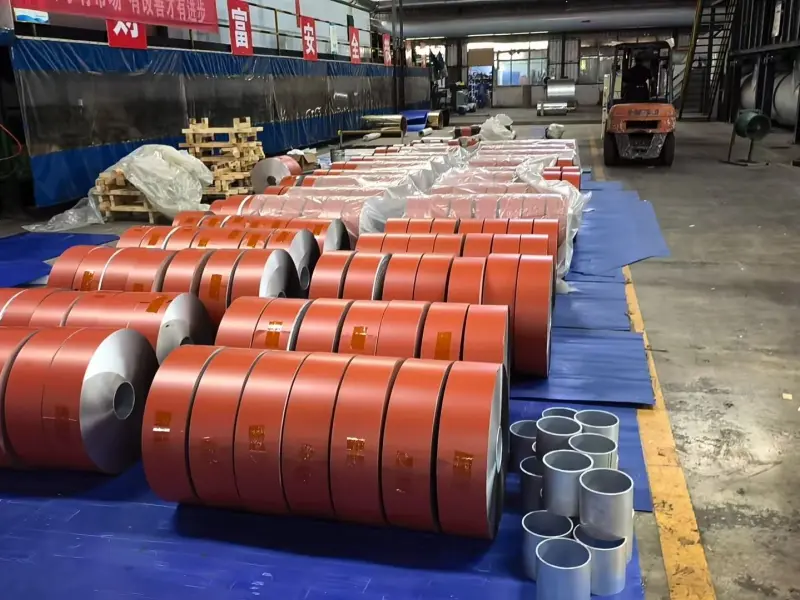
One-side coating is often selected when only the visible surface needs color.
This option can reduce unnecessary coating and may be suitable for applications where the reverse side remains hidden.
Two-Side Colored Aluminum Foil
Two-side colored material has color on both surfaces.
It is useful when both sides may be visible or when the product requires a more uniform appearance.
| Surface Type | Best Use |
|---|---|
| One-side colored | Hidden-back applications |
| Two-side colored | Visible both sides |
| Colored + plain | Functional layered design |
| Custom coating | Special industrial requirements |
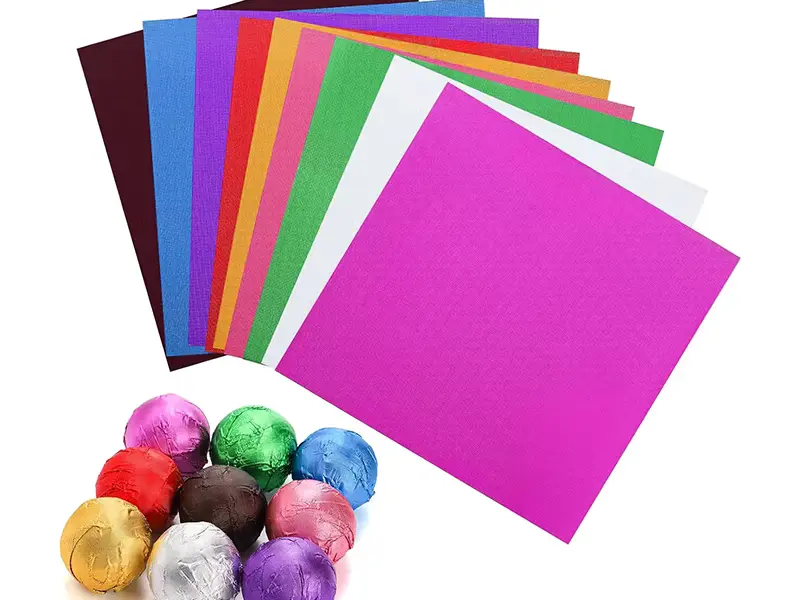
Popular Colors for Colored Aluminum Foil
Color selection depends on the customer’s design and application.
Common colors include:
- Red
- Blue
- Green
- Black
- White
- Silver
- Gold
- Orange
- Yellow
- Brown
- Gray
- Bronze
- Champagne
- Custom colors
Glossy Colored Foil
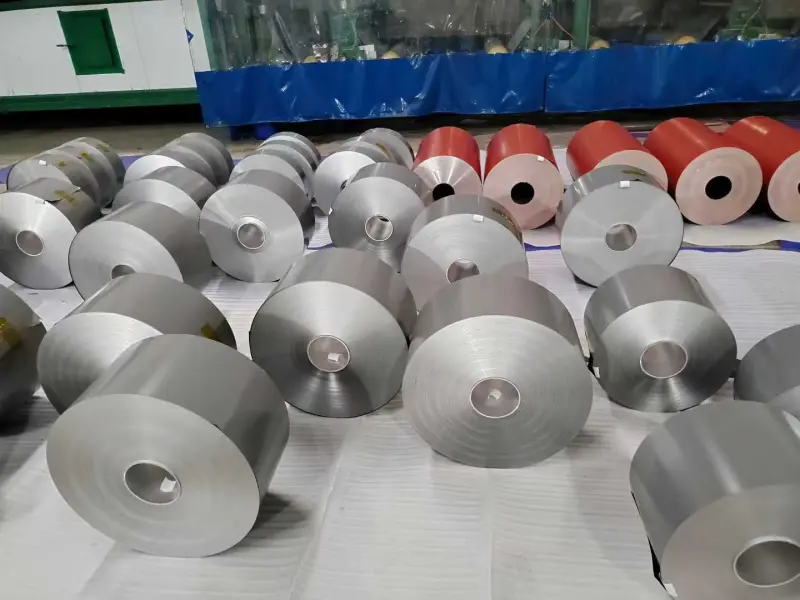
A glossy surface reflects more light and provides a stronger visual effect.
It is often selected for decorative products, packaging, labels, and display applications.
Matte Colored Foil
Matte foil has lower surface reflection. It gives a softer appearance and can be useful where glare needs to be reduced.
Metallic Colored Foil
Metallic finishes can combine color with the natural visual character of aluminum.
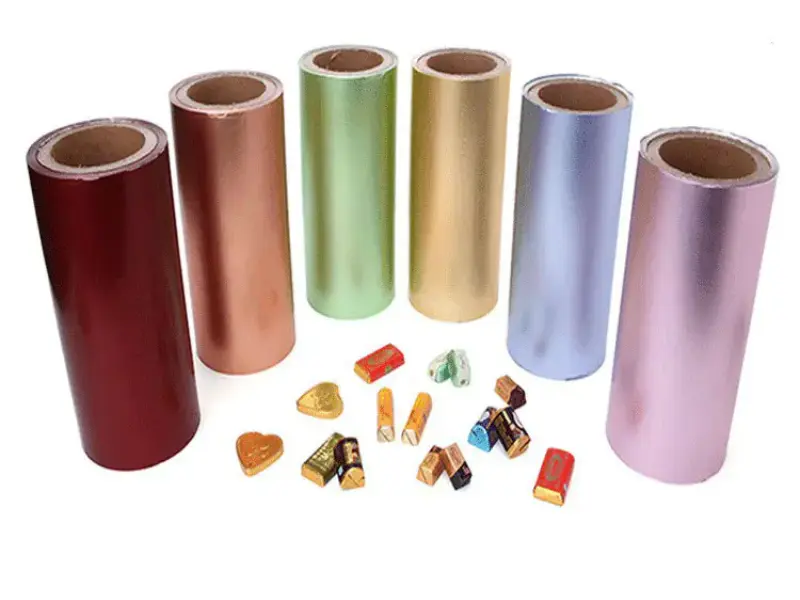
Gold, bronze, champagne, and metallic silver are common choices for decorative projects.
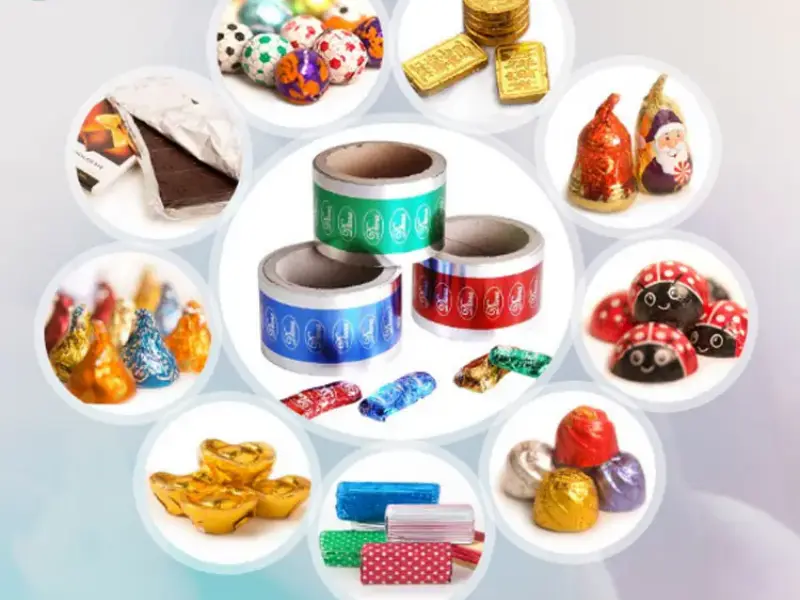
Colored Aluminum Foil for Packaging
Packaging is one of the important application areas.
Colored foil can provide a strong visual appearance while retaining the basic advantages of aluminum foil. Depending on the coating system, it can be used for decorative packaging components, labels, lids, and other products.
Possible applications include:
- Food packaging components
- Cosmetic packaging
- Pharmaceutical packaging
- Gift packaging
- Labels
- Decorative wrapping
- Flexible packaging
- Container components
The coating has selected according to the contact requirements of the final product. For food or pharmaceutical applications, buyers should confirm the applicable coating and compliance requirements before production.
Colored Foil for Insulation
Aluminum foil has uses as a reflective material in insulation systems. A colored surface has selected when appearance or identification is important.
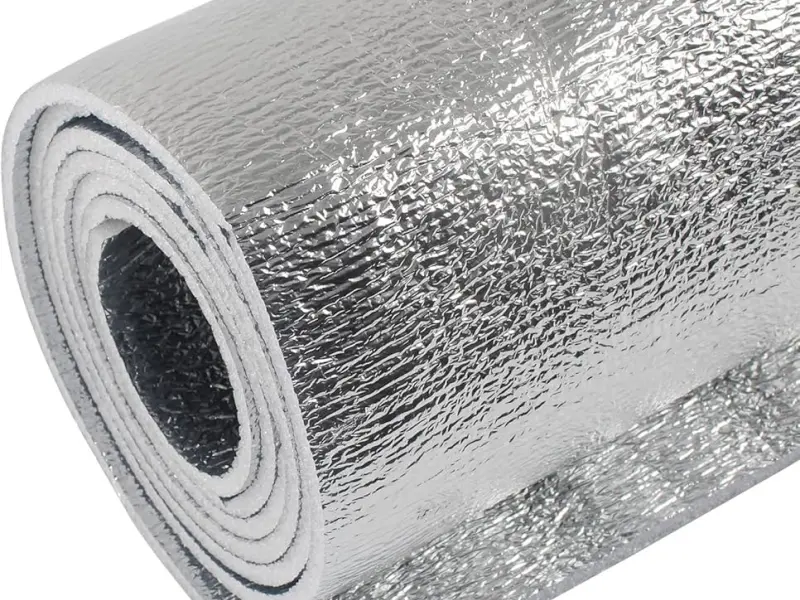
The aluminum surface can reflect radiant heat, while the insulation system provides the main thermal resistance.
Possible applications include:
- Building insulation
- HVAC insulation
- Pipe insulation
- Roof insulation systems
- Wall insulation
- Duct insulation
- Industrial thermal insulation
For insulation projects, buyers should focus on the complete system rather than judging thermal performance from the foil alone.
Colored Aluminum Foil for Decoration
The combination of aluminum and color makes the material useful for decorative products.
It can be cut, laminated, formed, embossed, or processed depending on the alloy and thickness.
Common uses include:
- Interior decoration
- Decorative panels
- Ceiling components
- Furniture details
- Display products
- Sign components
- Crafts
- Gift products
- Architectural details
A thinner foil is suitable for flexible designs. A thicker coated aluminum sheet may be better when the finished part needs to be rigid.
Colored Aluminum Foil for Printing
Some coated surfaces have prepared for printing or further surface treatment.
The correct coating is important because ordinary decorative paint and printing-grade coatings do not always have the same surface characteristics.
Before ordering, buyers should confirm:
Printing Method → Ink Type → Coating Type → Surface Finish → Adhesion Requirement
For high-volume printing, a trial sample has recommended before mass production.
Colored Aluminum Foil for Labels
Colored aluminum has uses in decorative and industrial label applications.
The final result depends on the coating, printing method, adhesive, and forming process.
Narrow aluminum strips have slit from wider master coils to meet label production requirements.
| Width Type | Typical Purpose |
|---|---|
| Narrow strip | Labels and small components |
| Medium width | Packaging and decoration |
| Wide coil | Industrial processing |
| Custom width | Automated production |
Custom slitting can help reduce material waste during further processing.
Colored Aluminum Foil for Crafts and DIY Products
Small colored aluminum pieces are popular for craft and decorative work.
The material is light and easy to cut compared with many other metals.
It can be used for:
- Handmade decoration
- Model making
- Art projects
- Holiday decoration
- Gift decoration
- DIY panels
- Small ornaments
- Creative packaging
For manual cutting, soft aluminum is often easier to work with. For products that need to keep their shape, a harder temper or thicker material may be preferred.
Colored Aluminum Foil vs Colored Aluminum Sheet
Although both products can have similar colors and coatings, their physical form is different.
| Item | Colored Aluminum Foil | Colored Aluminum Sheet |
|---|---|---|
| Thickness | Very thin | Thicker |
| Flexibility | High | Lower |
| Weight | Very low | Higher |
| Forming | Easy for flexible applications | Better for rigid structures |
| Roll supply | Common | Sheet or coil |
| Decoration | Excellent | Excellent |
| Structural use | Limited | Better |
If the final product needs to be rolled or wrapped, foil is usually more convenient. If it needs to stand as a rigid panel, aluminum sheet may be a better choice.
Colored Aluminum Foil vs Colored Aluminum Strip
Width is the main difference between many foil and strip products.
A master coil has slit into narrower widths to meet production requirements.
Wide Coil
Wide material is useful for customers with their own slitting or forming equipment.
Narrow Strip
Narrow colored aluminum strip is useful for products that require precise widths.
The purchasing process can be simplified:
Master Coil → Slitting → Edge Inspection → Rewinding → Packing
This is especially useful for customers with continuous production lines.
How to Choose the Right Thickness
Thickness has selected based on the final product rather than simply choosing the lowest possible number.
Choose Thin Foil When
The final product does not need high rigidity.
Flexibility is important.
Weight needs to be minimized.
The material will be laminated.
The foil will be wrapped or folded.
Choose Thicker Material When
- Better shape retention is required.
- The product will be handled frequently.
- Cutting and forming need more body.
- The finished part needs additional strength.
| Requirement | Suggested Direction |
|---|---|
| Maximum flexibility | Thin foil |
| Easy wrapping | Thin to medium foil |
| Better handling | Medium thickness |
| Better rigidity | Thick foil or sheet |
| Structural application | Consider aluminum sheet |
These are general selection guidelines. The actual thickness has confirmed with the customer’s processing method.
How to Choose the Right Alloy
A simple alloy selection process can help:
High Purity → 1050 / 1060
Higher Strength → 3003 / 3105
Special Conductivity Requirement → 1050 / 1070
General Coated Application → 1060 / 3003
The final selection also depends on the temper, coating, forming method, and required surface quality.
Coating Options
The coating is one of the most important parts of colored foil.
Different projects may require different coating systems.
Common considerations include:
| Coating Factor | Why It Matters |
|---|---|
| Color | Controls appearance |
| Gloss | Controls reflection |
| Adhesion | Affects coating durability |
| Flexibility | Important during forming |
| Chemical resistance | Important for industrial use |
| UV resistance | Important for outdoor exposure |
| Surface hardness | Helps resist scratching |
For outdoor use, buyers should specifically discuss UV resistance and weathering requirements.
Surface Finish Options
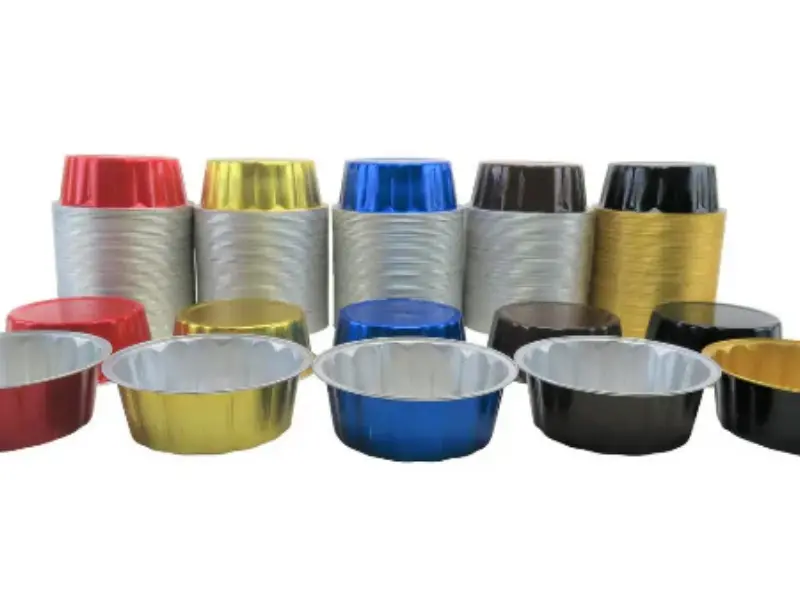
Colored aluminum foil can have different visual effects.
Possible finishes include:
- Smooth
- Glossy
- Matte
- Metallic
- Embossed
- Brushed appearance
- Custom decorative finish
A smooth finish is common for printing and decorative work. Embossed surfaces can add texture and visual depth.
Standard and Custom Sizes
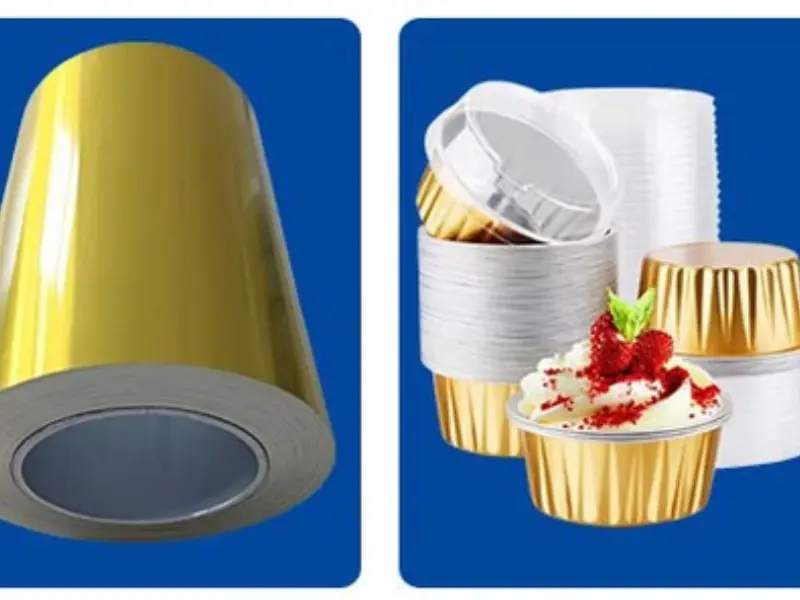
Colored foil is commonly supplied in rolls.
Width and roll length have customized according to production equipment.
| Specification | Example |
|---|---|
| Thickness | 0.02–0.20 mm |
| Width | 20–1600 mm |
| Coil ID | Customer requirement |
| Coil OD | Customer requirement |
| Roll Weight | Customized |
| Color | Standard or custom |
| Surface | Glossy or matte |
| Core | Paper or other suitable core |
The actual production range depends on alloy, thickness, coating, equipment, and order quantity.
What Buyers Should Check Before Ordering
A good specification can reduce production problems.
Before sending an inquiry, prepare the following information:
Alloy → Temper → Thickness → Width → Color → Coating → Surface → Roll Weight → Quantity → Application
For example:
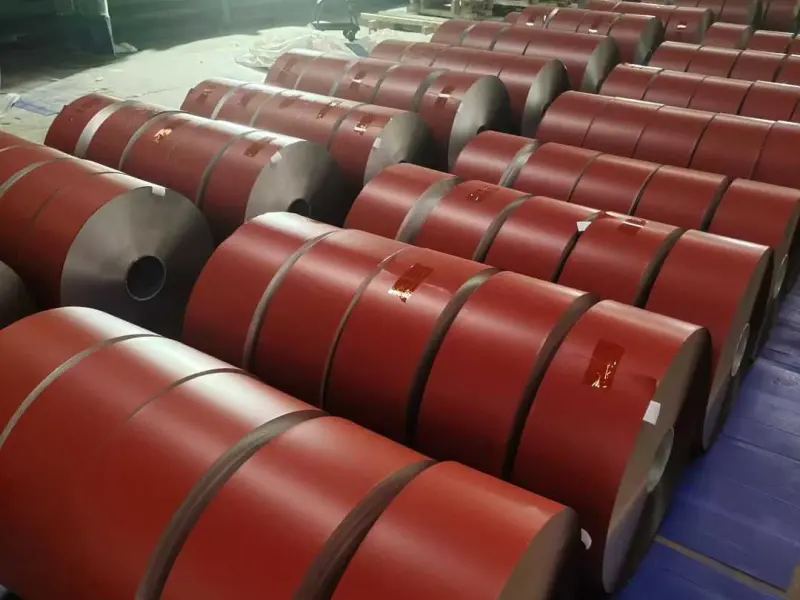
1060 O temper, 0.05 mm thickness, 500 mm width, red coated surface, 500 kg.
A more complete inquiry can include:
1060 aluminum foil, O temper, 0.05 × 500 mm, red color, one-side coating, smooth surface, 1 ton.
This allows the supplier to give a more accurate quotation.
Quality Control for Colored Aluminum Foil
Appearance is important for colored products. However, visual inspection is only one part of quality control.
Typical inspection points include:
- Thickness
- Width
- Weight
- Alloy
- Temper
- Color consistency
- Coating adhesion
- Surface cleanliness
- Pinholes
- Scratches
- Edge quality
- Roll tension
- Core size
Color Consistency
For large orders, color consistency between different rolls is important.
A color sample or reference standard has confirmed before mass production.
Coating Adhesion
The coating should remain attached during the customer’s normal processing.
If the material has bent, folded, stamped, or laminated, coating flexibility becomes particularly important.
Edge Quality
Slit edges should be clean and free from excessive burrs.
This matters for automatic production lines and narrow-strip applications.
Packaging and Shipping
Colored aluminum foil has protected from moisture, dust, impact, and surface damage during transportation.
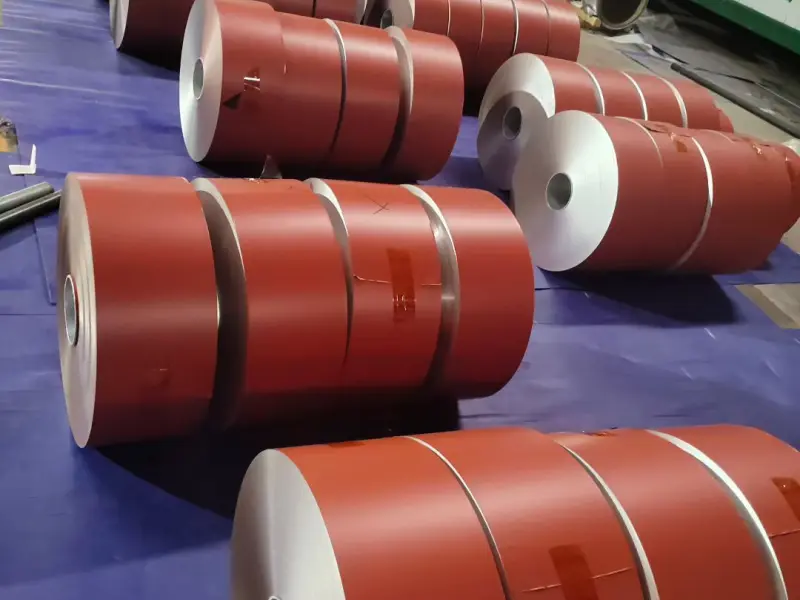
Common packaging methods include:
- Export wooden cases
- Wooden pallets
- Moisture-resistant wrapping
- Kraft paper
- PE protective film
- Steel straps
- Roll protection
For ocean shipping, moisture protection is especially important.
The packing method has adjusted according to container loading, roll weight, destination, and customer requirements.
Why Buy Colored Aluminum Foil in Coil Form?
Coil supply can be more efficient for industrial customers.
It reduces the need for repeated manual cutting and allows the customer to use continuous processing equipment.
Coil supply is especially useful for:
- Slitting
- Laminating
- Printing
- Stamping
- Forming
- Packaging production
- Insulation production
For customers with automated equipment, customized coil width can also reduce waste.
Common Problems When Selecting Colored Foil
Some buyers focus only on color and price. This can lead to problems later.
Choosing Only by Color
Two products can look similar but have different coating systems.
The coating must match the final application.
Choosing Only by Thickness
The same thickness can perform differently with different alloys and tempers.
Thickness should be considered together with alloy and temper.
Ignoring the Processing Method
A foil for folding may need different properties from foil for printing.
Always tell the supplier how the material will be processed.
Not Confirming the Color Standard
For repeat orders, a color reference is useful.
It can help reduce differences between production batches.
A Simple Buying Process
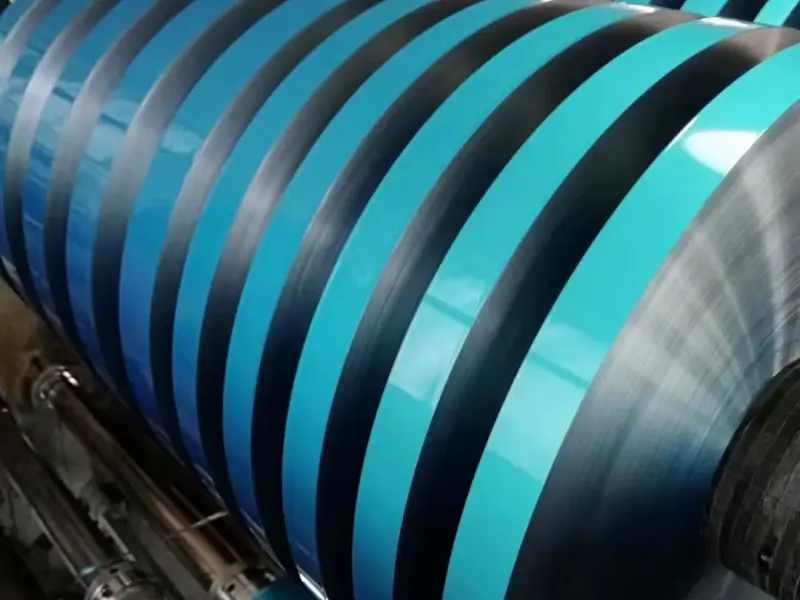
The purchasing process does not need to be complicated.
Step 1 → Tell the supplier the application
Step 2 → Select alloy and temper
Step 3 → Confirm thickness and width
Step 4 → Select color and surface
Step 5 → Confirm coating requirements
Step 6 → Check sample
Step 7 → Confirm quantity and packing
Step 8 → Start mass production
This process helps buyers avoid unnecessary communication and specification changes.
Colored Aluminum Foil for Different Industries
The material can serve very different industries because the aluminum base and coating can be customized.
| Industry | Common Requirement |
|---|---|
| Packaging | Color + surface appearance |
| Insulation | Reflective aluminum surface |
| Printing | Coating compatibility |
| Decoration | Color and finish |
| HVAC | Lightweight foil |
| Crafts | Easy cutting and forming |
| Labels | Narrow width and clean surface |
| Industrial | Stable thickness and coating |
| Construction | Weather-resistant coating |
| Consumer products | Appearance and formability |
The same color does not mean the same product. Industrial requirements should always be confirmed before production.
Standard products are useful for common applications. However, industrial buyers often need more specific dimensions.
Why Choose a Customized Colored Aluminum Foil?
Customization can include:
- Alloy
- Temper
- Thickness
- Width
- Roll length
- Roll weight
- Color
- Coating
- Surface finish
- Core diameter
- Packaging
For large-volume buyers, customized specifications can make production more efficient.
Can aluminum foil be colored on both sides?
Yes. One-side and two-side coated options can be produced. The choice depends on whether both surfaces will be visible or processed.
What alloy is best for colored aluminum foil?
There is no single best alloy for every application. 1050 and 1060 are commonly considered for high-purity and highly formable applications, while 3003 and 3105 can provide higher strength.
FAQ About Colored Aluminum Foil
What is colored aluminum foil used for?
It can be used for packaging, insulation, decoration, printing, labels, crafts, HVAC products, and various industrial applications. The exact use depends on the alloy, thickness, coating, and temper.
Can colored aluminum foil be customized?
Yes. Depending on the production equipment, suppliers can normally customize thickness, width, alloy, temper, color, coating, roll weight, and packaging.
What colors are available?
Common colors include red, blue, green, black, white, gold, silver, yellow, orange, brown, gray, bronze, and champagne. Custom colors may also be available based on a color sample or reference.
Is 1060 aluminum foil suitable for coating?
Yes. 1060 aluminum has uses as a base material for various coated foil applications when its formability and high aluminum content match the project requirements.
What is the thinnest colored aluminum foil?
The available minimum thickness depends on the alloy, coating process, width, and production equipment. Thin foil such as 0.02 mm may be available for selected applications.
Can colored aluminum foil be used outdoors?
Some coated aluminum products have uses outdoors, but the coating system must be suitable for outdoor exposure. UV resistance, weather resistance, color retention, and corrosion resistance has confirmed before ordering.
Can colored aluminum foil be printed?
Some coated surfaces have designed for printing or further processing. The correct product has selected according to the printing method, ink, and required adhesion.
Can colored aluminum foil be embossed?
Depending on the thickness, alloy, temper, and coating flexibility, colored aluminum material has processed into textured or embossed surfaces.
Can you supply narrow colored aluminum strips?
Yes. Wide aluminum coils have slit into narrower widths when the production requirements and order quantity are suitable.
What information should I provide for a quotation?
The most useful information is alloy, temper, thickness, width, color, coating, quantity, application, roll requirements, and destination.
Is a sample available before bulk production?
A sample can be useful for checking color, surface appearance, thickness, coating adhesion, and processing performance before placing a large order.
How should colored aluminum foil be stored?
It has stored in a dry environment away from direct water and excessive humidity. The original protective packaging should remain intact as much as possible.
Get a Quote for Colored Aluminum Foil
The right product is not simply the cheapest foil. A suitable combination of alloy + temper + thickness + coating + color + width can provide better processing performance and more stable production.
For a quotation, buyers can send the following information:
| Item | Your Requirement |
|---|---|
| Product | Colored Aluminum Foil |
| Alloy | 1050 / 1060 / 3003 / 3105 |
| Temper | O / H12 / H14 / H16 / H18 |
| Thickness | ___ mm |
| Width | ___ mm |
| Color | ___ |
| Coating | ___ |
| Surface | Glossy / Matte / Custom |
| Quantity | ___ kg / tons |
| Application | ___ |
| Packing | Standard / Custom |
A clear specification helps the supplier understand the project and provide a more accurate quotation.
If you are not sure which alloy, temper, or thickness to use, providing the final application is often enough to start the discussion.