Does aluminum foil have a coating?
Does Aluminum Foil Have a Coating? Everything You Need to Know
When you reach for a roll of foil in your kitchen or see it used in food packaging, you might wonder: Does aluminum foil have a coating? The short answer is: it depends on the use. While standard household foil is often just pure aluminum, many industrial and food-packaging foils have special layers to improve performance.
What is Aluminum Foil?
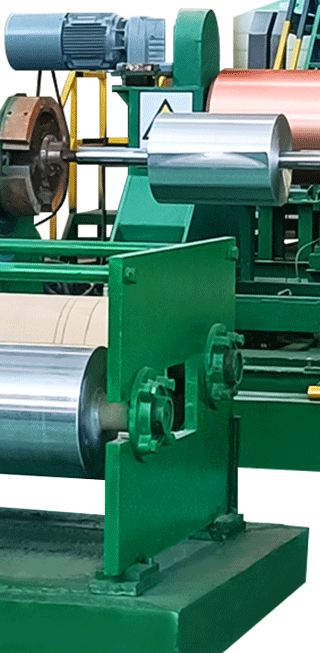
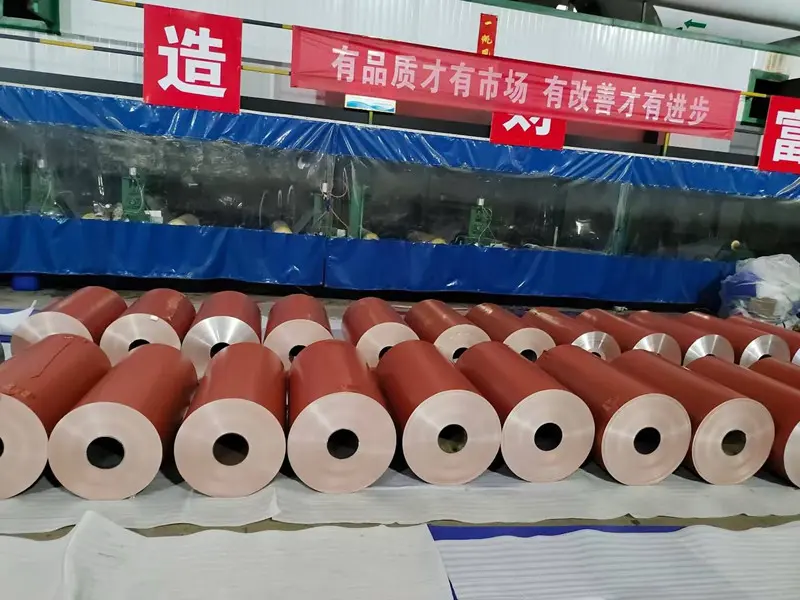
Aluminum foil is a very thin sheet of aluminum metal. It is made by rolling large slabs of aluminum until they are less than 0.2 mm thick. Because it is flexible, it can be easily bent or wrapped around objects.
Is Standard Foil Coated?
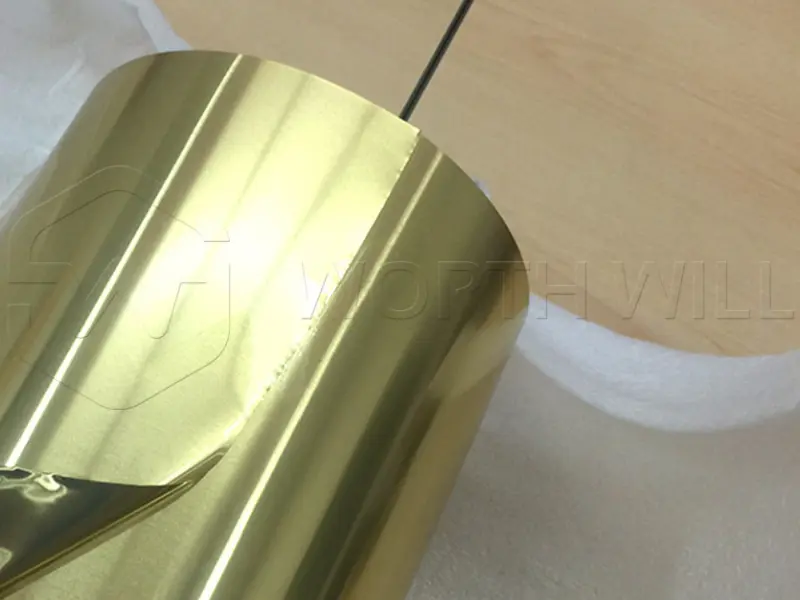
Most standard household aluminum foil (the kind you buy at the grocery store) is not coating. It is simply 99% to 99.5% pure aluminum. However, many professional and industrial versions feature a thin layer of polymer, lacquer, or lubricant to help with specific tasks like heat sealing or corrosion resistance.
Why is Aluminum Foil Coated?
Manufacturers apply coatings to aluminum foil to enhance its natural properties. Here are the primary reasons:
- Corrosion Resistance: Aluminum is naturally resistant to rust, but acidic or salty foods can cause “pitting” (tiny holes). A coating protects the metal from these chemical reactions.
- Heat Sealing: For products like yogurt lids or medicine blister packs, a plastic coating (like PE or PP) allows the foil to be heat-sealed to a plastic container.
- Printing and Aesthetics: A primer or coating helps inks stick to the surface, allowing for colorful branding and labels.
- Lubrication: During manufacturing, a very light food-grade oil coating may be to help the foil move through machines without tearing.
- Insulation: In construction, coatings help the foil reflect heat better and resist moisture.
Types of Aluminum Foil and Specifications
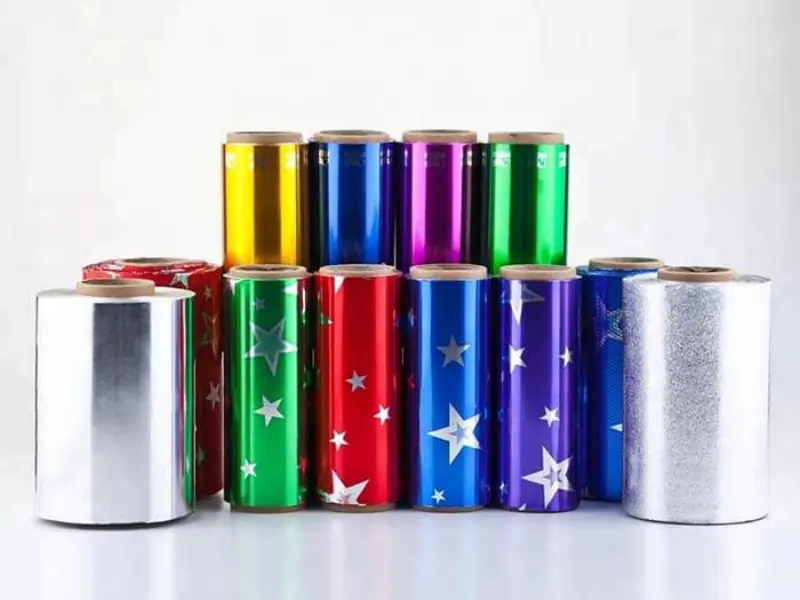
There are many different types of foil based on their thickness, alloy, and coating. The table below shows the technical specifications for common types of coated aluminum foil.
Technical Specification Table
| Foil Type | Typical Alloy | Thickness (mm) | Common Coating | Primary Use |
|---|---|---|---|---|
| Household Foil | 8011 | 0.008 – 0.02 | None / Lubricant | Cooking & Wrapping |
| Pharma Foil | 8021 | 0.02 – 0.03 | Heat-seal Lacquer | Blister Packaging |
| Container Foil | 3003 | 0.04 – 0.10 | Food-grade Lubricant | Take-out Trays |
| Lidding Foil | 8011 | 0.03 – 0.04 | PP / PS / PE | Yogurt & Juice Lids |
| Industrial Foil | 1100 | 0.01 – 0.05 | Epoxy / Bitumen | Cable Wrapping / Construction |
| Colored Foil | 1235 | 0.01 – 0.02 | Decorative Lacquer | Chocolate & Candy |
Common Coating Materials
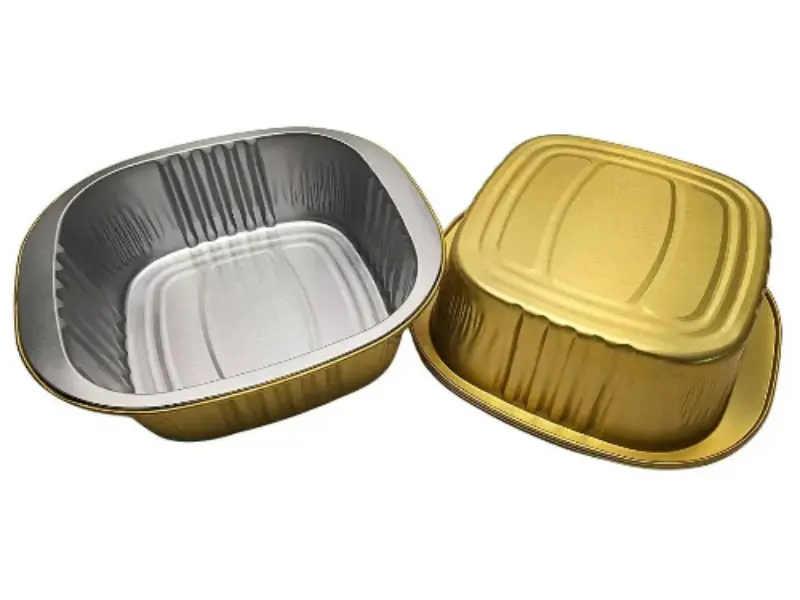
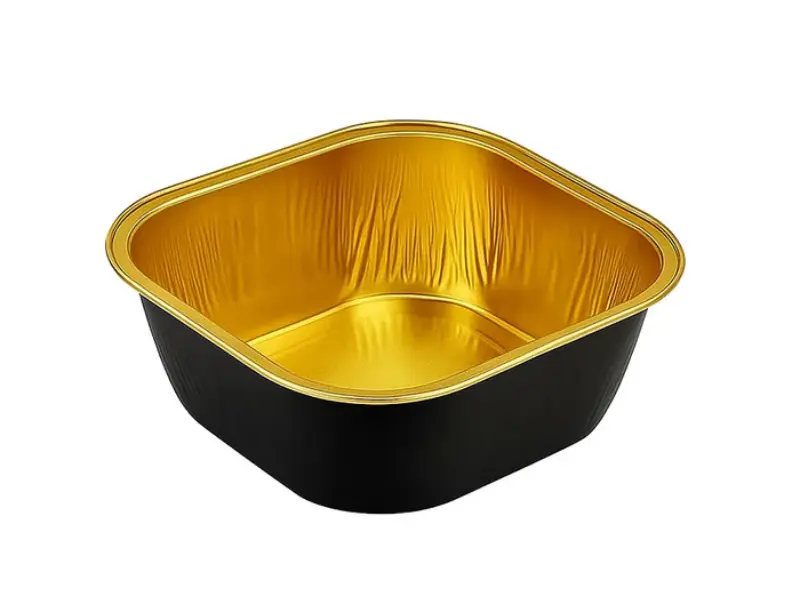
If an aluminum foil is coated, it usually uses one of the following materials:
1. Epoxy Coatings
Epoxy is on the inside of aluminum cans and some foils. It provides a strong barrier against acids. This is very common in industrial applications where the foil must withstand harsh environments.
2. Polyethylene (PE) or Polypropylene (PP)
These are plastic layers. This is why your yogurt lid stays on so tightly.
3. Nitrocellulose (NC) Lacquer
This is a common coating for printing. If you see a brand name or logo printed on a foil wrapper, there is likely an NC coating helping that ink stay in place.
4. Food-Grade Lubricants
Sometimes, the “coating” is just a very thin layer of vegetable oil or synthetic lubricant.
Applications of Coated Aluminum Foil
Coated aluminum foil is used in almost every industry.
- Food & Beverage:
- Lids for cream, yogurt, and butter.
- Wrappers for chocolate, candy, and chewing gum.
- Liners for juice boxes (aseptic packaging).
- Pharmaceuticals:
- Push-through blister packs for pills and tablets.
- Sachets for powdered medicines.
- Home & Kitchen:
- Non-stick aluminum foil (coated with food-grade silicone).
- Heavy-duty foil for roasting.
- Industrial & Construction:
- Heat insulation for roofs and walls.
- Shielding for electrical cables to prevent interference.
- Fin stock for air conditioners (hydrophilic coating to manage water).
How to Tell if Your Foil is Coated
It isn’t always easy to see a coating with the naked eye because they are often clear and very thin (1 to 5 microns). However, you can use these tips:
- The “Non-Stick” Label: If the box says “Non-Stick,” it has a silicone coating on one side.
- The Texture: Coated foil often feels slightly smoother or more “plastic-like” than plain foil.
- Water Test: If you drop water on the foil and it beads up perfectly, it might have a hydrophobic coating.
- Heat Test: If you try to heat-seal the foil to a plastic cup and it sticks, it has a heat-seal lacquer coating.
Is Coated Aluminum Foil Safe?
Safety is a top priority for food grade aluminum foil.
- Regulatory Standards: Most coatings used in food and medicine must pass strict regulations, such as FDA (USA) or EFSA (Europe) standards.
- BPA Concerns: Some older epoxy coatings contained BPA. However, most modern manufacturers have moved to BPA-free coatings to ensure consumer safety.
- Temperature Limits: It is important to remember that some plastic-coated foils are not meant for high-heat ovens. Always check the packaging to see if the foil is “Oven Safe.”
Frequently Asked Questions (FAQ)
Does aluminum foil have a plastic coating?
Some do. Foil used for sealing lids (like on a milk bottle) has a plastic layer. Standard kitchen foil usually does not.
Which side of the foil is the coating on?
If the foil is “non-stick,” the coating is usually on the dull side. For other industrial foils, the coating can be on one or both sides depending on the requirement.
Can you recycle coated aluminum foil?
It depends on the coating. If the coating is a very thin lacquer, it can often be recycled. If it is a thick plastic laminate, it might be more difficult for standard recycling centers to process.
does aluminum foil have a coating?
So, does aluminum foil have a coating? While your basic kitchen roll is likely pure metal, a huge variety of coated aluminum foils exist to make our lives easier. From keeping medicine fresh to sealing our favorite snacks, these coatings provide the protection and functionality that plain metal cannot.
Whether you are looking for high-quality food packaging or industrial insulation, understanding the type of coating and the alloy used (like 8011 or 3003) is the key to choosing the right product. By selecting the correct thickness (0.006 mm to 0.2 mm) and the right finish, you can ensure your project is successful and safe.
Leave a Comment
You must be logged in to post a comment.