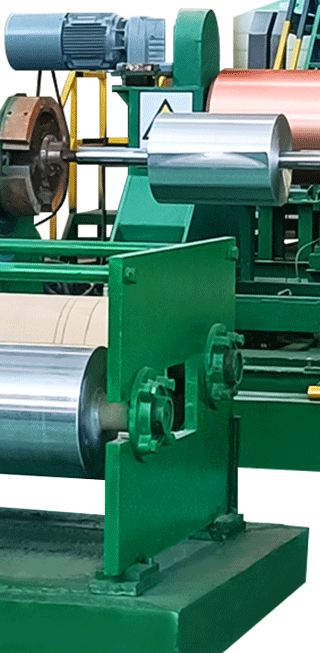
An aluminum foil pan is a disposable food container made from aluminum. It is lightweight and comes ready to use. No washing or seasoning is needed.
These pans work for baking, roasting, and storing food. They come in many sizes and depths. Home cooks and professional kitchens both use them regularly.
Aluminum foil pans are affordable and convenient. They heat evenly and cool quickly. The material does not react with food, making them safe for any dish.
Material and Construction
Aluminum Alloy Types
Foil pans use specific aluminum alloys. The most common is 8011-H14. This alloy offers good strength and formability.
| Alloy | Composition | Best For |
|---|---|---|
| 8011-H14 | 98.5% Al, iron and silicon | Standard pans |
| 3003-H14 | 99% Al, manganese | Premium pans |
| 5052-H14 | 97.5% Al, magnesium | Heavy-duty pans |
| 1200-H16 | 99.0% Al, pure | Specialty pans |
The 8011 alloy is most popular. It provides the right balance between cost and performance. It does not crack under heat and handles rough transport well.
The 3003 alloy is stronger. It is used for pans that need extra durability. Premium bakeries and caterers often choose this type.
Gauge and Thickness
Pan thickness affects durability and performance. Thicker pans cost more but last longer and conduct heat more evenly.
| Gauge | Thickness (mm) | Thickness (inch) | Use |
|---|---|---|---|
| 8 oz | 0.64 mm | 0.025″ | Lightweight, one-time use |
| 10 oz | 0.76 mm | 0.030″ | Standard household |
| 12 oz | 0.89 mm | 0.035″ | Heavy-duty, professional |
| 16 oz | 1.27 mm | 0.050″ | Extra strong, commercial |
Standard household pans are usually 10 oz or 12 oz gauge. Commercial pans for restaurants are 12 oz or 16 oz. Thicker pans conduct heat better and resist warping.
Standard Pan Sizes and Shapes
Rectangular Pans
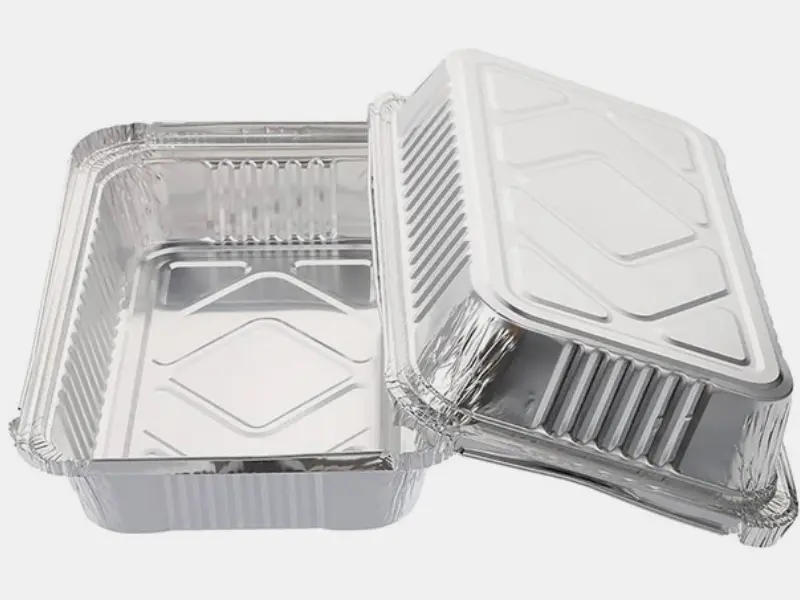
Rectangular pans are the most common. They fit standard ovens and are easy to stack and store.
| Size | Length | Width | Depth | Typical Use |
|---|---|---|---|---|
| Half Size | 325 mm | 260 mm | 50 mm | Side dishes, brownies |
| Full Size | 535 mm | 325 mm | 50 mm | Lasagna, sheet cakes |
| Deep Half | 325 mm | 260 mm | 65 mm | Roasting, stews |
| Deep Full | 535 mm | 325 mm | 65 mm | Large roasts, deep bakes |
Full-size pans (535 × 325 mm) fit standard commercial ovens. Half-size pans (325 × 260 mm) are good for smaller quantities. Depth ranges from 40 mm to 75 mm.
Round Pans
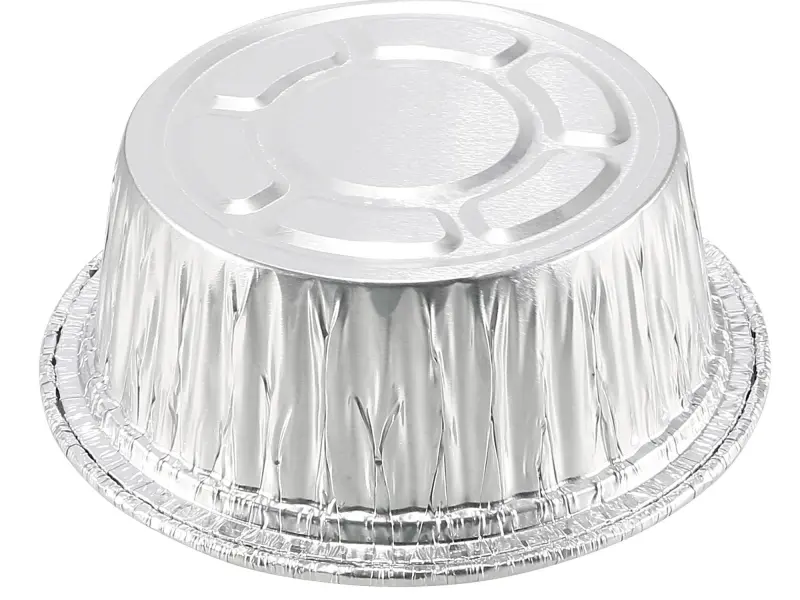
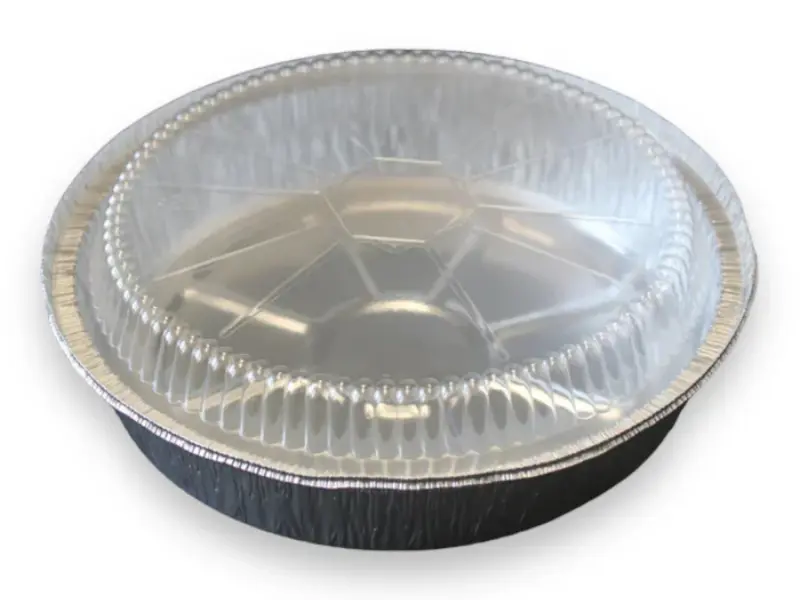
Round aluminum foil pans work for cakes, pies, and circular dishes. They stack efficiently and take up less freezer space than rectangular pans.
| Diameter | Depth | Best For |
|---|---|---|
| 200 mm (8″) | 40 mm | Single-layer cakes |
| 225 mm (9″) | 50 mm | Standard cakes and pies |
| 250 mm (10″) | 50 mm | Large layer cakes |
| 300 mm (12″) | 65 mm | Sheet cakes, pizzas |
Round pans are popular in bakeries and pizzerias. The depth options range from shallow (30 mm) to deep (75 mm). Cake makers often use 225 mm diameter pans.
Square Pans
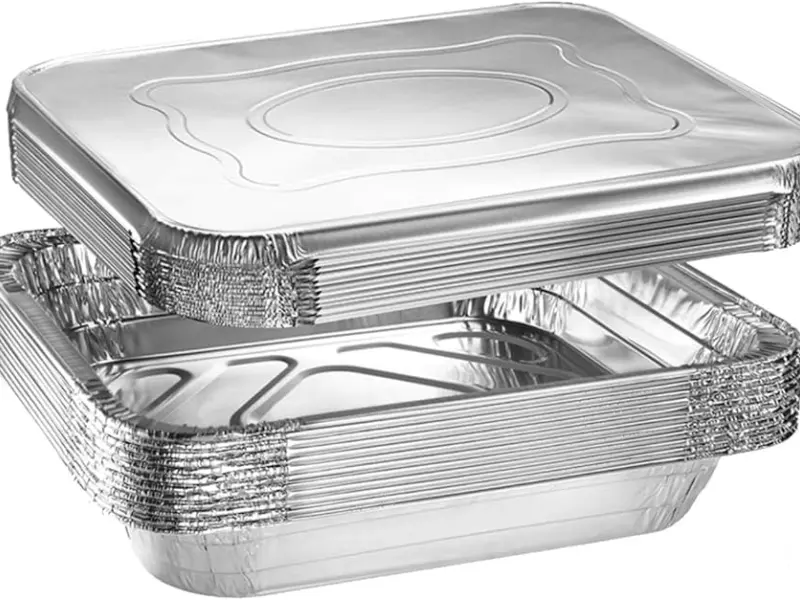
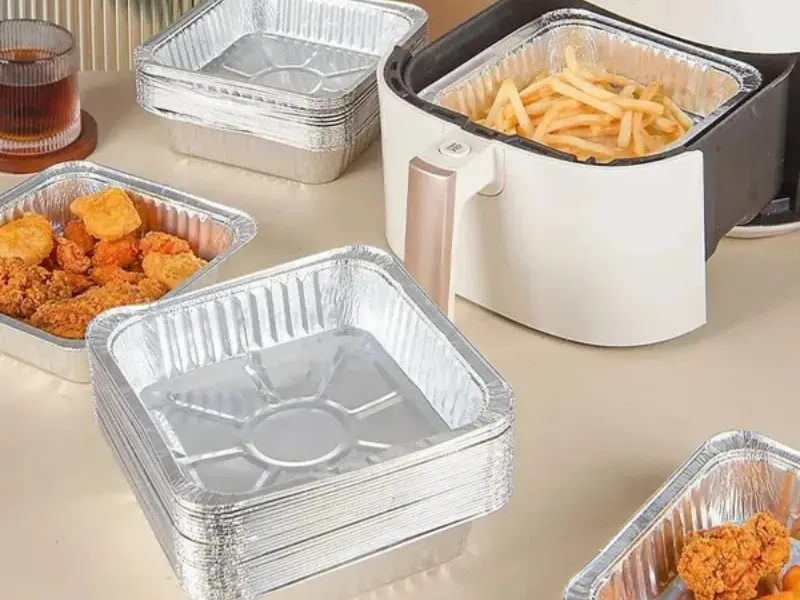
Square aluminum foil pans are good for brownies, bars, and layered dishes. They are easier to portion than round or rectangular pans.
| Size | Dimension | Depth | Capacity |
|---|---|---|---|
| Small | 200 × 200 mm | 40 mm | 1.2 liters |
| Medium | 225 × 225 mm | 50 mm | 2 liters |
| Large | 250 × 250 mm | 65 mm | 3 liters |
Square pans divide evenly into portions. Bakeries use them for brownies, bars, and sheet cakes. The square shape makes counting servings simple.
Specialty Shapes
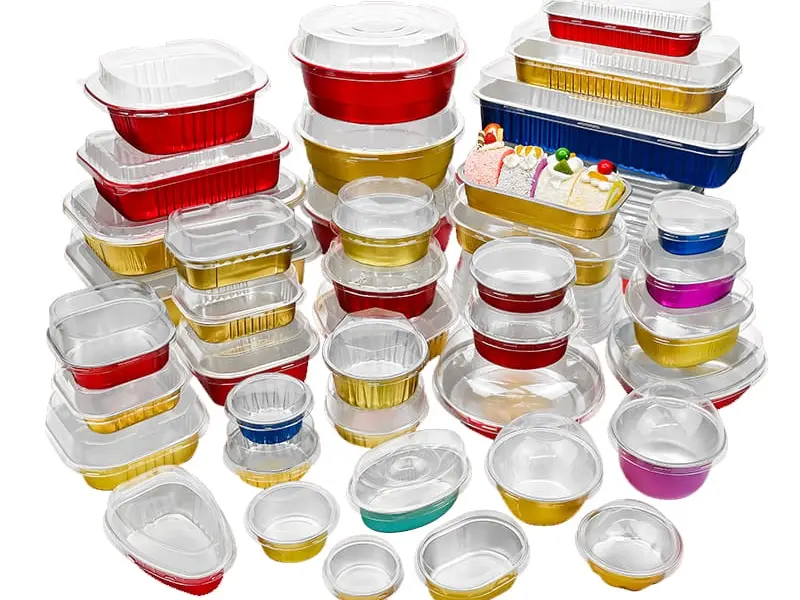
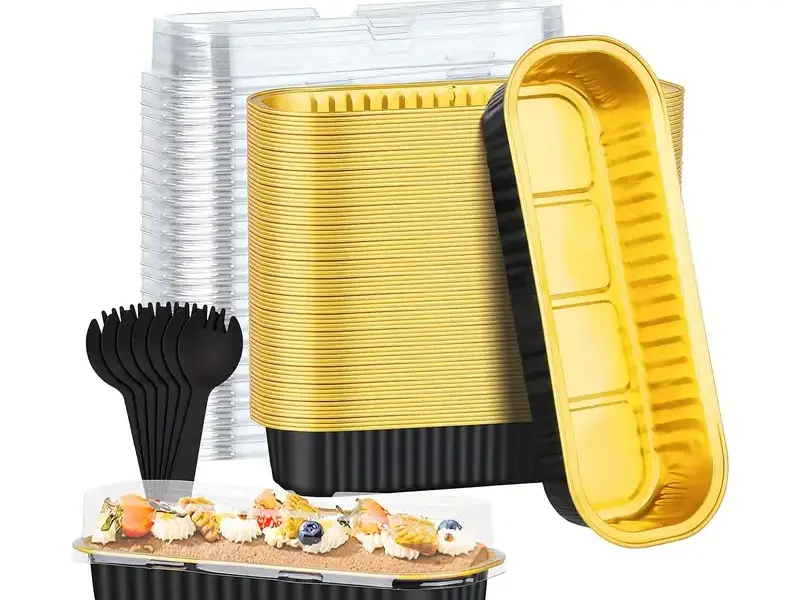
Specialty pan shapes serve specific purposes. Loaf pans, meat pans, and container pans come in various configurations.
| Shape | Dimensions | Purpose |
|---|---|---|
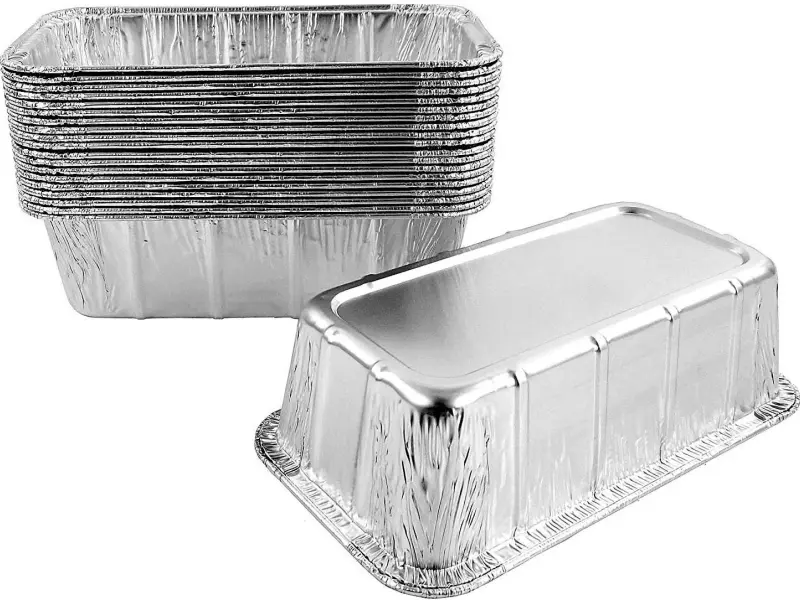
| Loaf pan | 280 × 115 × 65 mm | Bread, meatloaf |
| Meat/Roasting | Large rectangle, deep | Roasting chicken, turkey |
| Hinged container | Various | Takeout, food delivery |
| Dome lid pan | Various | Storage with cover |
| Divided compartment | Various | Multiple items, catering |
Loaf pans are popular for bread and quick breads. Meat pans have higher sides for roasting. Compartment pans are used in catering for meal prep.
Product Types and Features
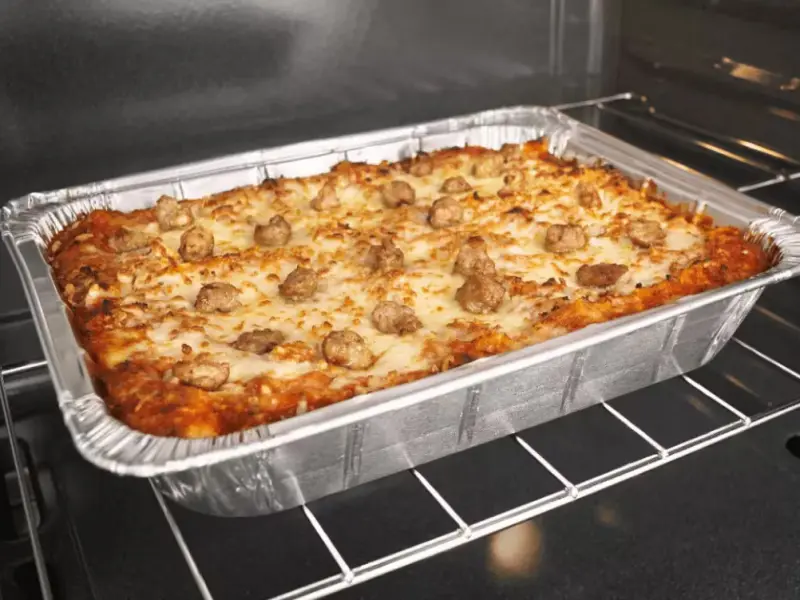
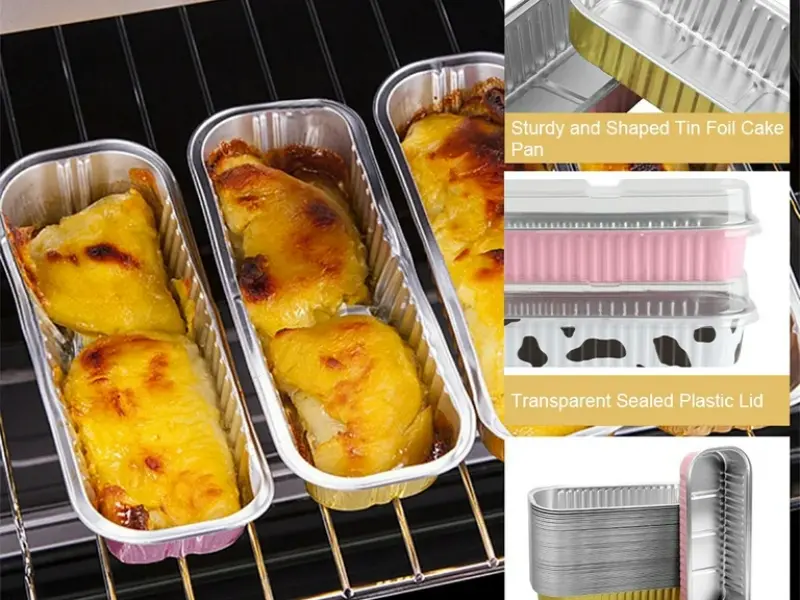
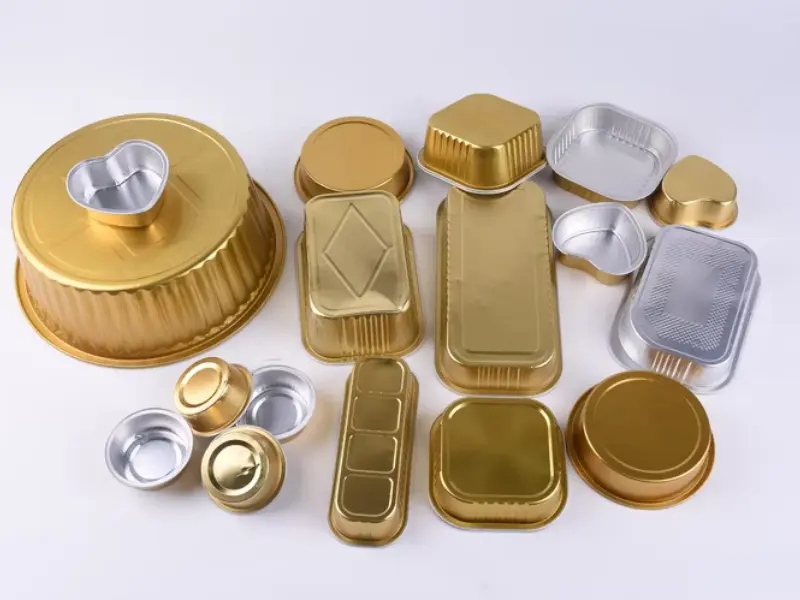
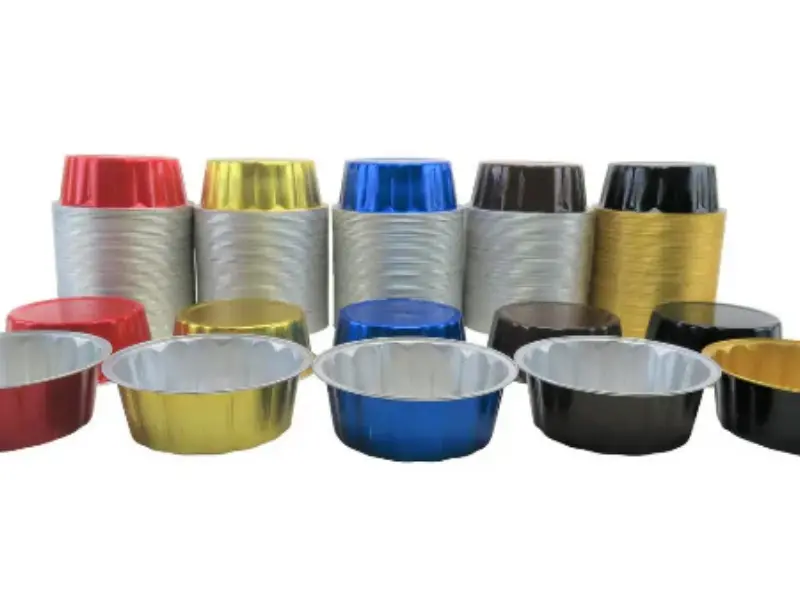
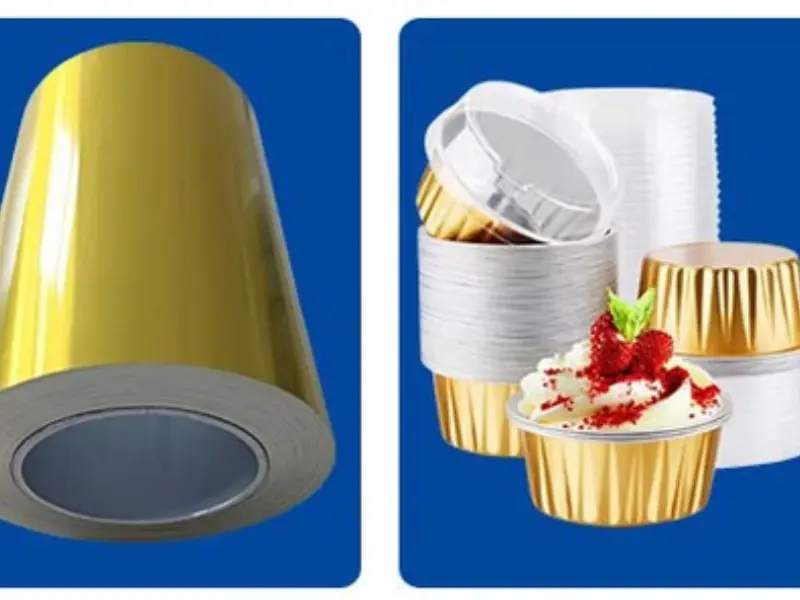
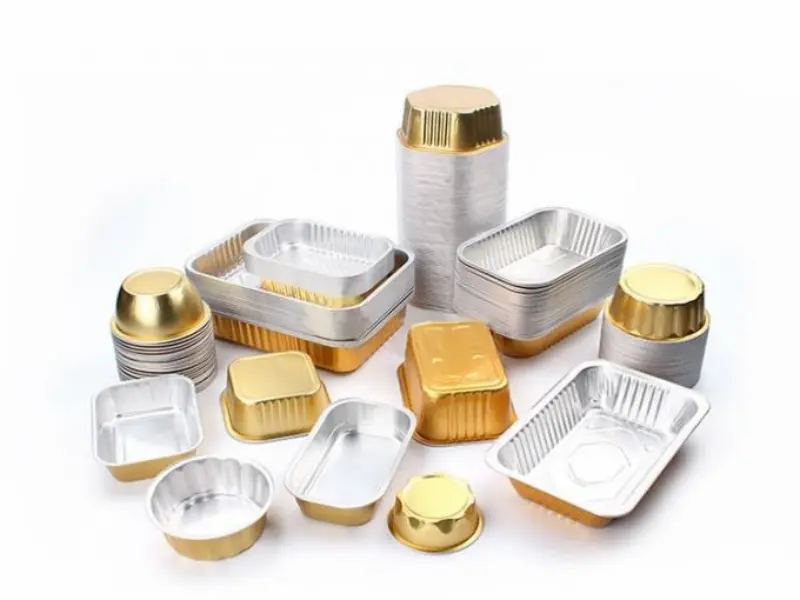
Standard Disposable Aluminum Pans
Standard disposable pans are basic, no-frills options. They work fine for one-time use. Cost is very low.
These pans are perfect for casual events, office parties, and small gatherings. They come plain without lids. Many users cover them with plastic wrap or foil.
Key features:
- Plain aluminum surface
- Ready to use immediately
- No preparation needed
- Very affordable
- Single-use design
Standard pans are stocked in most grocery stores and restaurant supply shops. They are ideal when budget is the main concern.
Heavy-Duty Aluminum Pans
Heavy-duty pans are thicker and stronger. They cost more but last longer and perform better.
These pans handle rough treatment, high heat, and frequent use. Commercial kitchens prefer heavy-duty pans for regular production. The extra thickness prevents warping and denting.
Key features:
- Thicker gauge (12 oz or 16 oz)
- Better heat conduction
- Resists warping and denting
- Holds up to repeated use
- Professional grade
Heavy-duty pans work well for meal prep services, catering companies, and busy restaurants. The investment pays off through reduced replacement costs.
Aluminum Pans with Lids
Pans with matching aluminum or plastic lids are convenient for storage and transport. The lid keeps food fresh and protects during delivery.
These pans are ideal for takeout, catering delivery, and food storage. The lid makes them stackable in refrigerators and freezers. Some lids are hinged for easy opening.
Lid options:
- Flat aluminum lids
- Hinged aluminum lids
- Plastic dome lids
- Cardboard and foil combination lids
- Separate plastic covers (sold with pans)
Pans with lids cost more upfront but reduce the need for separate covering materials. They are popular for meal delivery services and restaurant takeout.
Non-Stick Coated Aluminum Pans
Non-stick coating makes food release easier. The coating reduces sticking and makes cleanup faster.
Non-stick pans are good for baking delicate items and foods that stick easily. The dark non-stick surface also helps with browning. Temperature limits are usually lower than plain pans.
Non-stick coating types:
- PTFE-based (standard non-stick)
- Ceramic non-stick
- Silicone-based coating
- Oil-resistant coating
Non-stick aluminum pans cost more than plain pans. The coating extends life and improves performance for certain applications. Bakeries often use non-stick pans for cakes and baked goods.
Compartment Aluminum Pans
Compartment pans have divided sections. Each section holds a different food item. This design is popular for meal prep and catering.
These pans are perfect for delivering complete meals. One pan can hold meat, vegetables, starch, and sauce in separate areas. Customers appreciate the organization.
Compartment configurations:
- Two compartments (main and side)
- Three compartments (protein, starch, vegetable)
- Four compartments (main, two sides, sauce)
- Five or more compartments (complete meals)
Compartment pans reduce the need for multiple containers. They save money on packaging and are easier to transport. Meal prep companies and food delivery services use them frequently.
Freezer-to-Oven Aluminum Pans
These pans are designed to go directly from freezer to oven. They handle temperature extremes without cracking or warping.
Freezer-to-oven pans are ideal for meal prep services and food manufacturers. Customers can freeze meals and bake them later. No thawing step is required.
Performance characteristics:
- Freeze safe to -40°C
- Oven safe to 230°C
- Rapid temperature change tolerant
- No preheating damage
- Ideal for frozen baked goods
These pans are slightly thicker and stronger. The material quality ensures they do not crack when moved from freezer to hot oven. Professional meal prep businesses favor this type.
Alloy Specifications and Properties
Aluminum Alloy Comparison
| Property | 8011-H14 | 3003-H14 | 5052-H14 |
|---|---|---|---|
| Tensile Strength | 140 MPa | 170 MPa | 210 MPa |
| Yield Strength | 95 MPa | 145 MPa | 165 MPa |
| Elongation | 2% | 3% | 5% |
| Corrosion Resistance | Good | Very Good | Excellent |
| Cost | Low | Medium | Higher |
| Pan Use | Standard | Premium | Heavy-duty |
The 8011 alloy is cost-effective and suitable for most applications. It has adequate strength for typical food service. The 3003 alloy offers better durability. The 5052 alloy is strongest and most corrosion-resistant.
Temper Conditions
Temper refers to the hardness and strength level. H14 is the standard temper for foil pans.
| Temper | Hardness | Best For |
|---|---|---|
| H14 | Half-hard | Standard disposable pans |
| H18 | Fully hard | Heavy-duty commercial pans |
| O | Annealed (soft) | Specialty forming applications |
H14 temper is most common. It provides good strength without being too brittle. H18 temper is harder but less formable. O temper is too soft for most pan applications.
Application Areas
Aluminum foil pans serve many purposes across different industries and settings.
Home Kitchen and Baking
Home cooks use aluminum foil pans for convenience and easy cleanup. No washing required after use.
Home uses include:
- Baking sheet cakes and brownies
- Freezing homemade meals
- Roasting vegetables
- Preparing casseroles
- Making lasagna and layered dishes
- Storing baked goods
- Transporting dishes to potlucks
- Organizing freezer storage
Home cooks appreciate the low cost and disposability. These pans reduce dish-washing tasks. Many people reuse them once or twice before discarding.
Professional Bakeries
Bakeries use aluminum foil pans extensively for production and storage. High volume requires efficient, reliable pans.
Bakery applications:
- Baking cakes and sheet cakes
- Cooling baked goods after oven
- Freezing cake layers
- Transporting products to retail locations
- Packaging finished goods
- Storage in freezers
- Portion control for brownies and bars
Bakeries typically use heavy-duty pans. Non-stick coating is popular for delicate baked goods. Compartment pans help organize different product types.
Restaurants and Food Service
Restaurants rely on aluminum foil pans for prep, cooking, and storage. The pans are integral to daily operations.
Restaurant uses:
- Prep work and mise en place
- Roasting and baking
- Holding food during service
- Transporting prepared dishes
- Storing leftovers safely
- Taking food to catering events
- Organizing walk-in storage
Restaurants buy pans by the case. Heavy-duty and non-stick options are preferred. Pans with lids simplify storage and transport.
Catering and Event Services
Catering companies depend on aluminum pans for transport and presentation. Pans with lids are especially valuable for food safety.
Catering applications:
- Transporting large quantities of food
- Keeping food warm during events
- Dividing food into serving portions
- Organizing multiple menu items
- Storing prep work overnight
- Meeting health department requirements
- Protecting food during transport
Compartment pans reduce the number of containers needed. Pans with hinged lids allow quick access without removing the cover entirely. Heavy-duty construction handles frequent use.
Meal Prep and Food Delivery
Meal prep services and food delivery companies use aluminum pans for packaging prepared meals.
Meal prep uses:
- Portioning meals into individual containers
- Freezing prepared meals
- Organizing multiple meal plans
- Direct-to-consumer delivery
- Weekly meal prep services
- Corporate catering packages
- Bulk meal preparation
Compartment pans are ideal for delivering complete meals. Freezer-to-oven pans allow customers to cook meals at home without thawing. Heavy-duty construction resists repeated handling.
Institutional Feeding
Schools, hospitals, and senior centers use aluminum pans for bulk food preparation and service.
Institutional uses:
- Preparing large quantities for cafeterias
- Holding food in warmers during service
- Transporting meals to different areas
- Meeting food safety standards
- Organizing storage by item type
- Portion control
Heavy-duty pans are essential in institutional settings. Dishwasher-safe, reusable pans are often preferred over disposable options. Compartment pans help organize different menu items.
Travel and Camping
Portable kitchen use benefits from lightweight, disposable pans. Aluminum pans are easy to pack and do not require washing.
Travel uses:
- Camping trips
- RV and van life
- Picnics and outdoor events
- Tailgating parties
- Beach trips
- Emergency food preparation
- Portable cooking setups
Lightweight pans are ideal for travel. The ability to discard used pans eliminates cleaning concerns. Round and square pans pack efficiently.
Standard Specifications Table
Dimension Chart
| Type | Length (mm) | Width (mm) | Depth (mm) | Volume (L) |
|---|---|---|---|---|
| Half-size shallow | 325 | 260 | 40 | 3.4 |
| Half-size standard | 325 | 260 | 50 | 4.2 |
| Half-size deep | 325 | 260 | 65 | 5.5 |
| Full-size shallow | 535 | 325 | 40 | 7.0 |
| Full-size standard | 535 | 325 | 50 | 8.7 |
| Full-size deep | 535 | 325 | 65 | 11.4 |
| Round 8″ | 200 mm diameter | 200 mm diameter | 40 | 1.2 |
| Round 9″ | 225 mm diameter | 225 mm diameter | 50 | 2.0 |
| Round 10″ | 250 mm diameter | 250 mm diameter | 50 | 2.5 |
| Square 8″ | 200 | 200 | 40 | 1.6 |
| Square 9″ | 225 | 225 | 50 | 2.5 |
Gauge and Weight
| Gauge | Thickness (mm) | Thickness (inch) | Approx. Weight per Pan |
|---|---|---|---|
| 8 oz | 0.64 | 0.025″ | 45-55 grams |
| 10 oz | 0.76 | 0.030″ | 55-70 grams |
| 12 oz | 0.89 | 0.035″ | 70-90 grams |
| 16 oz | 1.27 | 0.050″ | 100-130 grams |
Packaging and Quantities
Typical Pack Sizes
| Quantity | Pack Size | Typical Use |
|---|---|---|
| Single | 1 pan | Trial, replacement |
| Pack | 5-10 pans | Small household |
| Case | 50-100 pans | Regular use |
| Bulk | 500-1000 pans | Commercial |
| Pallet | 5000+ pans | Wholesale |
Home users typically buy packs of 5-10. Small businesses order cases. Large restaurants and manufacturers buy pallets.
Storage and Shipping
Aluminum pans are lightweight and stack efficiently. Nesting design allows compact storage. Most pans are shrink-wrapped in groups before case packing.
| Format | Stacking | Dimensions | Weight |
|---|---|---|---|
| Individual wrapped | High | Full pan size | Light |
| 5-pan pack | Very high | Compact | Very light |
| 50-pan case | Extreme | Compact box | 3-5 kg |
| Pallet | Minimal | Uniform | 500+ kg |
Efficient packing reduces shipping costs. Nested pans reduce storage space requirements. Individual wrapping prevents sticking and protects pan edges.
Frequently Asked Questions
Q: Can I reuse aluminum foil pans? A: Yes. Many people reuse disposable pans 2-3 times before discarding. Rinse and dry thoroughly between uses.
Q: Are aluminum pans oven safe? A: Yes. Most aluminum pans are safe up to 230°C (450°F). Check the packaging for specific temperature limits.
Q: Can I use aluminum pans in the microwave? A: No. Aluminum reflects microwaves and can cause sparking. Transfer food to microwave-safe containers.
Q: Do aluminum pans affect food taste? A: No. Aluminum does not react with most foods or affect flavor. Food-grade aluminum is completely safe.
Q: What is the difference between disposable and heavy-duty pans? A: Disposable pans (8 oz) are thinner and cheaper. Heavy-duty pans (16 oz) are thicker, more durable, and better for repeated use.
Q: Can I freeze food in aluminum pans? A: Yes. Aluminum pans are excellent for freezing. They conduct cold quickly and protect food effectively.
Q: How should I store unused aluminum pans? A: Store in a cool, dry place. Keep in original packaging to prevent dust accumulation. Pans stack compactly.
Q: Are aluminum pans recyclable? A: Yes. Aluminum pans are fully recyclable. Check local recycling programs for drop-off locations.
Choosing the Right Pan
For Home Use
Choose standard 10 oz gauge rectangular or square pans. Buy packs of 5-10 for occasional use. Round pans work well for cakes. Non-stick coating is optional but helpful.
For Businesses
Choose heavy-duty 12 oz or 16 oz pans. Round and compartment options add versatility. Pans with lids simplify storage and transport. Buy cases or pallets for volume discounts.
For Freezing
Choose freezer-to-oven rated pans if going from freezer to oven without thawing. Standard pans work fine if you thaw first. Heavy-duty gauge prevents cracking under temperature stress.
For Catering
Choose compartment pans with lids. Heavy-duty gauge handles frequent transport. Mix rectangular and round sizes for variety. Calculate quantities based on typical event sizes.
Aluminum foil pans for sale
Aluminum foil pans are essential for home cooks, professionals, and businesses. They offer convenience, affordability, and reliability.
Standard 10 oz pans work fine for casual use. Heavy-duty 12-16 oz pans suit professional environments. Specialty options like non-stick, compartment, and lids add functionality for specific applications.
Material quality matters. The 8011-H14 alloy is standard. Higher alloys like 3003 and 5052 provide better durability for demanding applications.
Size and shape options accommodate almost any food item. Rectangular, round, and square pans are most common. Specialty shapes serve specific purposes.
Whether for baking cakes, roasting vegetables, storing meals, or catering events, aluminum foil pans deliver dependable performance at reasonable cost.
Looking for quality aluminum foil pans for your kitchen or business? Contact us for bulk pricing, custom sizes, and wholesale orders.