Difference between cold foil and rainbow foil
Cold foil and rainbow foil are common in packaging and print. Both add shine and color. They look similar, but they are different in material and process.

What is cold foil?
Cold foil is a thin metallic layer transferred to paper or film without heat. A printed UV adhesive pattern is used. The foil film peels away, leaving metal on the substrate. Cold foil creates bright metallic areas with the printed image.
Key points about cold foil:
- Used in offset and flexo printing.
- Transfer occurs at room temperature using pressure and UV cure.
- Works fast and suits long runs.
- Gives a true metallic silver or gold look when metallized foil is used.
Cold foil — simple table of definition and properties
| Item | Cold foil (short) |
|---|---|
| Process | Adhesive printed, foil transferred, UV cured |
| Carrier | Metallized PET film (carrier) |
| Finish | Metallic shine (silver, gold, colored metal) |
| Typical use | Packaging, labels, folding cartons |
| Speed | High-speed printing compatible |
| Cost | Moderate for long runs, lower than hot stamping per unit on long runs |
What is rainbow foil?

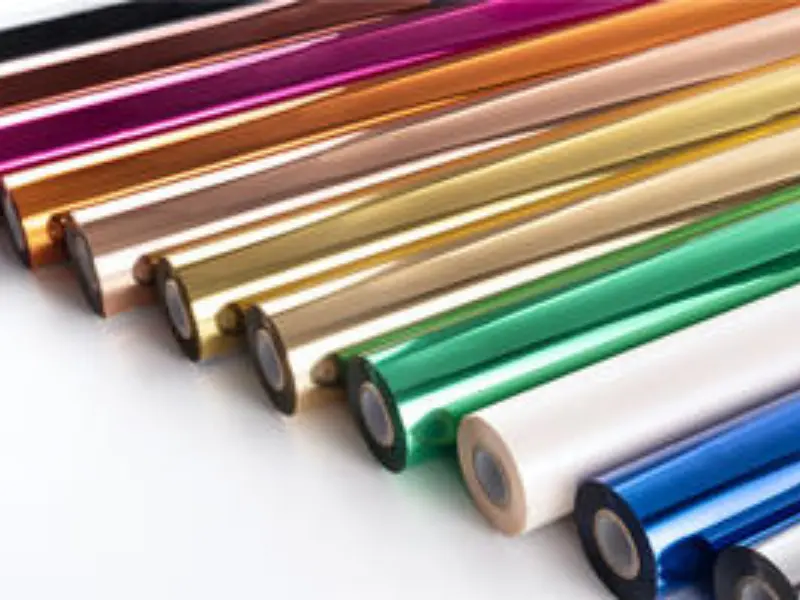
Rainbow foil usually means holographic or prismatic foil with a rainbow effect. It shows many colors when viewed from different angles. Rainbow foil can be pre-embossed with a pattern or used as a transfer foil. It is chosen for strong visual impact and security effects.
Key points about rainbow foil:
- Produces color-shift, prismatic, or holographic effects.
- Available as transfer foil, hot stamp foil, or self-adhesive laminate.
- Used for decoration, brand impact, and anti-counterfeiting.
Rainbow foil — short table
| Item | Rainbow foil (short) |
|---|---|
| Process | Holographic effect made by embossed pattern on foil or carrier |
| Carrier | Polyester film with diffractive embossing |
| Finish | Multi-color, prismatic, holographic |
| Typical use | Luxury packaging, labels, security seals |
| Speed | Varies by application; cold transfer or hot stamp methods used |
| Cost | Higher than plain metal foils, varies by pattern and method |
Side-by-side comparison
This table compares cold foil and rainbow foil by key points. It helps decide which foil fits your job.
| Feature | Cold foil | Rainbow foil |
|---|---|---|
| Visual effect | Metallic silver/gold or color-coated metal | Multi-color, prismatic, holographic |
| Main use | Metallic accents, large area coverage | Eye-catching finishes, security effects |
| Application method | Cold transfer using UV adhesive | Transfer or hot stamping; also laminate or self-adhesive |
| Best on | Smooth paperboard, coated stocks | Coated stocks, labels, special papers |
| Registration tolerance | Good for fine detail with UV print | Requires care for pattern alignment, embossing |
| Run cost | Cost-effective for long runs | More expensive per unit, especially for custom holograms |
| Speed on press | High-speed compatible | Speed depends on method; can be lower with complex holograms |
| Recyclability | Depends on substrate; small metal layer may affect recycling | May affect recycling more if heavy holographic layers are used |
Typical specifications and numeric types
Use this table to see common numeric ranges and specs. Values are approximate and vary by supplier and foil type.
| Spec | Cold foil (approx.) | Rainbow foil (approx.) |
|---|---|---|
| Carrier film thickness | 6–12 µm (PET) | 8–15 µm (PET with emboss) |
| Transferred metal layer | 0.1–1.5 µm (depends on foil) | 0.1–2.0 µm (plus embossed layer) |
| Adhesive type | UV-curable tacky adhesive | Hot-melt or UV transfer adhesive (depends on method) |
| Typical transfer speed | 5,000–30,000 sheets/hour (offset/flexo lines) | Varies widely; often slower for complex holograms |
| Line repeat for hologram | N/A | 10–200 mm patterns common |
| Typical roll width | 300–1,400 mm | 300–1,400 mm |
| Typical roll length | 500–5,000 m | 200–3,000 m |
Note: Exact numbers change by supplier and product. Ask your foil vendor for technical data sheets.
How each process works (step-by-step)
Cold foil process (simple steps)
- Print UV-curable adhesive pattern on substrate.
- Lay metallized foil film over adhesive.
- Press through nip to transfer metal to adhesive.
- Peel back carrier film; metal stays on substrate.
- Cure with UV, then continue printing (varnish, inks).
Rainbow foil process (typical methods)
- For hot stamping:
- Place holographic foil on substrate.
- Use heated die to stamp pattern; metal transfers to paper.
- Remove carrier film.
- For cold transfer:
- Print transfer adhesive pattern.
- Apply holographic transfer foil.
- Peel carrier; holographic layer stays on substrate.
- For lamination:
- Laminate holographic film over substrate using adhesive.
- Trim and finish.
Applications and use areas
Below are clear bullet lists showing typical uses for cold foil and rainbow foil. This helps with quick decisions.
Cold foil — common applications
- Folding cartons for cosmetics and beverages.
- Labels for wine, spirits, and foods.
- Full or spot metallic panels on packaging.
- High-volume print jobs where cost per unit matters.
- Promotional mailers and brochures.
Rainbow foil — common applications
- Luxury packaging and gift boxes.
- Security labels, certificates, and tamper seals.
- Brand features to draw attention on shelves.
- Limited edition or premium print items.
- Decorative sleeves and promotional cards.
Applications table by industry
| Industry | Cold foil use | Rainbow foil use |
|---|---|---|
| Food & beverage | Metallic panels, brand accents | Premium limited edition labels |
| Cosmetics | Shiny logo areas | Holographic accents for luxury lines |
| Security | Not typical | Holographic seals, anti-counterfeit |
| Publishing | Metallic covers, accents | Special edition covers, effects |
| Retail packaging | Brand shine, low-cost metallic | High-impact shelf presence |
Visual differences and finishing options
- Cold foil gives a smooth metal look and can be overprinted with inks.
- Rainbow foil shows color shifts and patterns that change with angle.
- Cold foil may be varnished or UV coated; some varnishes dull metal.
- Rainbow foil can be embossed, matt-lacquered, or spot-varnished to change look.
Finishing table
| Finish | Cold foil effect | Rainbow foil effect |
|---|---|---|
| Gloss varnish | High shine, deep metallic look | Enhances hologram depth |
| Matte varnish | Softer metallic, less reflection | Subtle hologram, lower contrast |
| Embossing | Can emboss over transferred metal (careful) | Adds tactile effect to hologram |
| Overprint | Possible with special inks | Possible but may reduce hologram clarity |
Pros and cons
Pros and cons table to help choose
| Item | Cold foil — pros | Cold foil — cons |
|---|---|---|
| Pros | Fast, cost-effective on long runs; true metal look; fine detail possible | Metal layer thin; may affect recycling; limited to metallic look (not rainbow) |
| Item | Rainbow foil — pros | Rainbow foil — cons |
|---|---|---|
| Pros | Strong visual impact; anti-counterfeit options; premium look | Higher cost; may need special handling and slower process |
Choosing guide — which foil to use?
Decision table to pick foil based on need
| Need | Choose cold foil? | Choose rainbow foil? |
|---|---|---|
| Large runs with metallic accents | Yes | No |
| Premium shelf impact with color shift | No | Yes |
| Anti-counterfeit or security | No | Yes |
| Tight budget per unit | Yes | No |
| Complex hologram pattern | No | Yes |
| Fast offset press runs | Yes | Maybe (depends on equipment) |
Checklist when selecting:
- What visual effect do you want? Metal shine or rainbow color?
- What is your budget and run length?
- Is compatibility with existing press equipment needed?
- Will the product be laminated, die-cut, or varnished later?
- Do you need security features or patent-protected holograms?
Handling, storage, and press tips
- Store foil rolls away from heat and sunlight.
- Keep foils on cores to avoid wrinkles.
- Use correct unwind tension to prevent stretching.
- For cold foil, ensure UV adhesive is matched to foil supplier recommendations.
- Test adhesion on the exact stock and with the exact varnish or ink you will use.
Quick press checklist
- Check press speed vs recommended foil speed.
- Run tests for registration and transfer quality.
- Use clean nips and proper pressure settings.
- Verify curing settings for UV adhesives.
- Run a short production test before full run.
Cost and sustainability notes
- Cold foil can cut cost vs hot foil for long runs because it transfers quickly from web rolls.
- Rainbow foil often costs more due to holographic embossing and pattern licensing.
- Both foils may affect recyclability; thin metal layers can complicate paper recycling. Check with local recyclers and substrate suppliers.
- Some suppliers offer recyclable or peelable foil systems to improve sustainability.
Frequently asked questions (FAQ)
Q: Can rainbow foil be applied with cold foil process?
A: Yes. Holographic transfer foils exist for cold transfer. The result depends on foil design and adhesive.
Q: Is cold foil the same as hot foil?
A: No. Cold foil transfers without heat; hot foil uses heat and stamp to transfer metal. Each has pros and cons.
Q: Which foil is better for small runs?
A: For very small runs, hot stamping or short-run holographic foil may be better, but costs can be higher. Discuss options with your printer.
Q: Do foils affect printing over time?
A: Metal foils are stable, but overprint varnish and storage conditions can change appearance. Test long-term behavior for products with long shelf life.
Q: Can you print on top of transferred cold foil?
A: In many cases yes, but ink adhesion and color outcome vary. Test with your ink and foil.


Leave a Comment
You must be logged in to post a comment.