Aluminum Foil for Insulation in Saudi Arabia
Saudi Arabia is known for its extreme desert climate. During the summer, temperatures often rise above 50∘C. This heat makes living and working difficult. To stay cool, buildings need high-quality protection. Using aluminum foil for insulation in Saudi Arabia has become the standard for modern construction.
Technical Specifications: Alloys and Tempers
Not all aluminum foil is the same. For insulation purposes, specific alloys and tempers are used to ensure the material can be laminated or installed without tearing.
Common Material Data
| Alloy Grade | Common Temper | Thickness Range | Main Feature |
| 1050 / 1060 | O (Soft) | $10 \mu m – 50 \mu m$ | High purity, excellent conductivity. |
| 1235 | O | $6 \mu m – 9 \mu m$ | Best for lamination with foam or bubble. |
| 8011 | O / H22 | $15 \mu m – 70 \mu m$ | High tensile strength for industrial use. |
| 3003 | H18 | $30 \mu m – 100 \mu m$ | Superior corrosion resistance for roofs. |
Why Use Aluminum Foil for Insulation in Saudi Arabia?
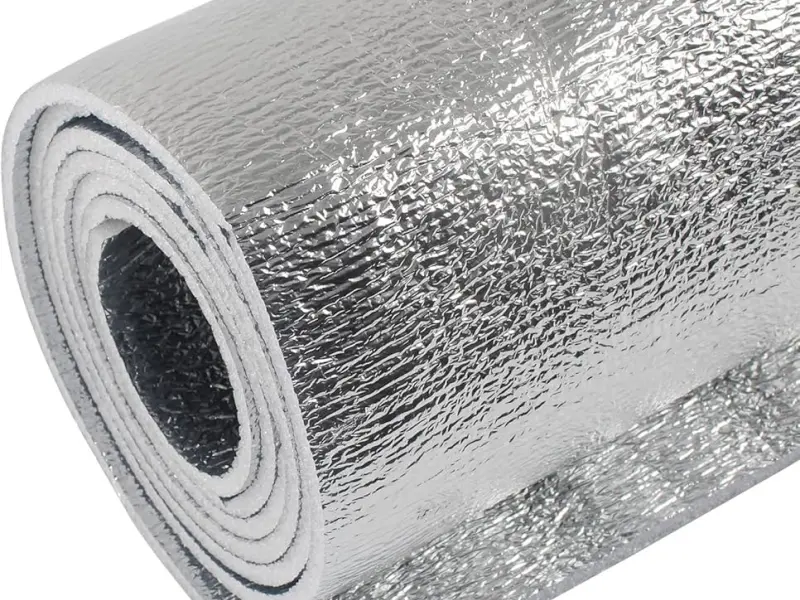
In a hot country like Saudi Arabia, traditional insulation like glass wool is often not enough. Heat moves in three ways: conduction, convection, and radiation.
- Radiant Heat: This is the heat from the sun. It hits the roof of a building and moves inside.
- The Solution: Aluminum foil reflects up to 97% of radiant heat.
- Energy Saving: By using aluminum foil for insulation in Saudi Arabia, homeowners can reduce their air conditioning (AC) bills by 20% to 35%.
Technical Specifications and Alloys
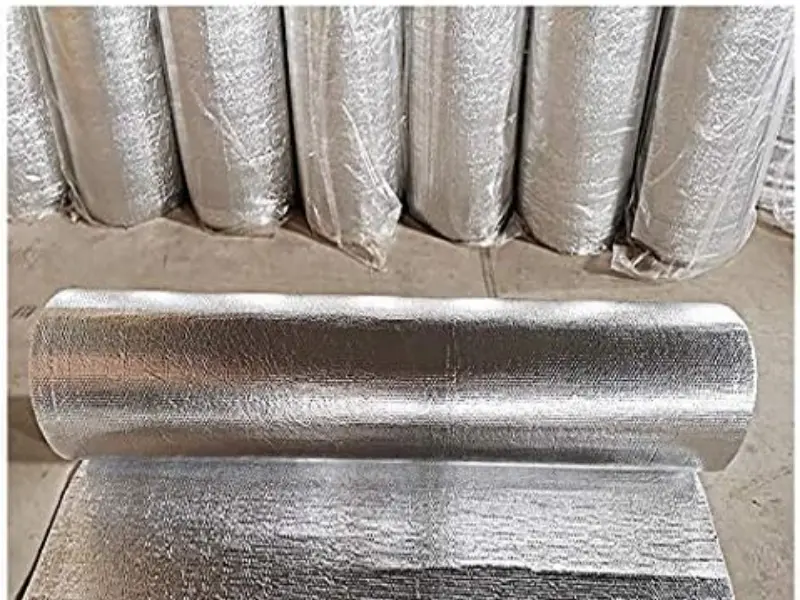
Not all aluminum foil is the same. For insulation, the foil must be strong and resistant to corrosion.
Common Alloys for Insulation Foil
| Alloy | Characteristics | Best Use |
|---|---|---|
| Alloy 8011 | High strength and good flexibility. | Roof insulation and HVAC ducts. |
| Alloy 1235 | High purity (99.35% aluminum). | Laminating with other materials. |
| Alloy 3003 | Excellent corrosion resistance. | Industrial pipelines and outdoor use. |
Digital Specs for Construction
| Property | Value |
|---|---|
| Thickness | 6.5μm to 50μm |
| Width | 100mm to 1600mm |
| Temper | O (Soft) or H18 (Hard) |
| Reflectivity | 95% to 97% |
| Emissivity | 0.03 to 0.05 |
Different Types of Aluminum Insulation Products
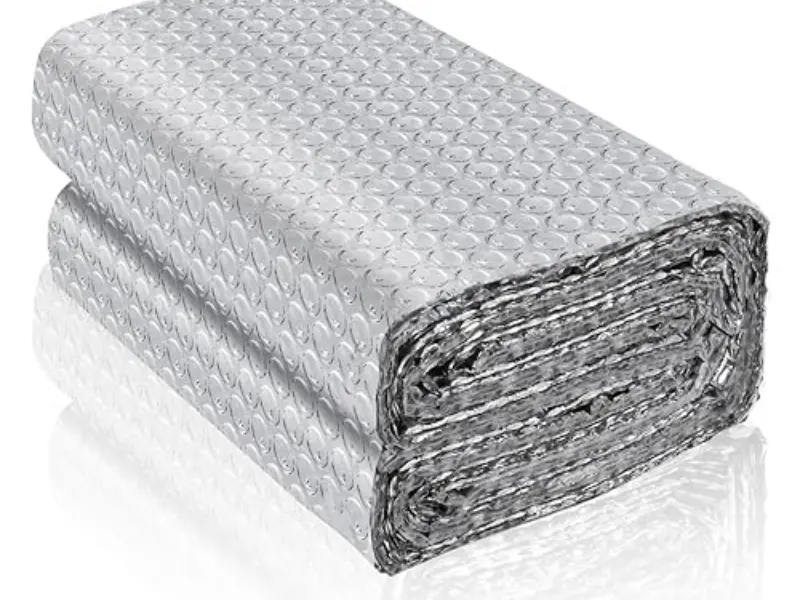
When buying aluminum foil for insulation in Saudi Arabia, you will find several product types. These are usually “laminated” products. This means the foil is glued to another material to make it stronger.
1. FSK Facing (Foil-Scrim-Kraft)
This is the most common type for HVAC ducts in Saudi Arabia.
- Layer 1: Aluminum Foil (reflects heat).
- Layer 2: Glass fiber scrim (adds strength).
- Layer 3: Kraft paper (provides a base).
It is very strong and does not tear easily.
2. Aluminum Foil with Bubble Insulation
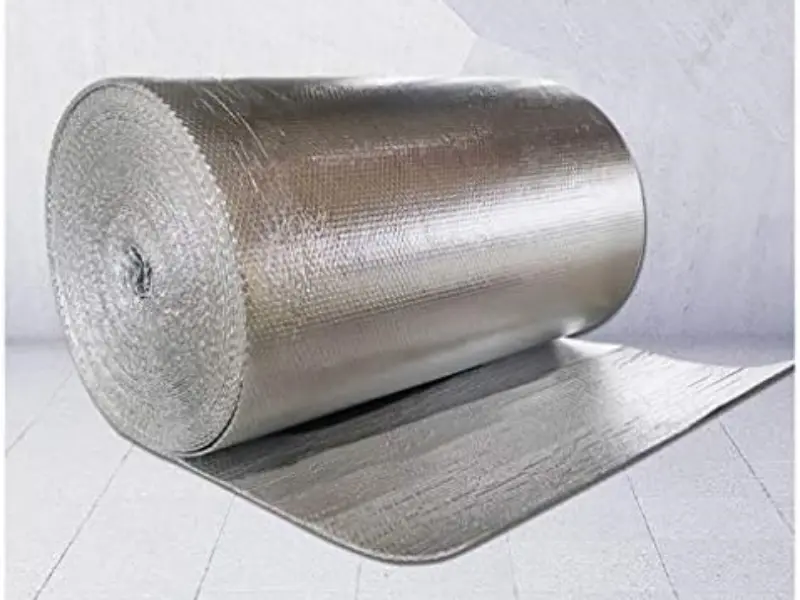
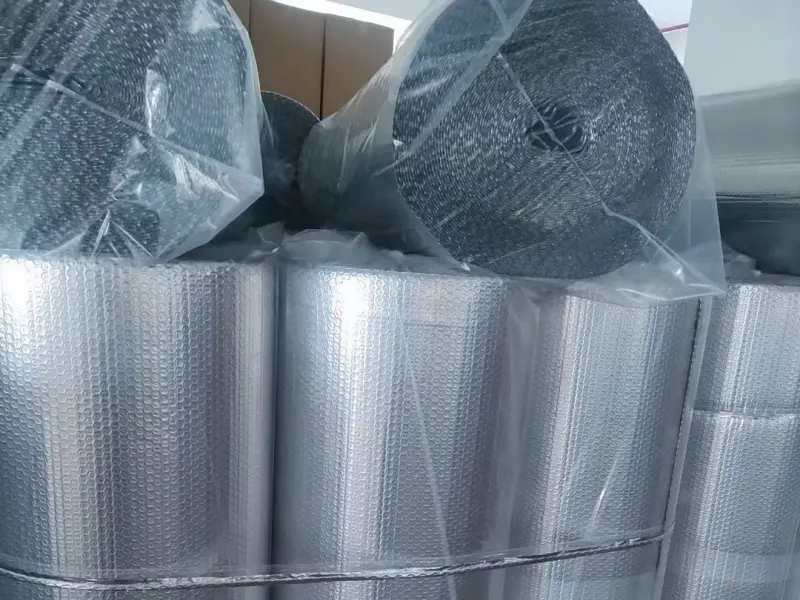
This looks like bubble wrap covered in silver. It creates a “thermal break.” The air inside the bubbles stops heat from moving by conduction. It is very popular for metal roofs in warehouses across Riyadh and Jeddah.
3. Aluminum Foil with XPE/EPE Foam
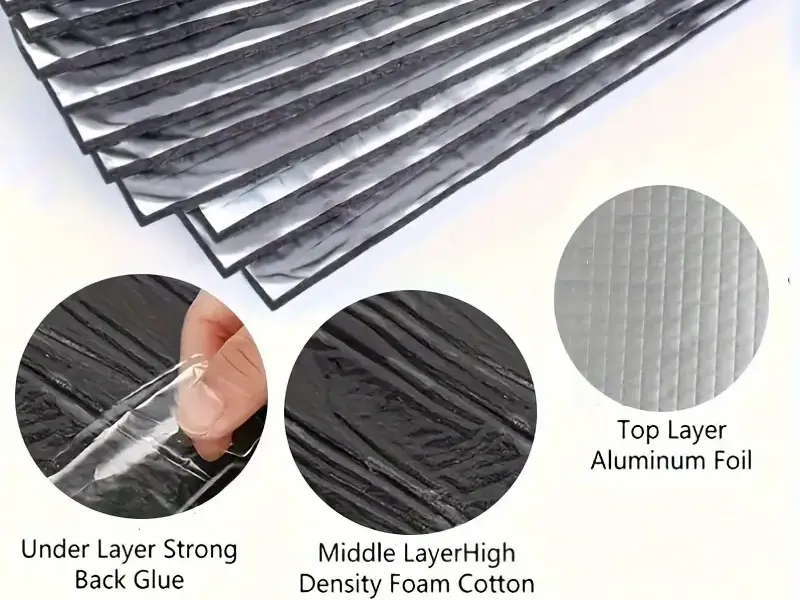
This uses a layer of chemically cross-linked polyethylene foam. It is thicker, usually between 3mm and 20mm. It provides both heat insulation and sound insulation. It is great for residential villas.
4. Woven Fabric Laminated Foil
In this type, aluminum foil is glued to a woven plastic fabric. It is almost impossible to tear by hand. It is used in large-scale industrial projects and agricultural buildings in Saudi Arabia.
Types
There are several ways to apply aluminum foil for insulation in Saudi Arabia. Depending on the project, you might choose a pure foil or a composite material.
1. Pure Aluminum Foil Rolls
These are large industrial rolls used by manufacturers to create insulation boards or flexible ducts.
- Surface: One side bright or both sides bright.
- Application: Base layer for fiberglass or rock wool.
2. Aluminum Foil Laminated with Bubble (Reflective Bubble Insulation)
This type uses a layer of polyethylene bubbles between two layers of aluminum foil. It provides an air gap that significantly reduces heat transfer.
- Best for: Metal buildings, warehouses, and garage doors.
3. Aluminum Foil Scrim Kraft (FSK Insulation)
FSK is a flame-retardant vapor barrier. It consists of aluminum foil, glass fiber reinforcing scrim, and kraft paper.
- Best for: Duct wrapping in HVAC systems and pipe insulation.
Primary Applications in the Saudi Market
The construction boom in cities like Riyadh, Jeddah, and NEOM has increased the demand for high-quality insulation.
Roofing and Wall Insulation
- Used under roof tiles or metal sheets to block sun heat.
- Installed within cavity walls to improve the energy efficiency of villas.
HVAC and Air Ducting
- Aluminum foil for insulation in Saudi Arabia is vital for cooling systems.
- It prevents condensation in AC ducts, which is a common problem in humid coastal areas.
Industrial and Cold Storage
- Used in the construction of cold stores for food and medicine.
- Provides a sterile and heat-proof environment for sensitive goods.
Comparison: Aluminum Foil vs. Other Materials
When planning a project, it is important to compare aluminum foil with traditional mass insulation like fiberglass or foam.
| Feature | Aluminum Foil | Fiberglass | Synthetic Foam |
| Heat Type | Reflects Radiant Heat | Absorbs Conductive Heat | Blocks Conductive Heat |
| Moisture | 100% Vapor Barrier | Can absorb moisture | Varies by type |
| Space | Very Thin | Bulky | Medium Thickness |
| Installation | Easy / No Mask Needed | Requires Protective Gear | Easy to Install |
Choosing the Right Supplier for Saudi Projects
When sourcing aluminum foil for insulation in Saudi Arabia, look for suppliers who understand the local standards and environmental challenges.
Quality Standards to Verify
- Tensile Strength: Ensuring the foil won’t tear during lamination.
- Oxidation Resistance: Critical for materials used in coastal cities like Dammam.
- Core Specifications: We provide standard core sizes ($76mm$ or $152mm$) to fit local manufacturing machines.
Delivery and Packaging
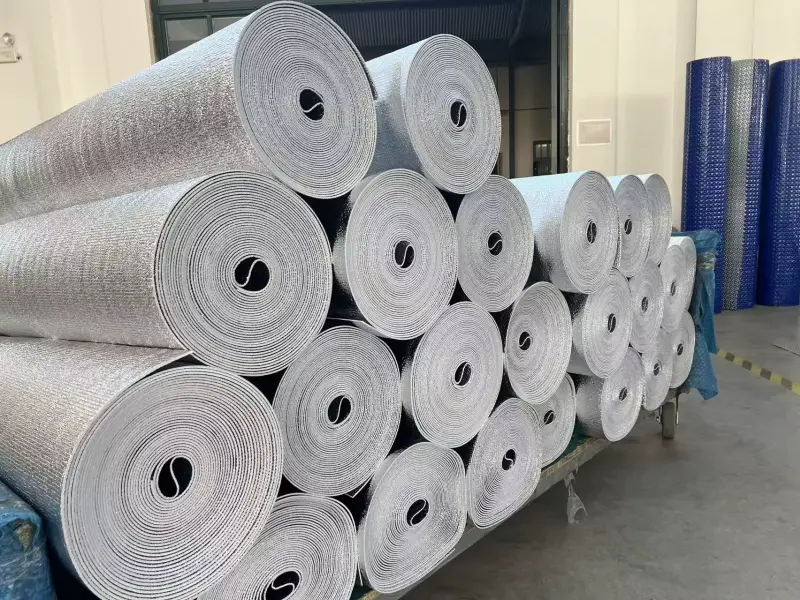
For international orders to Saudi Arabia, we use heavy-duty wooden crates. Each roll is wrapped in a moisture-proof film to ensure it arrives in perfect condition, even after weeks at sea.
Key Applications in Saudi Arabia
The use of aluminum foil for insulation in Saudi Arabia is visible in many sectors.
Construction and Buildings
- Roof Insulation: Installed under the tiles or metal sheets to block the sun.
- Wall Insulation: Placed inside cavity walls to keep the interior cool.
- Attics: Used as a radiant barrier to stop heat from entering the living space.
HVAC and Air Conditioning
- Duct Wrapping: Wrapping AC ducts with foil prevents cool air from getting warm as it travels through the building.
- Pipe Insulation: Used for chilled water pipes in large cooling plants.
Industrial and Logistics
- Cold Storage: Used in warehouses that store food or medicine.
- Container Liners: Protecting goods inside shipping containers from the desert heat during transport.
Comparison: Aluminum Foil vs. Other Materials
How does aluminum foil compare to other common insulation materials used in KSA?
| Feature | Aluminum Foil | Rockwool / Glasswool | Styrofoam (EPS) |
|---|---|---|---|
| Heat Type | Blocks Radiant Heat | Blocks Conductive Heat | Blocks Conductive Heat |
| Thickness | Very Thin (<1mm) | Thick (50mm+) | Thick (25mm+) |
| Moisture | Waterproof | Absorbs water (bad) | Waterproof |
| Space | Saves Space | Takes a lot of space | Takes space |
| Durability | High (does not rot) | Can sag over time | Can be eaten by pests |
Installation Tips for the Saudi Climate
To get the most out of aluminum foil for insulation in Saudi Arabia, installation must be done correctly.
1. Leave an Air Gap
A radiant barrier needs an air space of at least 10mm to 20mm to work. If the foil touches the hot roof directly, it will conduct heat instead of reflecting it.
2. Seal the Joints
Use aluminum foil tape to seal every edge. This prevents hot air from leaking through the gaps.
3. Keep it Clean
Dust can reduce the reflectivity of the foil. In the dusty environment of Saudi Arabia, try to install the foil in a way that minimizes dust buildup on the shiny surface.
Benefits for Building Owners in KSA
Investing in high-quality aluminum foil for insulation in Saudi Arabia offers long-term rewards.
- Lower Maintenance: Your AC units do not have to work as hard. This means they last longer and need fewer repairs.
- Fire Safety: Aluminum is naturally fire-resistant. It does not catch fire easily and does not spread flames.
- Environmental Protection: Reducing energy use helps Saudi Arabia meet its “Vision 2030” goals for sustainability.
- Comfort: The temperature inside the building stays stable. There are no “hot spots” near the walls or ceiling.
Frequently Asked Questions (FAQ)
Is aluminum foil for insulation expensive?
Initially, it costs more than basic plastic wraps. However, the savings on electricity bills usually pay for the insulation within 1 to 2 years.
Can I use household aluminum foil for insulation?
No. Household foil is too thin (around 12μm) and will tear easily. Industrial insulation foil is thicker and often reinforced with fibers or foam.
Does it work at night?
Yes. While its main job is reflecting the sun, it also helps keep the cool air inside the building during the night by acting as a vapor barrier.
Is it safe for health?
Yes. Aluminum foil is non-toxic and fiber-free. Unlike some types of glass wool, it does not release itchy fibers into the air.
Leave a Comment
You must be logged in to post a comment.