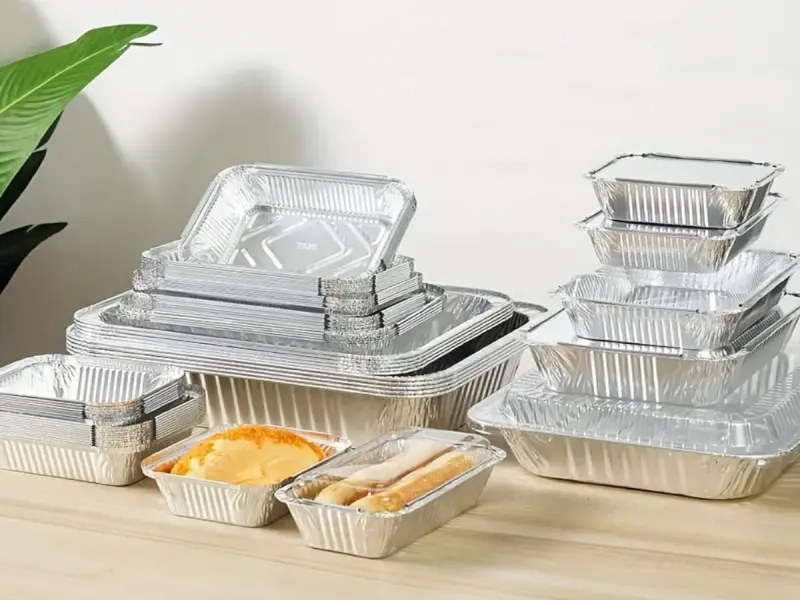
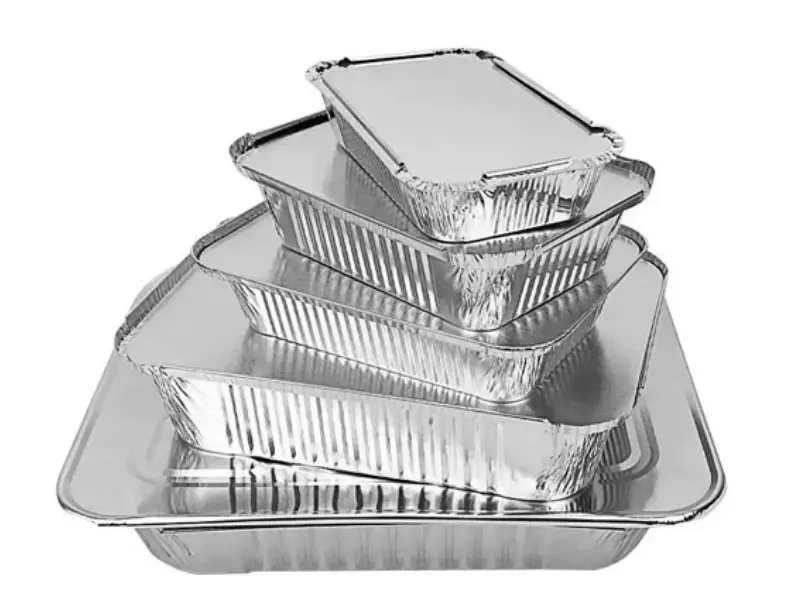
When it comes to food delivery, catering, and baking, choosing the right aluminum foil container sizes is critical. These containers are durable, heat-resistant, and recyclable. Whether you run a busy restaurant or a small bakery, understanding the different dimensions and types will help you save money and improve food presentation.
Technical Specifications: The Material Behind the Container
Before looking at the aluminium foil container sizes, it is important to know what they are made of. The quality of the container depends on the alloy and the temper (hardness) of the metal.
Alloy and Temper Table
| Feature | Specification | Why it matters |
|---|---|---|
| Common Alloy | Alloy 3003 | High strength and excellent corrosion resistance. |
| Alternative Alloy | Alloy 8011 | More flexible, often used for smaller or shallower trays. |
| Temper (State) | H22 / H24 | Semi-hard state. It makes the container rigid enough to hold weight. |
| Thickness | 0.04mm to 0.20mm | Thicker foil is used for “heavy-duty” catering trays. |
| Coating | Plain or Lacquered | Lacquered (coated) foil is used for acidic foods like tomatoes. |
Common Aluminum Foil Container Sizes and Shapes
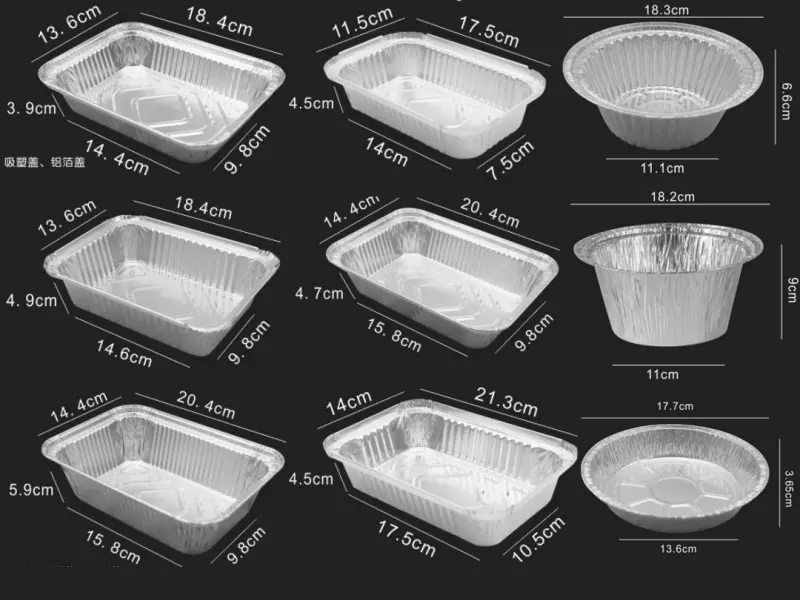
Aluminum containers come in hundreds of shapes. Most are categorized by their top dimensions (length and width) and their capacity in milliliters (ml) or ounces ($$oz$$).
1. Rectangular Takeaway Containers
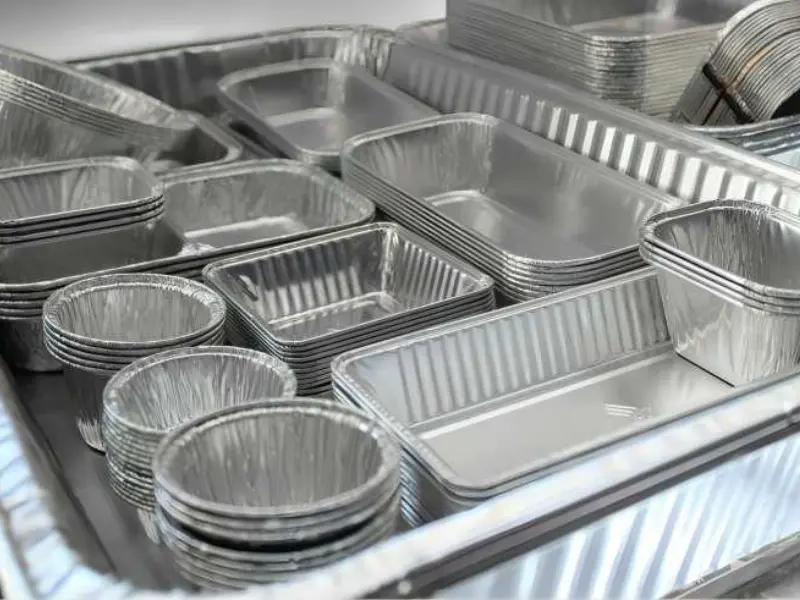
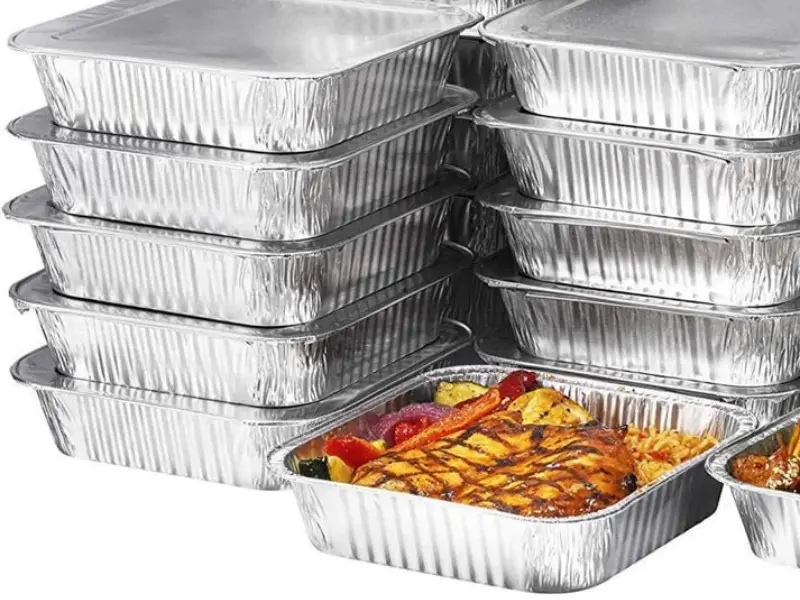
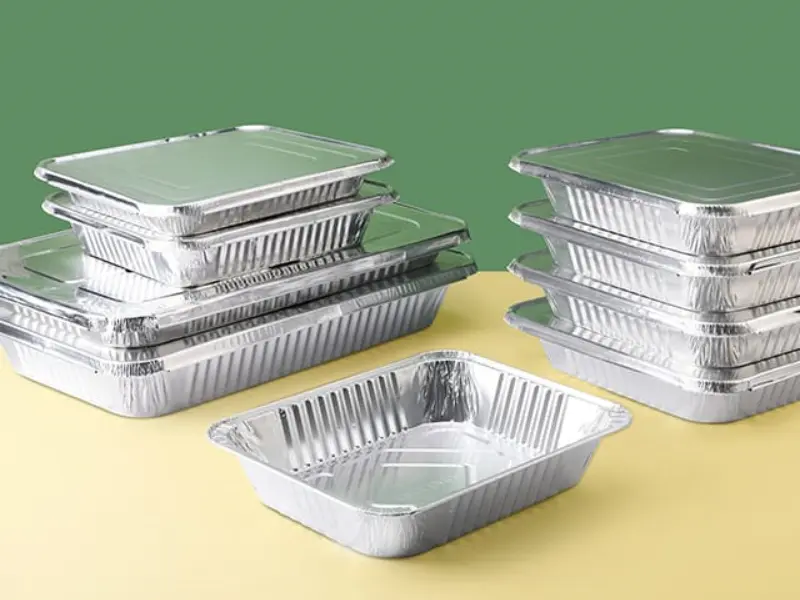
These are the most popular aluminium foil container sizes for food delivery services. They often come with cardboard or plastic lids.
| Product Code | Top Out (mm) | Depth (mm) | Capacity (ml) | Best Use |
|---|---|---|---|---|
| Small | 145 \times 120 | 40 | 450ml | Single portions of rice or sides. |
| Medium | 200 \times 110 | 55 | 700ml | Main courses, pasta, or stir-fry. |
| Large | 220 \times 160 | 50 | 1000ml | Family-sized meals or salads. |
| Extra Large | 320 \times 260 | 60 | 2500ml | Buffet service and catering. |
2. Round Foil Containers
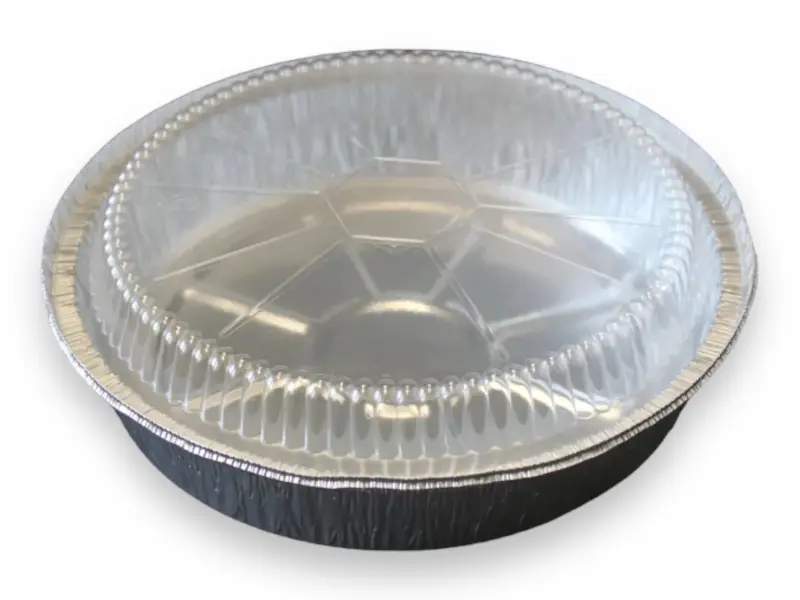
Round containers are frequently used for pies, cakes, and specialty dishes like Quiche.
| Diameter (mm) | Depth (mm) | Capacity (ml) | Application |
|---|---|---|---|
| 80mm | 35 | 120ml | Small egg tarts or muffins. |
| 150mm | 40 | 500ml | Small round cakes or pies. |
| 200mm | 45 | 1100ml | Standard family pies. |
| 230mm | 50 | 1500ml | Large pizzas or roasted meats. |
Deep Dive into Applications
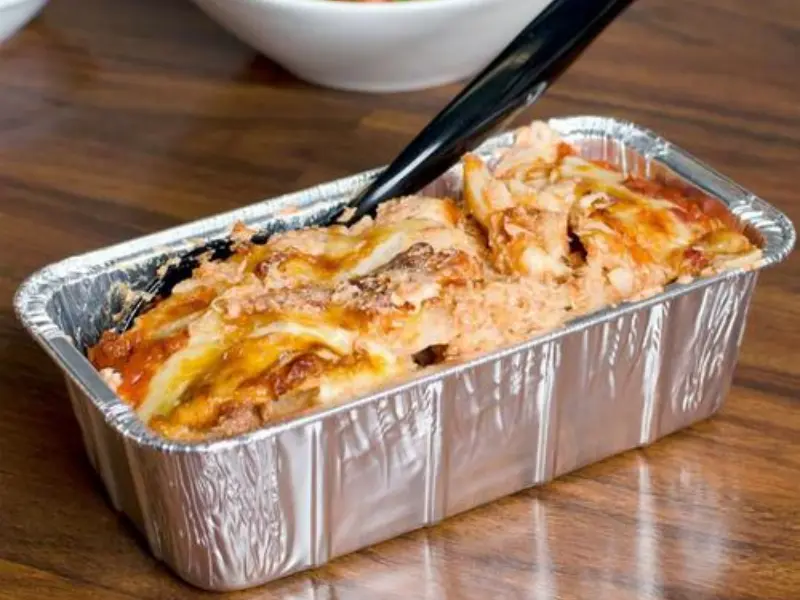
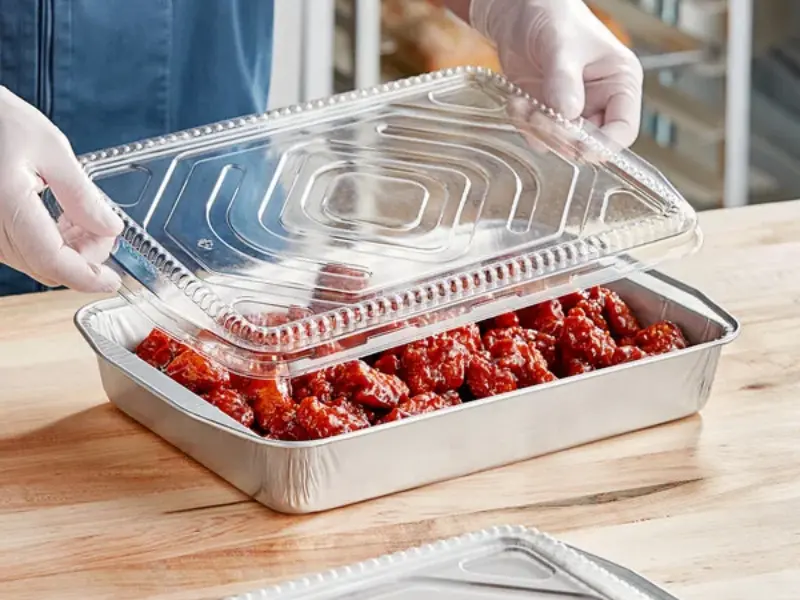
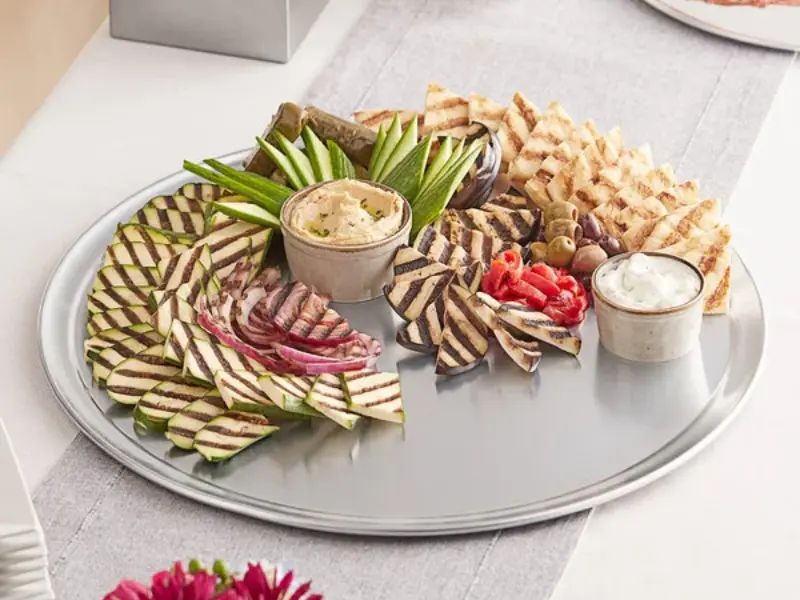
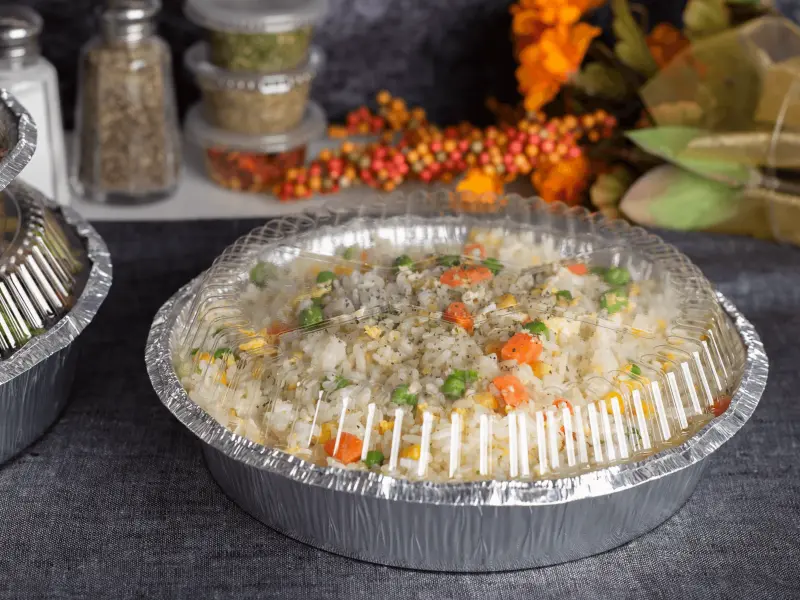
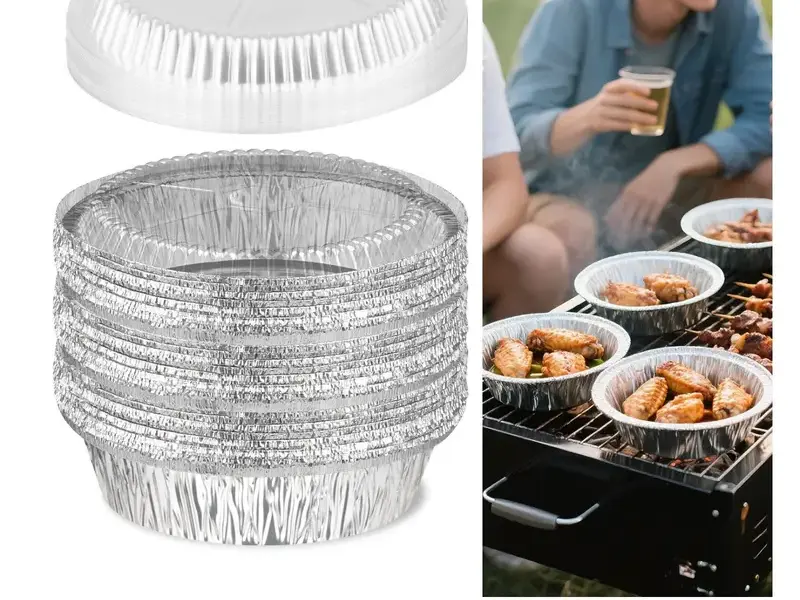
Because they can go from the freezer to the oven, they are the “all-in-one” solution for the food industry.
1. Restaurant and Takeaway Services
Most modern restaurants use rectangular aluminium foil containers for hot food delivery.
- Heat Retention: Keeps food hot during the delivery trip.
- Leak-Proof: When used with a crimped lid, it prevents sauces from spilling.
- Safety: It is much more stable than thin plastic containers when holding hot oil or grease.
2. Bakery and Pastry Shops
Bakers use specific aluminium foil container sizes for individual treats.
- Egg Tart Shells: Tiny round foils ($$70mm$$) for Portuguese egg tarts.
- Loaf Pans: Rectangular foils ($$200mm$$ length) for banana bread and pound cakes.
- Muffin Cups: Used to line baking trays for easy cleanup.
3. Airline Catering
If you have ever eaten on a plane, you have used an airline foil tray. These are designed to fit perfectly into the narrow heating ovens found in aircraft galleys.
- Standard Airline Size: Usually around $$160 \times 100mm$$.
- Multi-Compartment: Some trays have $$2$$ or $$3$$ sections to separate the meat from the vegetables.
4. Industrial Food Processing
Large food factories use foil containers for “Ready-to-Eat” meals.
- Frozen Meals: Foil can withstand temperatures as low as $$-40^{\circ}C$$.
- Oven Heating: Consumers can put the tray directly into the oven at $$220^{\circ}C$$.
Specialized Product Types
Compartment Foil Trays
These are great for balanced meals. You can find them in $$2$$-compartment or $$3$$-compartment versions.
- 2-Compartment: Often used for “Curry and Rice” or “Fish and Chips.”
- 3-Compartment: Used for traditional bento-style meals or school lunches.
Smoothwall Foil Containers
Standard foil containers have “wrinkles” on the sides. Smoothwall containers are premium products.
- Design: They look more like ceramic dishes.
- Sealing: They can be “top-sealed” with a plastic film to make them airtight.
- Price: The aluminium foil container price for smoothwall types is higher, but they are much stronger.
Why Choose Aluminium Containers?
There are many reasons why businesses prefer these over plastic or paper.
- Eco-Friendly: Aluminium is 100% recyclable. It can be recycled over and over without losing quality.
- Temperature Range: They work perfectly from the freezer to the high-heat oven.
- Non-Toxic: Aluminium does not leach chemicals into food, unlike some plastics.
- Stackable: Their tapered design allows them to be stacked, saving space in your kitchen or warehouse.
How to Measure Aluminium Foil Container Sizes
If you are buying from a wholesaler, you need to know how to read the measurements. Usually, three numbers are provided:
- Top Out: The measurement from the very outer edge to the other outer edge.
- Top In: The measurement of the inner opening where the food goes.
- Base: The size of the bottom of the container.
- Vertical Height: How deep the container is.
Quick Reference for Volume
| Volume (ml) | Volume (oz) | Typical Usage |
|---|---|---|
| 250ml | 8.5oz | Small side dish |
| 500ml | 17oz | Regular meal for one |
| 750ml | 25oz | Large pasta dish |
| 1000ml | 34oz | Family sharing portion |
Frequently Asked Questions
Can you put aluminium foil containers in the microwave?
Most modern microwaves can handle foil if the container is not touching the walls of the microwave. However, always check the manufacturer’s instructions.
Are there lids available for all aluminium foil container sizes?
Yes. Most suppliers offer two types of lids:
- Laminated Board Lids: Silver on one side, white on the other. You fold the foil edges over the lid.
- Plastic Dome Lids: Transparent lids that allow the customer to see the food. These usually “click” onto the rim.
What is the difference between 3003 and 8011 alloy?
Alloy 3003 is the industry standard for containers because it is stronger. Alloy 8011 is usually used for thinner household foil or very flexible packaging.
Which Size Do You Need?
| Your Business | Recommended Shape | Recommended Size |
|---|---|---|
| Fast Food Takeaway | Rectangular | 700ml or 1000ml |
| Commercial Bakery | Round / Loaf | 120ml to 500ml |
| Catering Event | Large Deep Tray | 2500ml to 5000ml |
| Airline Meals | Small Rectangular | 160 \times 100mm |
Selecting the right aluminum foil container sizes will improve your efficiency and keep your customers happy. By matching the capacity to your portion sizes, you reduce food waste and lower your packaging costs. Always look for high-quality Alloy 3003 to ensure your containers are strong enough for transport.