A technical reference for engineers, architects, and procurement teams — covering foil grades, cell geometry, core types, mechanical performance, and where honeycomb aluminum foil is used across industries.
WORTHWILL
How Honeycomb Aluminum Foil Works
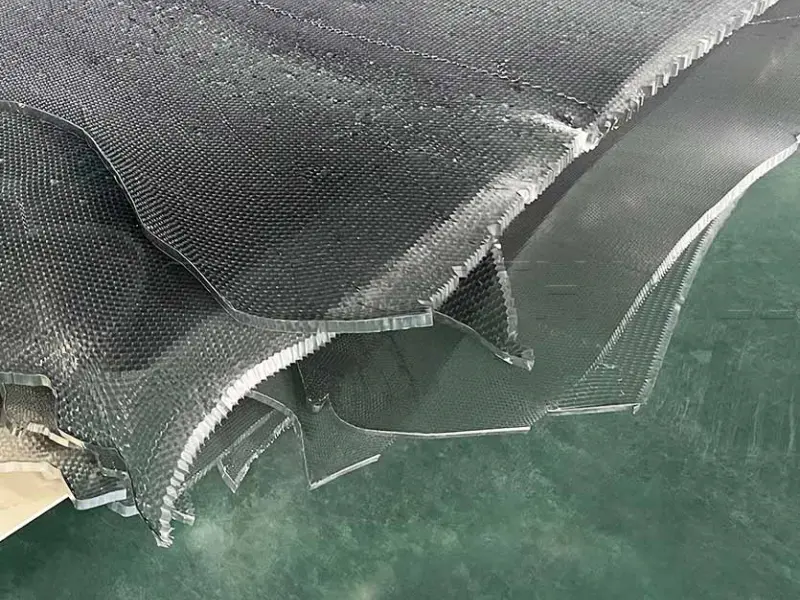
Honeycomb aluminum foil is a structured core material. Thin aluminum foil strips are bonded and expanded into a repeating hexagonal cell pattern. The result looks exactly like a natural honeycomb — rows of six-sided cells sharing walls.
Aluminum creates a large, stiff structure. The cells carry compressive load across their walls. Under bending, the core resists deformation the same way a structural beam does — material placed at a distance from the neutral axis is far more efficient than a solid cross-section of the same weight.
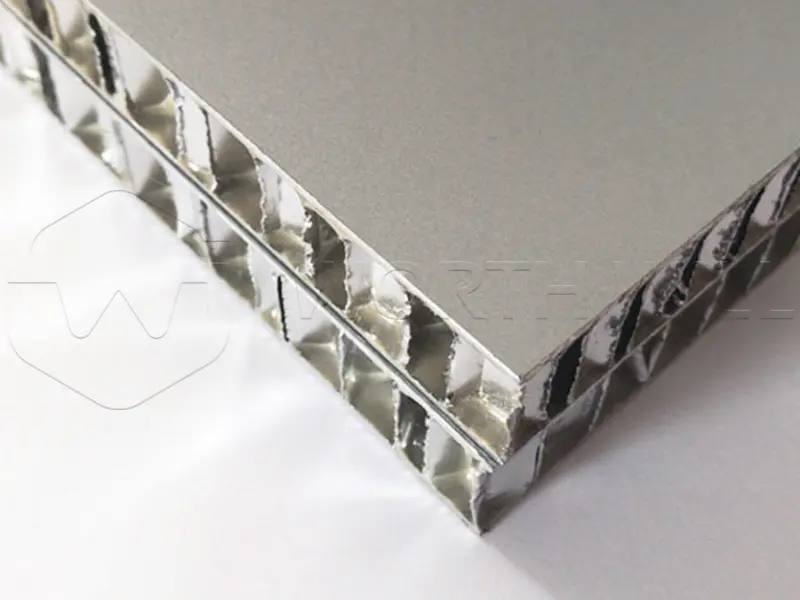
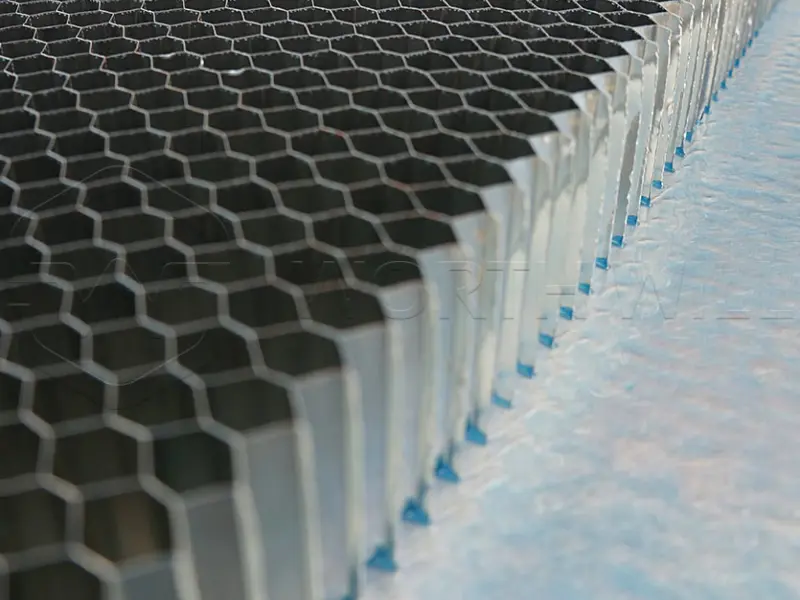
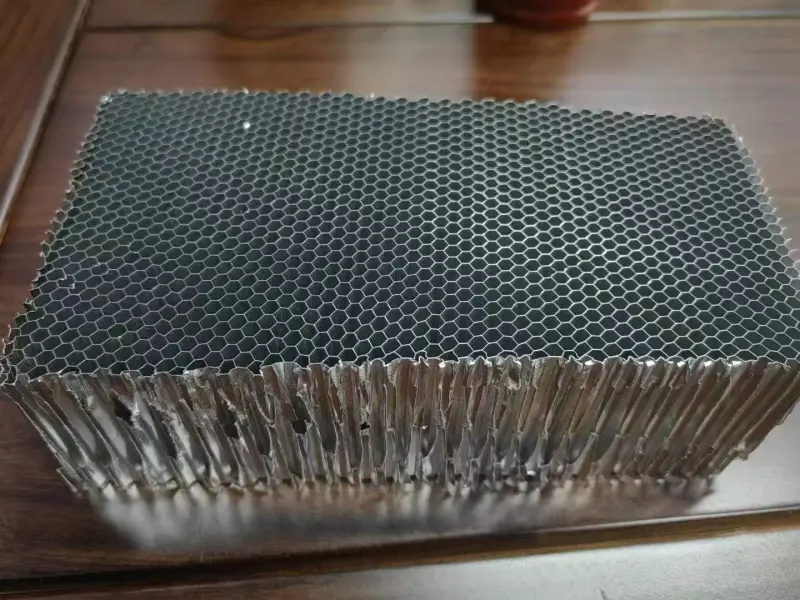
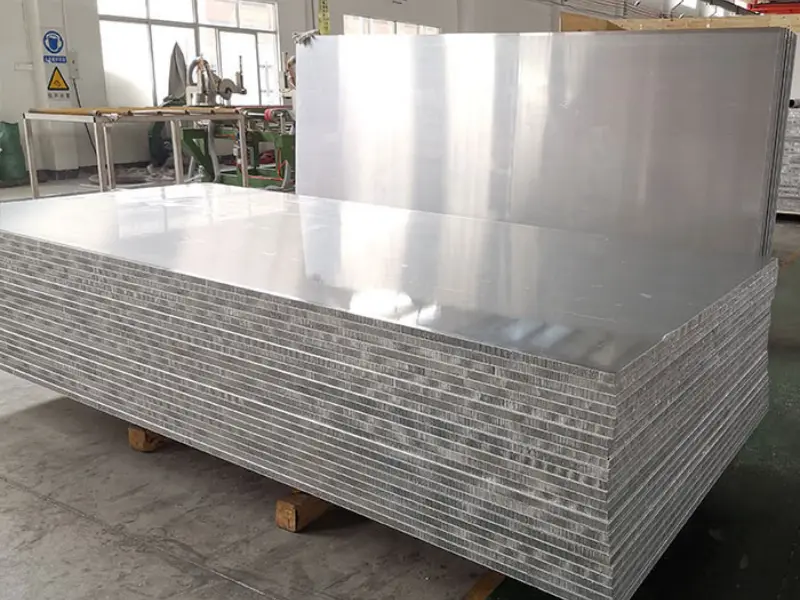
Honeycomb aluminum foil is not a finished product by itself. It is a core material. It gets bonded between two face sheets — aluminum, steel, composite, or glass — to form a honeycomb panel. The core carries shear loads; the face sheets carry bending loads.
The Numbers Behind the Structure
| Parameter | Typical Range | Notes |
|---|---|---|
| Foil thickness | 0.03 – 0.20 mm | Thicker foil = stronger, heavier core |
| Cell size (inscribed circle) | 3 – 25 mm | Smaller cell = higher strength, higher density |
| Core height | 3 – 200 mm | Taller core = higher bending stiffness |
| Core density | 16 – 130 kg/m³ | Depends on foil thickness + cell size |
| Compressive strength | 0.5 – 20 MPa | Depends on alloy, temper, cell size |
| Shear strength (L direction) | 1.0 – 8.0 MPa | L = ribbon direction |
| Shear strength (W direction) | 0.5 – 4.5 MPa | W = transverse direction |
Alloy Selection — What the Base Foil Is Made From
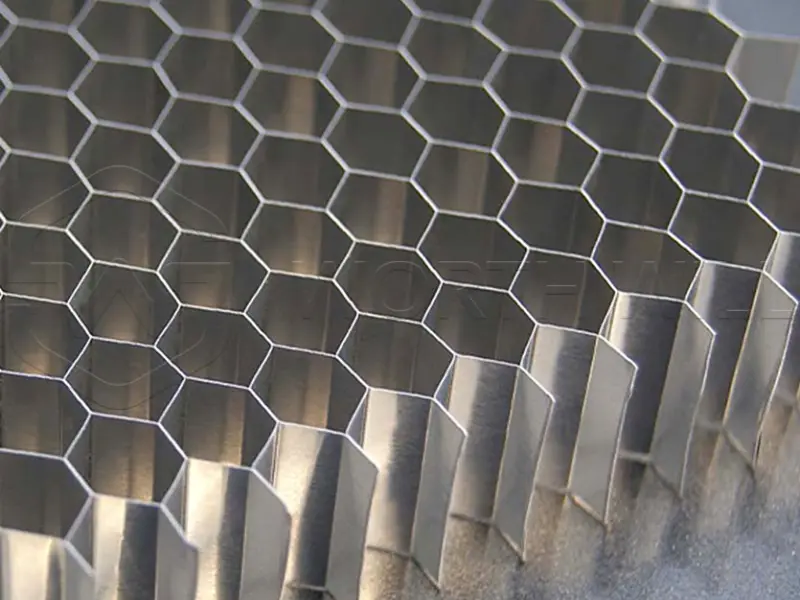
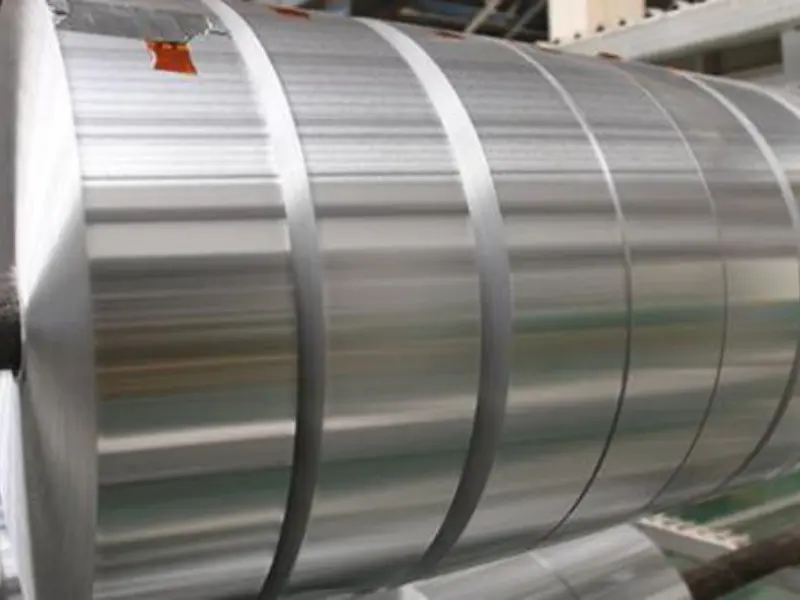
The alloy determines strength, corrosion resistance, and how well the foil bonds during the expansion process. Most honeycomb aluminum foil uses alloys from the 1xxx, 3xxx, or 5xxx series.
Alloy Comparison Table
| Alloy | Temper | Tensile Strength | Corrosion Resistance | Bondability | Typical Use |
|---|---|---|---|---|---|
| 1100 | O / H18 | Low–Medium | Excellent | Excellent | Lightweight decorative panels, non-structural cores |
| 1235 | O | Low | Excellent | Excellent | Thin foil cores, packaging honeycomb |
| 3003 | H18 / H19 | Medium | Very Good | Very Good | General structural panels, architectural cladding |
| 3004 | H18 | Medium–High | Very Good | Good | Higher-strength cores, transport panels |
| 5052 | H18 / H19 | High | Excellent | Good | Marine, aerospace, heavy-duty structural panels |
| 5056 | H18 | High | Excellent | Moderate | Aerospace cores, high-performance structures |
| 5182 | H18 | High | Excellent | Good | High-strength transport and industrial cores |
3003 — The Most Common Choice
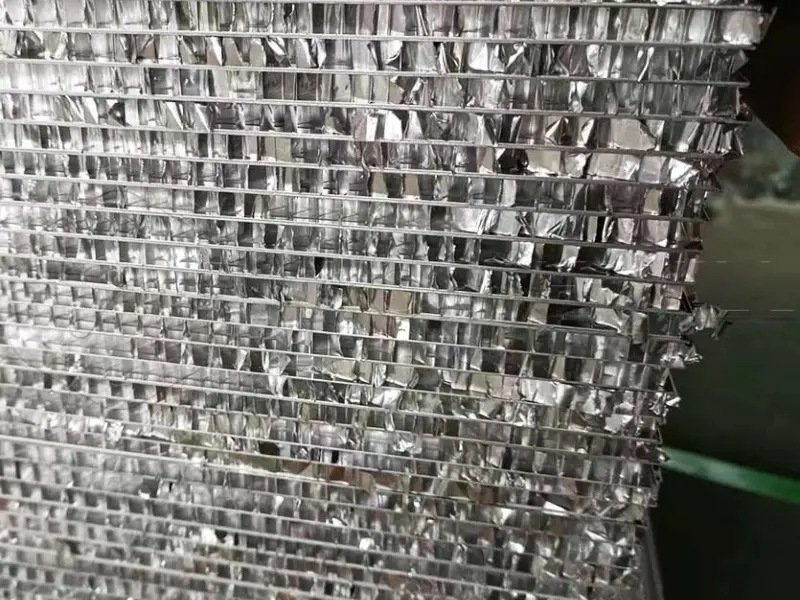
3003-H18 is the standard alloy for most commercial honeycomb aluminum foil. It has good strength, excellent workability, and a consistent surface for adhesive bonding. It is the baseline for architectural panels, furniture cores, and general industrial applications.
5052 — For Demanding Environments
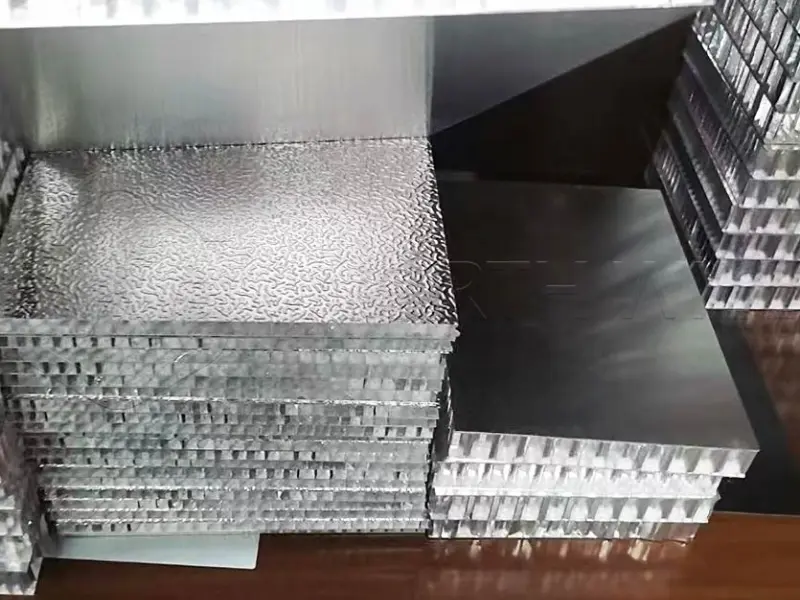
5052-H18 or H19 is specified when the panel will face salt water, chemical exposure, or higher mechanical loads. Magnesium gives it significantly better corrosion resistance than 3003. It is the standard for marine vessel interiors, offshore platforms, and coastal architectural cladding.
1100 — For Thin and Lightweight Cores
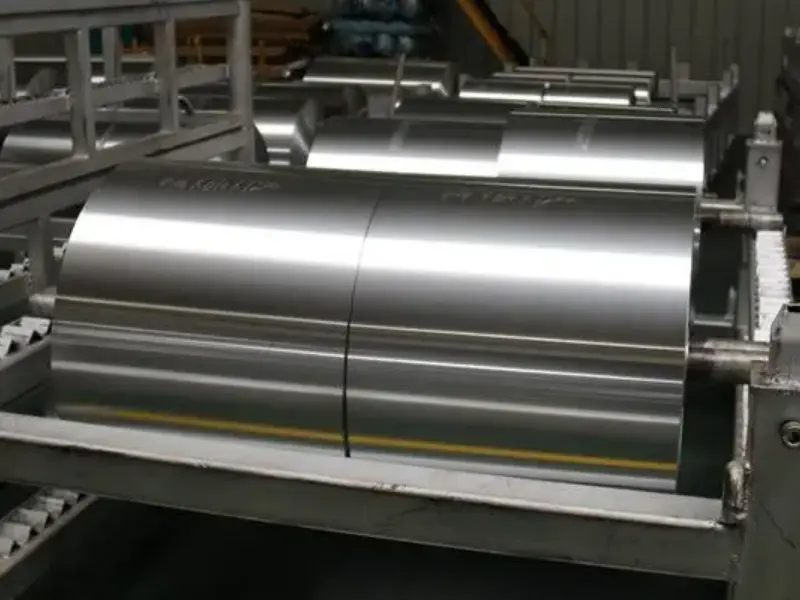
1100 foil at 0.03–0.06 mm produces very low-density cores. Used where minimum weight is the priority and structural loads are low — packaging honeycomb, lightweight display panels, and interior decorative applications.
Foil Thickness vs. Cell Size — How They Work Together
These two parameters control most of the core’s mechanical properties. They are specified together.
| Foil Thickness (mm) | Cell Size (mm) | Core Density (kg/m³) | Compressive Strength (MPa) | Typical Application |
|---|---|---|---|---|
| 0.03 | 6 – 10 | 16 – 25 | 0.5 – 1.5 | Packaging, lightweight display panels |
| 0.04 | 6 – 10 | 20 – 32 | 0.8 – 2.0 | Interior furniture panels, doors |
| 0.05 | 6 – 8 | 28 – 40 | 1.5 – 3.0 | Partition walls, ceiling panels |
| 0.06 | 4 – 6 | 35 – 55 | 2.5 – 5.0 | Architectural cladding, floor panels |
| 0.08 | 3 – 6 | 45 – 70 | 4.0 – 8.0 | Transport vehicle floors, structural panels |
| 0.10 | 3 – 5 | 55 – 90 | 6.0 – 12.0 | Rail car floors, aerospace secondary structure |
| 0.15 | 3 – 4 | 75 – 110 | 10.0 – 16.0 | High-load structural panels, heavy transport |
| 0.20 | 3 | 95 – 130 | 14.0 – 20.0 | Maximum-load industrial cores |
Smaller cell size + thicker foil = higher strength + higher weight. Larger cell size + thinner foil = lower weight + lower strength.
The right combination depends on the load the panel must carry and the weight budget available.
Cell Geometry — Not Always Hexagonal
Standard honeycomb uses regular hexagonal cells. But other cell shapes are available for specific performance requirements.
Regular Hexagonal Cell
Over-Expanded (OX) Cell
Under-Expanded (UX) Cell
Cells compressed in the W direction. Produces a narrower, taller cell. Higher shear strength in the W direction compared to standard. Less common; used for specialized structural applications.
Reinforced Cell (Double Wall)
Some cell walls are doubled — two foil layers bonded together in the ribbon direction. Increases compressive and shear strength in the L direction without changing cell size. Used where a standard cell at a given density is not strong enough but moving to a smaller cell would add too much weight.
Flex-Core
Cells formed with a curved or corrugated profile rather than straight walls. Flex-core conforms easily to compound curves (curves in two directions simultaneously). Used for complex doubly-curved aerospace panels and architectural feature elements.
Cell Geometry Comparison
| Cell Type | Shape | Curve Capability | L Shear | W Shear | Common Use |
|---|---|---|---|---|---|
| Regular hexagonal | Regular hex | Flat only | High | Moderate | General structural panels |
| Over-expanded (OX) | Rectangular | Single curve | Moderate | High | Curved panels, boat interiors |
| Under-expanded (UX) | Narrow hex | Flat | High | High | High-shear structural use |
| Double wall | Regular hex | Flat | Very High | Moderate | Heavy-load panels |
| Flex-core | Curved walls | Compound curve | Moderate | Moderate | Aerospace, complex façades |
Surface Treatment Options for Honeycomb Foil
Raw aluminum honeycomb core has good corrosion resistance. Surface treatment improves it further and helps adhesive bonding.
| Treatment | Method | Corrosion Resistance | Bond Strength | Extra Weight | Use Case |
|---|---|---|---|---|---|
| None (mill finish) | — | Good | Good | None | Dry interior applications |
| Chromate conversion | Chemical | Very Good | Excellent | Negligible | Aerospace, structural bonding |
| Phosphoric acid anodize (PAA) | Electrochemical | Excellent | Excellent | Negligible | Aerospace primary structure |
| Epoxy primer | Spray coat | Excellent | Good | Slight | Marine, transport, industrial |
| PTFE / non-stick | Spray coat | Excellent | Moderate | Slight | Chemical resistance applications |
| Anodize (standard) | Electrochemical | Excellent | Good | Negligible | Architectural visible cores |
Product Forms — How Honeycomb Aluminum Foil Is Supplied
Expanded Core Block
The most common supply form. A rectangular block of expanded honeycomb, typically 1220 mm × 2440 mm (4×8 ft) in plan, cut to the core height required. Buyers slice panels from the block using a band saw or wire saw.
Sliced Core Sheet
Pre-sliced from the block to a specified height. Ready for bonding directly to face sheets. Saves the buyer a processing step. Common thicknesses from 3 mm to 100 mm.
Perforated Core
Holes punched through the cell walls before expansion. Allows resin flow-through during composite panel manufacture. Used in resin-infusion and pre-preg composite panel production.
Adhesive-Coated Core
Heat-activated film adhesive pre-applied to the top and/or bottom face of the core. Press the core between face sheets and apply heat. Simplifies panel manufacturing and gives consistent bond line thickness.
Bent / Curved Core
Core pre-formed to a radius before delivery. Single-curve panels can be ordered with the core already curved. Eliminates the need for the panel maker to form the core during assembly.
Continuous Roll (Unexpanded)
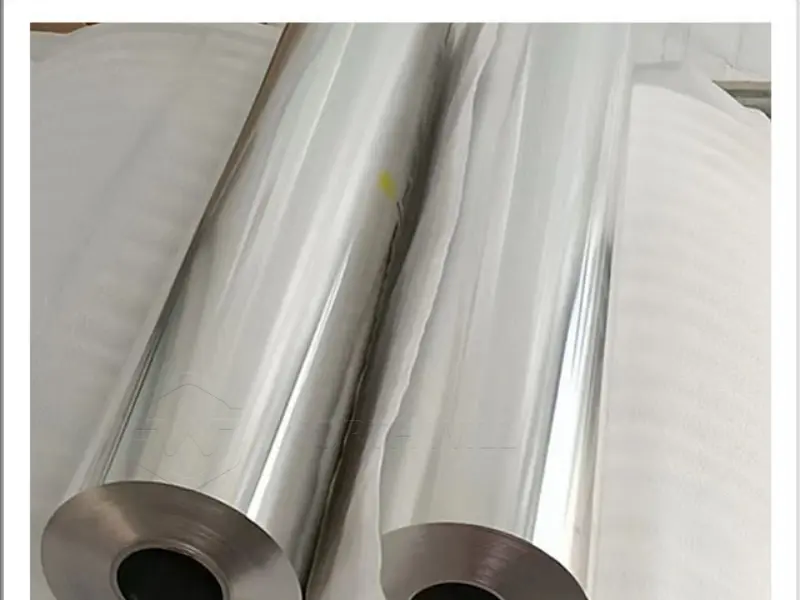
Unexpanded node-bonded foil supplied in roll form. The buyer expands it on their own equipment. Used by large panel manufacturers with in-house expansion lines. Offers lower shipping cost and allows the buyer to control expansion ratio.
Product Form Comparison
| Form | Buyer Process Required | Min. Order | Lead Time | Cost Level |
|---|---|---|---|---|
| Block | Slice to height + bond | 1 block | In stock | $ |
| Sliced sheet | Bond only | 10 sheets | In stock / 1–2 wk | $$ |
| Perforated core | Bond only | 50 kg | 2–4 weeks | $$ |
| Adhesive-coated | Press + heat only | 20 sheets | 2–3 weeks | $$$ |
| Pre-bent core | Bond only | 10 pcs | 2–4 weeks | $$$ |
| Unexpanded roll | Expand + slice + bond | 500 kg | 4–8 weeks | $ |
Where Honeycomb Aluminum Foil Is Used
Architecture & Construction
- Exterior façade cladding panels
- Interior partition walls and movable wall systems
- Ceiling tiles and suspended ceiling panels
- Raised access floor panels
- Elevator cab wall and ceiling panels
- Clean room wall and ceiling systems
- Stadium seating and grandstand panels
- Curtain wall infill panels
Transportation
- Rail car floors, walls, and ceiling panels
- Bus and coach floor panels
- Truck body panels and side walls
- Refrigerated trailer insulation panels
- Ship and ferry interior panels
- Subway station platform and tunnel panels
Aerospace & Defense
- Aircraft interior ceiling and wall panels
- Aircraft floor panels (cargo and passenger)
- Helicopter interior and exterior structural panels
- Spacecraft structural panels
- Radome cores
- Military shelter and vehicle panels
Industrial & Technical
- Machine enclosure panels
- Clean room equipment panels
- Vibration-damping platform floors
- Acoustic barrier and soundproofing panels
- Thermal insulation composite panels
- Workbench and table tops (precision flatness)
Furniture & Interior Design
- Lightweight door cores
- Table tops and desk surfaces
- Modular display systems and exhibition stands
- Kitchen cabinet panel inserts
- Decorative feature wall panels
Honeycomb Aluminum Foil vs. Alternative Core Materials
| Core Material | Density (kg/m³) | Compressive Strength | Cost | Moisture Resistance | Recyclability | Best For |
|---|---|---|---|---|---|---|
| Aluminum honeycomb | 16 – 130 | High | Medium | Excellent | Excellent | Structural panels, aerospace, transport |
| Nomex honeycomb | 24 – 144 | Very High | Very High | Good | Poor | Aerospace primary structure |
| Polypropylene honeycomb | 60 – 120 | Medium | Low | Good | Good | Interior panels, packaging |
| PVC foam | 30 – 200 | Low–Med | Low | Moderate | Poor | Marine, wind energy, furniture |
| Balsa wood | 100 – 200 | Medium | Medium | Poor | Moderate | Marine, wind turbine blades |
| Steel honeycomb | 50 – 200 | Very High | High | Good | Excellent | Heavy-load industrial panels |
| Cardboard honeycomb | 30 – 100 | Low | Very Low | Very Poor | Good | Packaging, disposable doors |
Aluminum honeycomb sits in a unique position — it is light, strong, moisture-resistant, and recyclable at end of life. No other core material combines all four of these properties at the same price point.
Mechanical Performance — Key Data for Specification
Engineers need these numbers to design panels properly. The values below are typical for 3003-H18 honeycomb at common cell sizes and foil thicknesses.
Compressive Properties
| Cell Size (mm) | Foil Thickness (mm) | Density (kg/m³) | Bare Compressive Strength (MPa) | Stabilized Compressive Strength (MPa) |
|---|---|---|---|---|
| 10 | 0.04 | 22 | 0.9 | 1.4 |
| 8 | 0.05 | 35 | 1.8 | 2.8 |
| 6 | 0.06 | 55 | 3.5 | 5.2 |
| 4 | 0.08 | 82 | 7.2 | 10.5 |
| 3 | 0.10 | 110 | 12.0 | 17.0 |
Shear Properties
| Cell Size (mm) | Foil Thickness (mm) | L Shear Strength (MPa) | L Shear Modulus (MPa) | W Shear Strength (MPa) | W Shear Modulus (MPa) |
|---|---|---|---|---|---|
| 10 | 0.04 | 0.8 | 180 | 0.5 | 90 |
| 8 | 0.05 | 1.4 | 280 | 0.8 | 140 |
| 6 | 0.06 | 2.2 | 420 | 1.3 | 210 |
| 4 | 0.08 | 3.8 | 680 | 2.2 | 340 |
| 3 | 0.10 | 5.5 | 950 | 3.2 | 480 |
L = ribbon direction; W = transverse direction. Values are indicative — confirm with material test certificates for structural design.
Frequently Asked Questions
What is honeycomb aluminum foil used for?
Core Material in Sandwich Panels Honeycomb aluminum foil is the core layer in sandwich panels. Face sheets of aluminum, steel, glass fiber, or carbon fiber are bonded to both sides. The resulting panel is extremely stiff and light — far better than solid material of the same weight.
Beyond Panels It also appears as an energy-absorbing crash structure in vehicles, as a flow-straightener in wind tunnels and HVAC ducting, and as a shielding core in EMI/RFI suppression applications.
What alloy is best for structural honeycomb cores?
3003-H18 — General Structural Use The most widely used alloy. Good strength, very good corrosion resistance, easy to bond. Right for architectural, transport, and general industrial panels.
5052-H18 or H19 — High-Performance Use Higher strength and better corrosion resistance than 3003. Specified for marine, offshore, and aerospace applications where 3003 is not strong enough or where long-term exposure to moisture or salt is expected.
What cell size should I specify?
For Light-Duty Applications (Ceilings, Doors, Furniture) 6–10 mm cell with 0.04–0.05 mm foil. Low density, low cost, adequate stiffness for non-structural panels.
For Medium-Duty Applications (Floor Panels, Partitions, Cladding) 4–6 mm cell with 0.06–0.08 mm foil. Good strength-to-weight ratio for most architectural and transport applications.
For Structural Applications (Aerospace, Heavy Transport, Load Floors) 3–4 mm cell with 0.08–0.15 mm foil. High compressive and shear strength. Higher density and cost, but necessary where loads are significant.
How is honeycomb aluminum foil manufactured?
Expansion Process Node adhesive is applied in parallel strips to flat foil. Sheets are stacked and the adhesive is cured. The resulting block is then pulled apart (expanded) to open the hexagonal cells. This is the most common method for structural cores.
Corrugation Process Foil is corrugated into a sinusoidal wave shape, then the corrugated strips are bonded node-to-node. Produces a more consistent cell geometry than expansion. Used for precision aerospace cores and some specialty applications. More expensive than the expansion method.
What is the difference between cell size and foil thickness?
Cell Size The diameter of the inscribed circle inside one hexagonal cell. Smaller cell = more cell walls per unit area = higher density and strength. Larger cell = fewer walls = lighter and weaker.
Foil Thickness The thickness of the aluminum strip that forms the cell walls. Thicker foil = heavier cell walls = higher compressive and shear strength. Thinner foil = lighter core = lower strength.
How They Interact You can achieve similar density with different combinations — a large cell with thick foil can have the same density as a small cell with thin foil. But the mechanical properties will differ. Thick foil gives better compressive strength; small cell gives better shear performance per unit of density.
Can honeycomb aluminum foil be used outdoors?
Yes — With the Right Alloy and Surface Treatment 3003-H18 with chromate conversion or epoxy primer performs well in most outdoor environments for 20–30 years when properly bonded inside a sealed panel. The face sheet and edge sealing protect the core from direct moisture exposure.
For Marine and Coastal Environments Specify 5052-H18 or H19 with epoxy primer. Edge sealing with moisture-resistant sealant is essential. The face sheets should also be 5052 or better. Properly assembled marine honeycomb panels last 25+ years in salt air environments.
What adhesives bond honeycomb aluminum cores to face sheets?
Film Adhesive (Aerospace Standard) Modified epoxy film adhesive is the standard for aerospace panels. It gives very consistent bond line thickness and high peel and shear strength. Requires oven or autoclave curing at 120–180°C.
Paste Adhesive Two-component epoxy or polyurethane paste. Lower cost than film adhesive. Applied by spreader or notched trowel. Suitable for architectural and transport panels. Room temperature curing available.
Polyurethane Hot Melt Applied hot, bonds on cooling. Fast processing for high-volume production lines. Good for furniture panels and interior applications. Not recommended for high-temperature or structural aerospace use.
What are standard panel sizes for honeycomb aluminum cores?
Block Size Standard expanded block is 1220 mm × 2440 mm (4 ft × 8 ft) in plan. Core height varies from 3 mm to 200 mm depending on specification. Other block sizes (1000×2000 mm, 1500×3000 mm) are available from most manufacturers.
Custom Sizes Most suppliers can slice or cut custom dimensions from standard blocks. Minimum order for custom sizes is typically 20–50 sheets. Very large custom blocks (up to 2400×6000 mm) are available from specialist manufacturers for aerospace and large transport applications