Aluminum Foil with a Non-Stick Coating
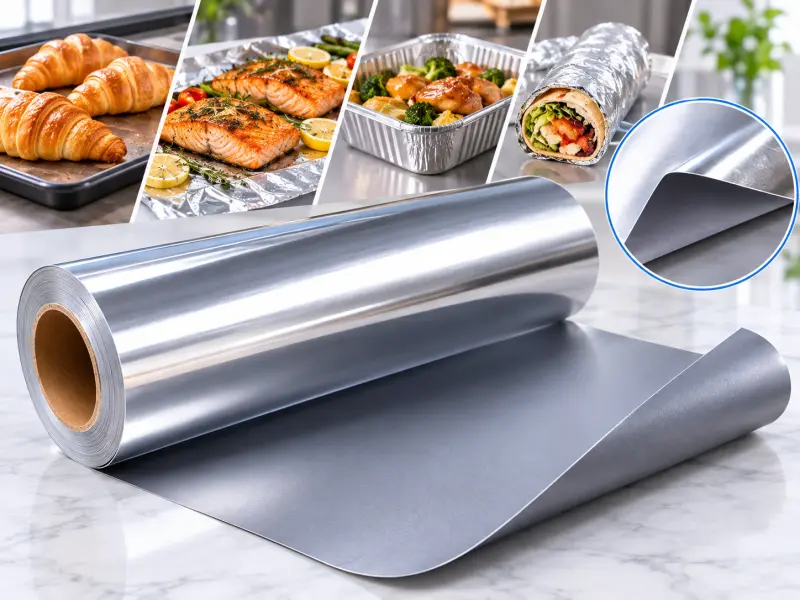
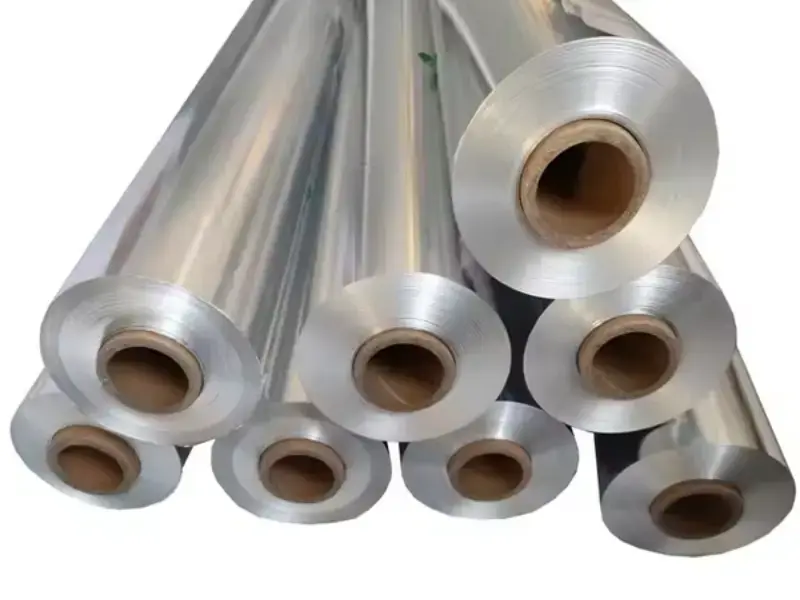
Aluminum foil with a non-stick coating is designed for food preparation, baking, grilling, roasting, and food packaging. It combines the heat transfer properties of aluminum foil with a coated surface that helps food release more easily.
Unlike standard aluminum foil, non-stick aluminum foil has a special coating on one side or both sides, depending on the product design. This surface can reduce food sticking and make cooking and cleaning easier.
It is available in different alloys, thicknesses, widths, roll lengths, and coating types. Food manufacturers, catering companies, supermarkets, and household product brands can choose suitable specifications for their needs.
What Is Non-Stick Aluminum Foil?
Non-stick aluminum foil is a thin aluminum sheet with a functional coating on its surface.
The aluminum layer provides flexibility, heat conductivity, and a barrier against light and moisture. The coating helps reduce direct contact between food and the metal surface.
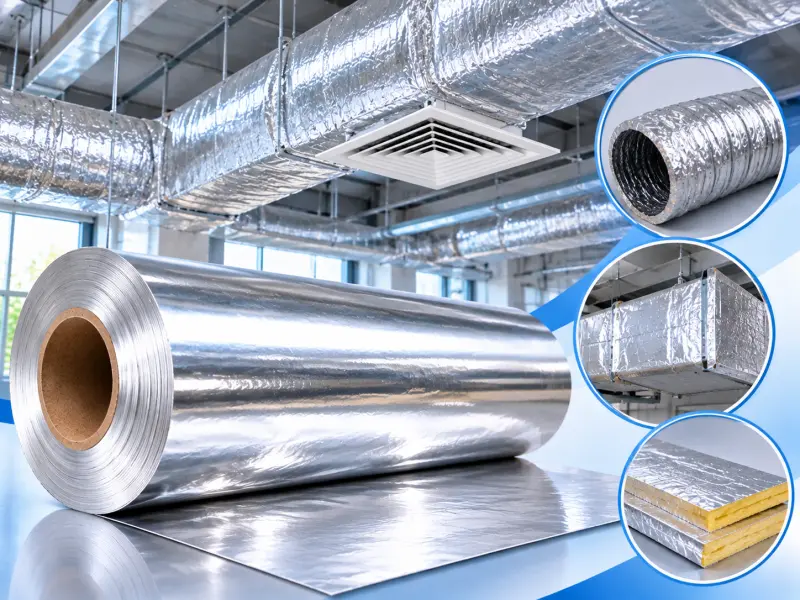
The coated side is usually designed to face the food. However, the correct side depends on the manufacturer’s instructions.
| Feature | Description |
|---|---|
| Base material | Aluminum foil |
| Surface | Non-stick coated |
| Coating | Food-contact suitable coating |
| Appearance | Silver, coated or colored surface |
| Form | Roll, sheet or customized format |
| Main function | Easier food release |
| Main uses | Baking, grilling, roasting and food preparation |
The coating type should be selected according to the cooking temperature, food type, and intended application. Always check the food-contact compliance and temperature limits of the finished product.
Aluminum Alloys Used for Non-Stick Foil
The aluminum alloy affects the strength, flexibility, and processing performance of the foil. Different alloys are used for different food packaging and household applications.
| Alloy | Main Features | Typical Applications |
|---|---|---|
| 1235 | High aluminum purity, good flexibility | Flexible foil products |
| 8011 | Good strength and formability | Household and food foil |
| 8079 | Good barrier performance and flexibility | Food packaging foil |
8011 Aluminum Foil
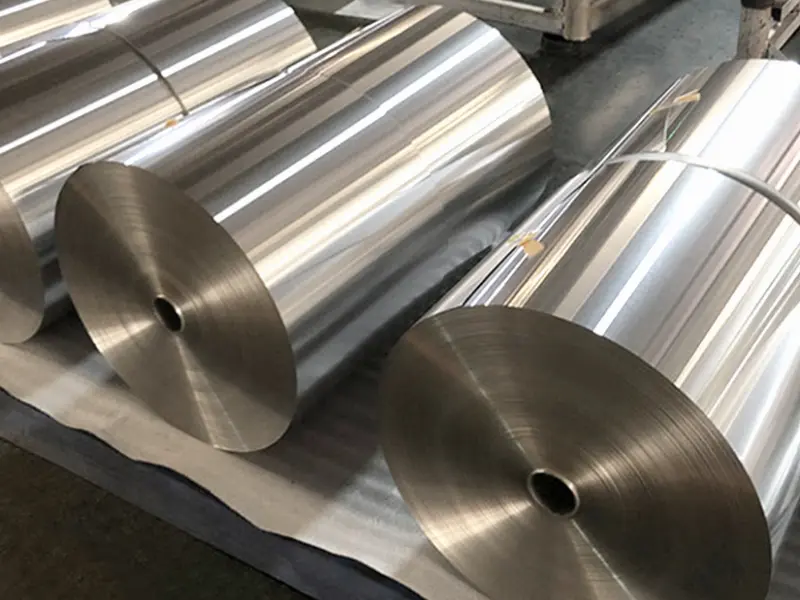
8011 aluminum foil has widely used for household foil and food packaging. It offers a good balance of strength, flexibility, and processing performance.
It has used as the base material for non-stick coated foil rolls and sheets.
1235 Aluminum Foil
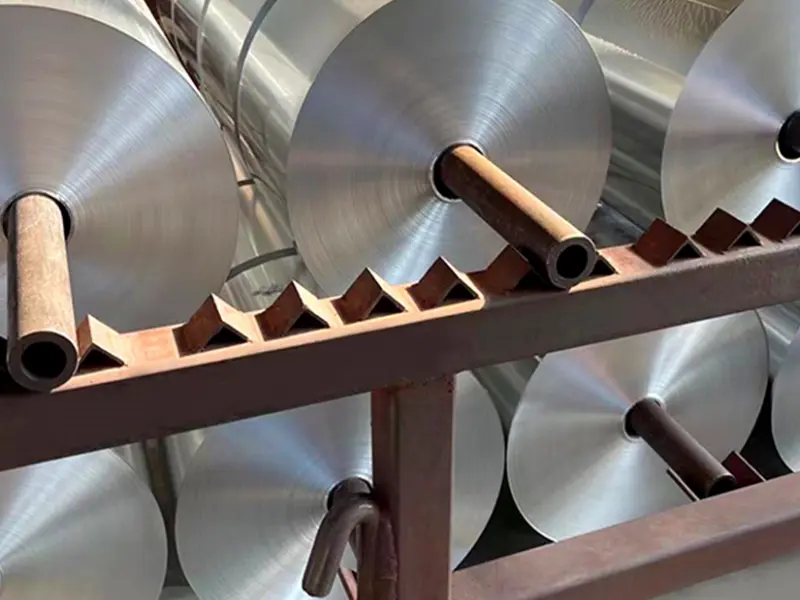
1235 aluminum foil has high aluminum content and good flexibility. It is suitable for applications that need a thin and flexible foil material.
8079 Aluminum Foil
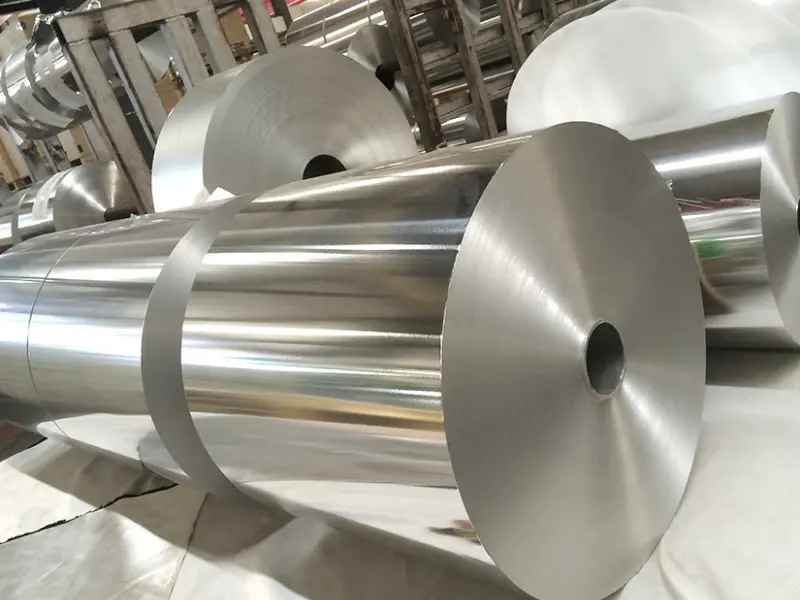
8079 foil has commonly used in flexible packaging and barrier applications. Its final suitability depends on the thickness, temper, and coating system.
The exact alloy has confirmed according to the product design and customer’s requirements.
Thickness and Specifications of Non-Stick Aluminum Foil
Thickness is an important factor when selecting coated aluminum foil. Thin foil is easy to fold and wrap, while thicker foil offers better handling strength.
The following specifications are common reference options. Actual availability can be customized.
| Product Type | Thickness | Typical Use |
|---|---|---|
| Light-duty foil | 10–12 μm | Food wrapping |
| Standard foil | 12–15 μm | Household cooking |
| Medium-duty foil | 15–18 μm | Baking and roasting |
| Heavy-duty foil | 18–25 μm | Grilling and food preparation |
| Extra heavy-duty foil | 25–30 μm | More demanding cooking uses |
Common Roll Sizes
| Width | Roll Length | Application |
|---|---|---|
| 150 mm | 5–10 m | Small household use |
| 300 mm | 10–30 m | Kitchen and baking |
| 450 mm | 10–30 m | Large trays and roasting |
| Customized | Customized | Commercial and industrial use |
Other Available Specifications
Customers can also request:
- Different foil thicknesses.
- Customized roll widths and lengths.
- One-side or two-side coating.
- Printed outer packaging.
- Private-label packaging.
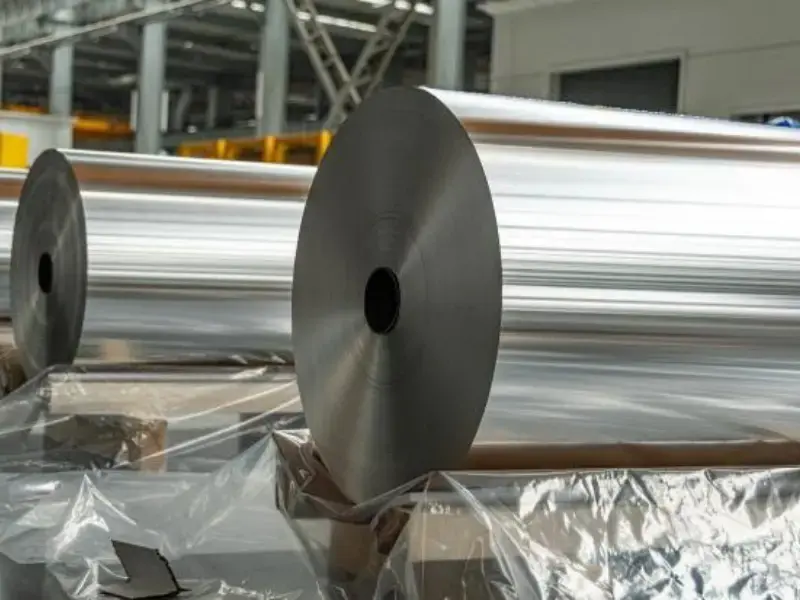
- Jumbo rolls for converting.
- Pre-cut aluminum foil sheets.
For bulk orders, the required core diameter, roll outer diameter, net weight, and packaging method should also be confirmed.
Different Types of Non-Stick Aluminum Foil
Non-stick foil is available in several product formats. Each type has designed for a different cooking or packaging purpose.
Standard Non-Stick Aluminum Foil Roll
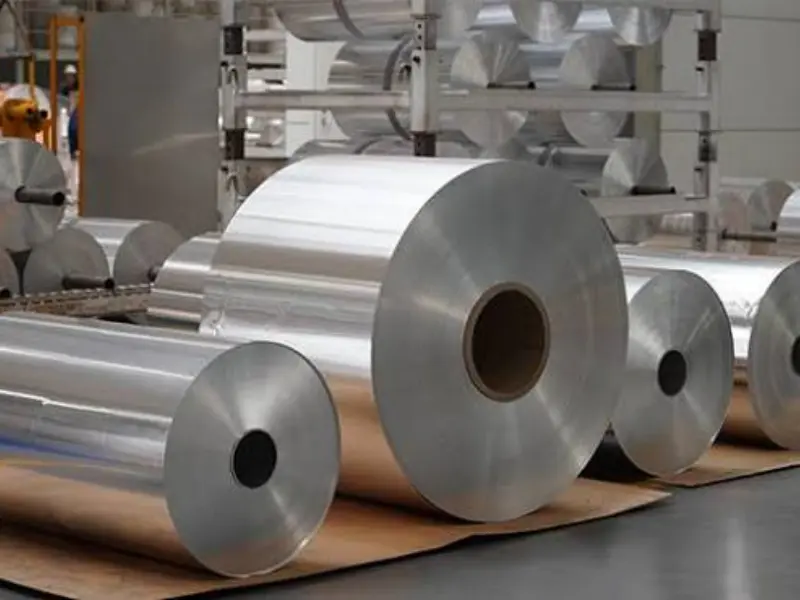
This is a common household product. It has supplied in a roll and can be cut to the required length.
It is suitable for wrapping food, lining baking trays, and covering dishes. Different widths and roll lengths can be selected for retail or wholesale orders.
Heavy-Duty Non-Stick Aluminum Foil
Heavy-duty foil uses a thicker aluminum base. It offers better handling strength and is less likely to tear during normal food preparation.
Common uses include:
- Grilling meat and vegetables.
- Roasting chicken and fish.
- Covering large baking trays.
- Wrapping food for outdoor cooking.
Non-Stick Aluminum Foil Sheets
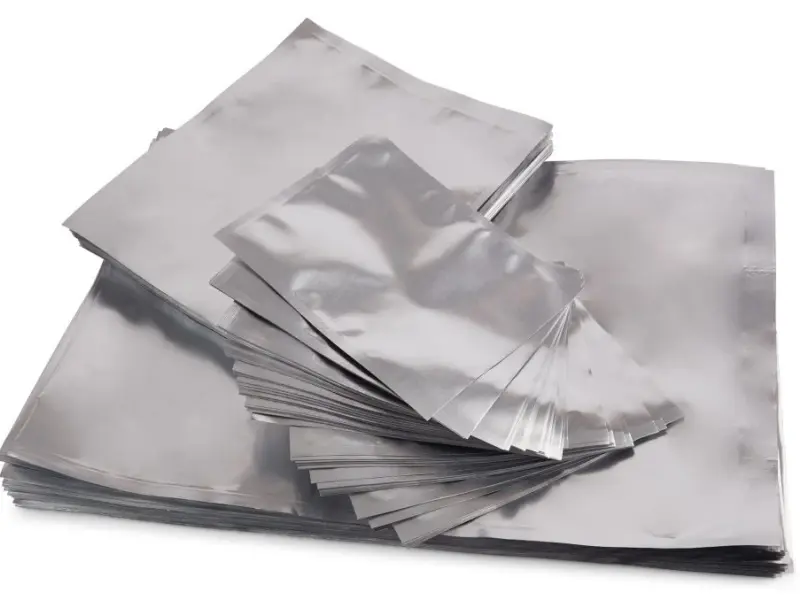
Pre-cut sheets are convenient for restaurants, bakeries, catering companies, and commercial kitchens.
They reduce cutting time and help standardize food preparation. Sheet sizes can be customized to match different trays and packaging requirements.
Non-Stick Foil for Baking
Baking foil has designed for use with bread, cookies, pastries, and other baked foods.
The coated surface helps reduce food sticking to the foil. Buyers should check the coating’s maximum working temperature before use.
Non-Stick Foil for Grilling
Grilling foil is often selected in a heavier thickness. It has used for fish, vegetables, meat, and other foods prepared on a grill.
The foil helps keep food together and makes handling easier. It has used according to the manufacturer’s instructions and should not block airflow in equipment that requires it.
Non-Stick Foil for Food Service
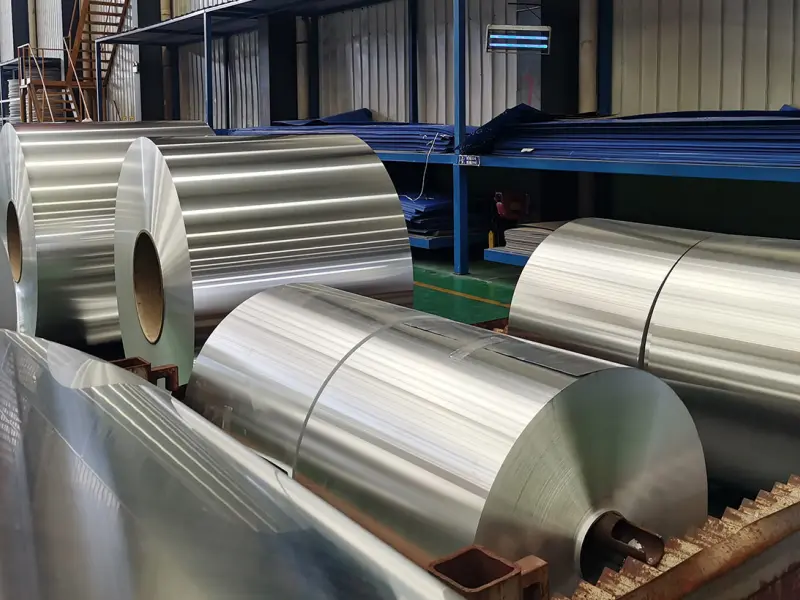
Food service foil is suitable for restaurants, hotels, catering companies, and takeaway businesses.
It has supplied in larger rolls or pre-cut sheets. Customized packaging is also available for distributors and private-label brands.
Main Applications of Non-Stick Aluminum Foil
The coated surface makes this product useful in many food preparation environments.
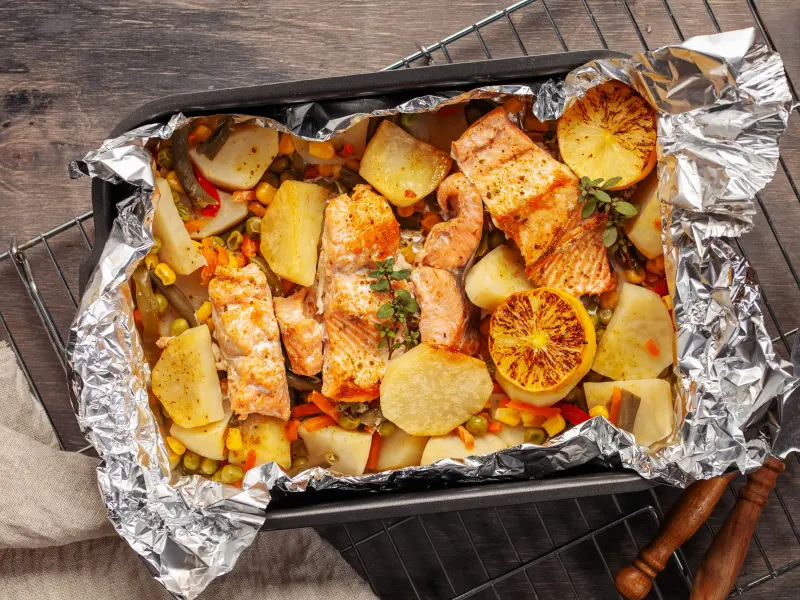
Common applications include:
- Baking: Lining trays for cookies, bread, pastries, and other baked foods.
- Grilling: Preparing meat, fish, and vegetables.
- Roasting: Wrapping poultry, seafood, and vegetables.
- Food wrapping: Covering sandwiches and prepared meals.
- Catering: Supporting large-volume food preparation.
- Restaurants: Reducing food sticking during cooking.
- Household kitchens: Daily cooking and food handling.
- Food processing: Selected food preparation and packaging processes.
The correct product should match the food type, cooking method, and temperature requirements.
Non-Stick Aluminum Foil vs. Regular Aluminum Foil
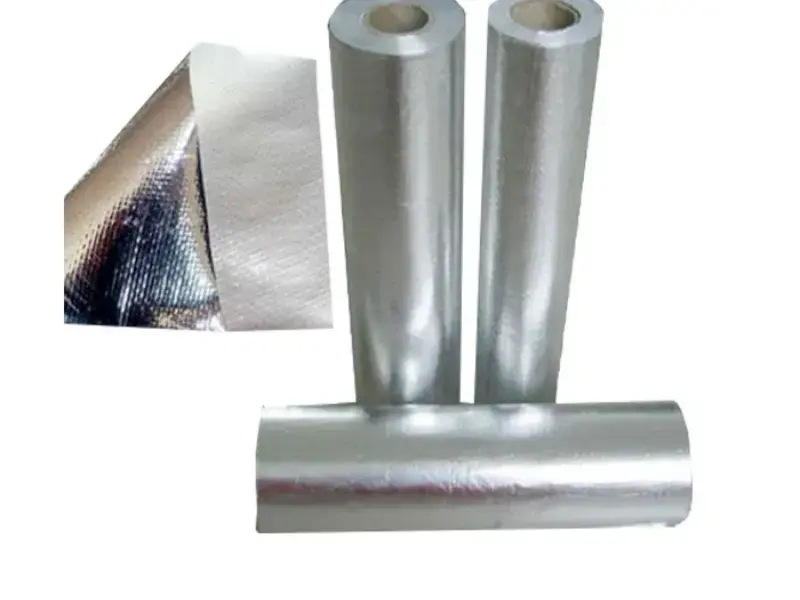
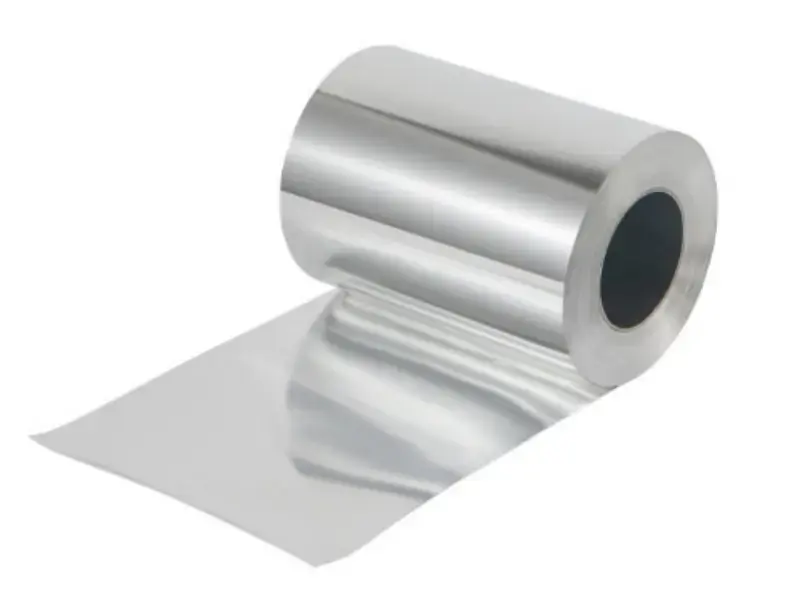
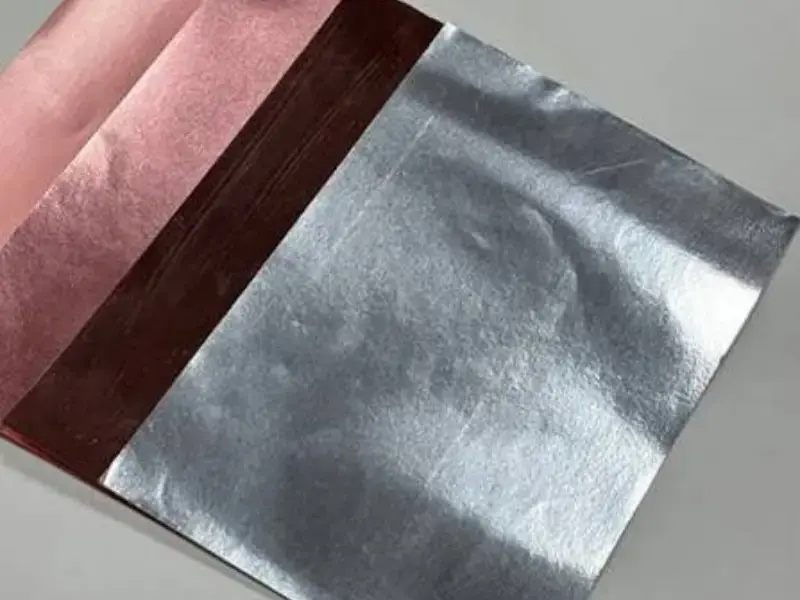
Both products use aluminum as the base material, but their surface functions are different.
| Comparison | Non-Stick Aluminum Foil | Regular Aluminum Foil |
|---|---|---|
| Surface | Special coated surface | Uncoated aluminum |
| Food release | Easier release for suitable foods | Food may stick |
| Cleaning | Can reduce residue | May require more cleaning |
| Cooking use | Baking, roasting and grilling | Wrapping and cooking |
| Cost | Usually higher | Usually lower |
| Selection | Based on coating and temperature | Based on thickness and strength |
Non-Stick Foil vs. Parchment Paper
These products have both used in baking, but they have different material structures.
| Feature | Non-Stick Foil | Parchment Paper |
|---|---|---|
| Base material | Aluminum | Paper |
| Heat transfer | Good heat conductivity | Lower heat transfer |
| Flexibility | Easy to fold and shape | Flexible |
| Light barrier | Yes | No |
| Grilling use | Suitable for selected applications | Usually less suitable |
| Recyclability | Depends on coating and local facilities | Depends on paper coating |
The best choice depends on the recipe, cooking equipment, and required performance.
How to Choose the Right Coated Aluminum Foil
Before purchasing non-stick aluminum foil, buyers should consider several product details.
Check the Coating Type
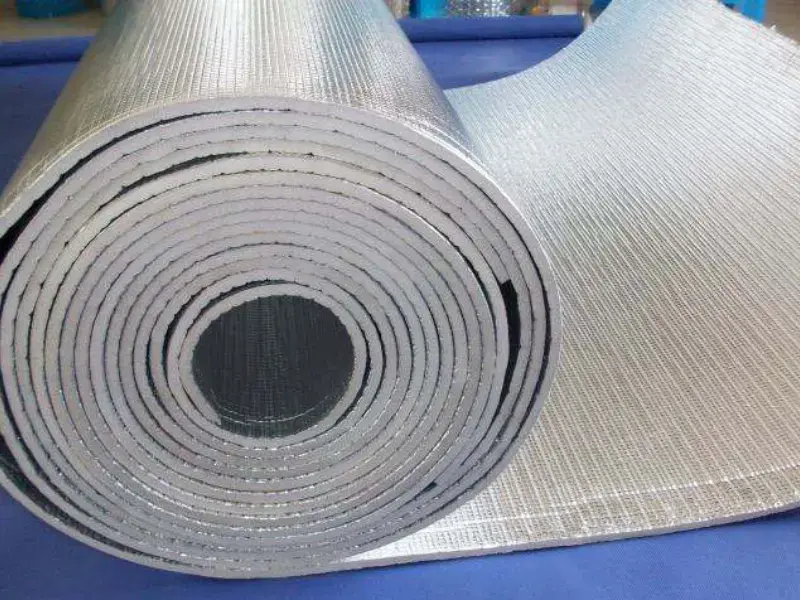
Different coatings provide different surface properties. The coating should be suitable for the intended food-contact application.
Ask the manufacturer for information about:
- Coating material.
- Coated side.
- Food-contact compliance.
- Maximum recommended temperature.
- Resistance to oil and moisture.
Select the Correct Thickness
A thin foil is suitable for light wrapping. A thicker product has often preferred for grilling and heavier food preparation.
The right thickness can help balance product performance and material cost.
Confirm Food-Contact Requirements
For food-related products, compliance is essential. Buyers should request relevant test reports or declarations for the target market.
The requirements may differ between the EU, the United States, and other regions.
Manufacturing and Quality Control
Non-stick aluminum foil production involves several steps. The aluminum base foil has prepared first, followed by surface treatment and coating.
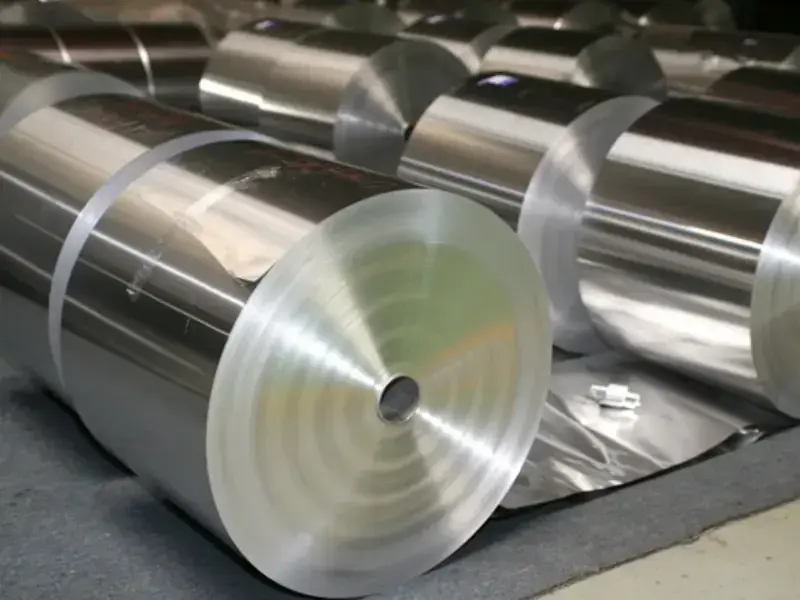
Typical production process:
Aluminum Ingot → Casting → Rolling → Annealing → Surface Cleaning → Coating → Curing → Slitting → Inspection → Rewinding → Packing
Quality checks may include:
| Inspection Item | Purpose |
|---|---|
| Thickness | Check material consistency |
| Width | Confirm roll dimensions |
| Surface quality | Identify scratches and defects |
| Coating adhesion | Check coating attachment |
| Coating appearance | Check surface uniformity |
| Roll quality | Check winding and edges |
| Food-contact documents | Verify applicable requirements |
A reliable supplier should be able to provide product specifications and relevant quality documents.
Bulk Purchasing and Customized Packaging
For wholesalers, supermarkets, food service distributors, and brand owners, customized production can help meet different market needs.
Available options may include:
- Customized roll width and length.
- Different thickness ranges.
- Private-label printing.
- Customized cartons and labels.
- Pre-cut foil sheets.
- Jumbo rolls for further processing.
When requesting a quotation, provide the alloy, temper, thickness, coating requirements, roll dimensions, order quantity, and destination market.
Frequently Asked Questions
Is non-stick aluminum foil safe for food?
It can be suitable for food contact when the aluminum foil and coating are designed, tested, and supplied for that purpose. Buyers should check the relevant compliance documents and follow the manufacturer’s use instructions.
Which side of non-stick aluminum foil should face the food?
The coated side has generally intended to face the food. However, the correct direction depends on the product design. Always follow the instructions printed on the packaging.
What alloy is commonly used for non-stick aluminum foil?
8011 is a common choice for household and food foil. 1235 and 8079 may also be used for selected foil applications. The final choice depends on thickness, strength, and processing requirements.
What thickness is suitable for baking?

A thickness of around 12–18 μm has used for some standard baking applications.
Heavier products have preferred for larger trays or more demanding handling. The correct specification depends on the cooking method.
Can non-stick foil be used for grilling?
Yes, selected products have designed for grilling. Check the coating’s temperature limit and the manufacturer’s instructions before use.
Can manufacturers supply customized non-stick foil rolls?
Yes. Many manufacturers can customize thickness, width, roll length, coating, core size, and packaging according to order requirements.
What is the difference between one-side and two-side coated foil?
One-side coated foil has a functional coating on one surface. Two-side coated foil has coating on both surfaces. The suitable option depends on the intended food contact and product design.
Can non-stick aluminum foil be used in an air fryer?
Only use a product when its instructions permit air-fryer use. The foil must not block airflow or contact heating elements. Follow the appliance manufacturer’s safety instructions.
Leave a Comment
You must be logged in to post a comment.