High Quality Aluminum Foil for Packaging, Cable & Battery
High quality aluminum foil is widely used in packaging, cable shielding, lithium batteries, insulation, electronics, pharmaceutical products, food containers, and industrial manufacturing.
Aluminum foil has excellent barrier performance, corrosion resistance, conductivity, and lightweight structure. Different alloys, tempers, thicknesses, and surface treatments are available for different industries.
Common searches include:
- high quality aluminum foil
- aluminum foil for packaging
- cable aluminum foil
- battery aluminum foil
- industrial aluminum foil
- pharmaceutical aluminum foil
- aluminum foil roll supplier
- aluminum foil manufacturer
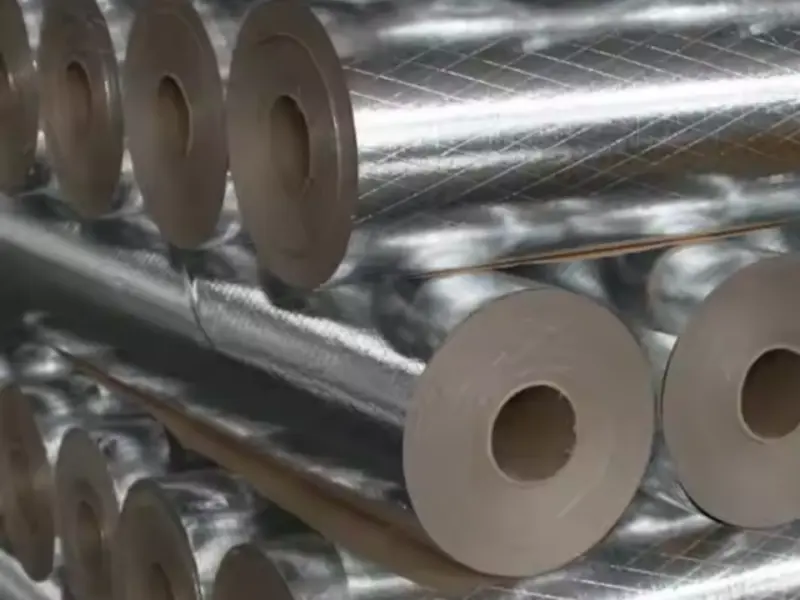
The product can be supplied in rolls, coils, laminated foil, embossed foil, or coated foil.
What Is High Quality Aluminum Foil?
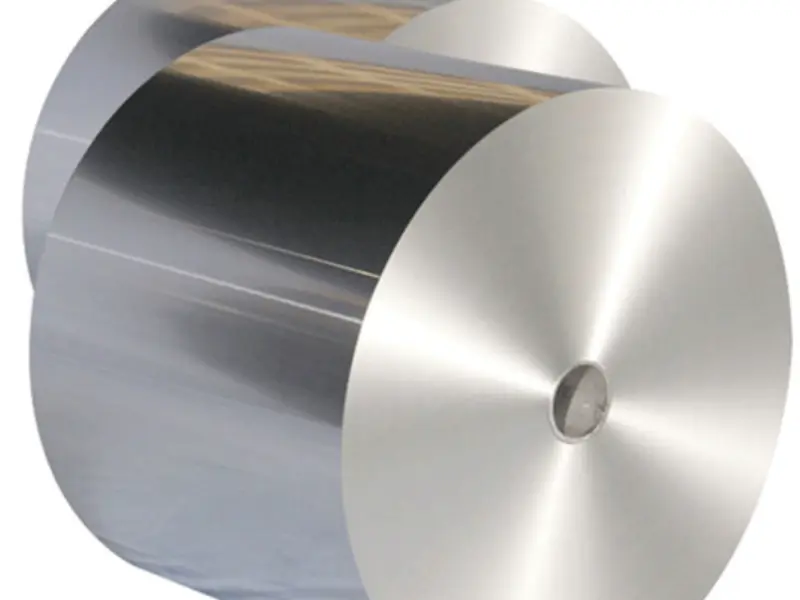
High quality aluminum foil is produced by rolling aluminum alloy into thin foil material with stable thickness and smooth surface quality.
The product offers:
- Strong barrier performance
- Moisture resistance
- Heat resistance
- Corrosion resistance
- Electrical conductivity
- Lightweight structure
Industrial foil is suitable for flexible packaging and technical applications.
Main Types of Aluminum Foil
Aluminum Foil for Packaging
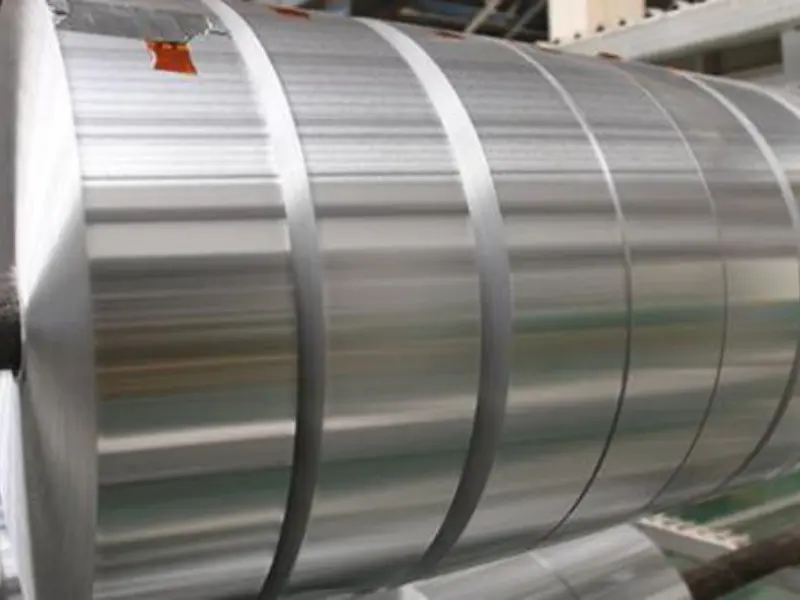
Packaging foil is one of the largest aluminum foil markets worldwide.
Applications:
- Food packaging
- Flexible packaging
- Pharmaceutical packaging
- Household foil
- Container foil
Common Specifications
| Thickness | Common Use |
|---|---|
| 0.006mm | Flexible packaging |
| 0.007mm | Household foil |
| 0.009mm | Food packaging |
| 0.02mm | Container foil |
Benefits:
- Excellent sealing
- Moisture barrier
- Odor protection
- Safe food contact
Cable Aluminum Foil
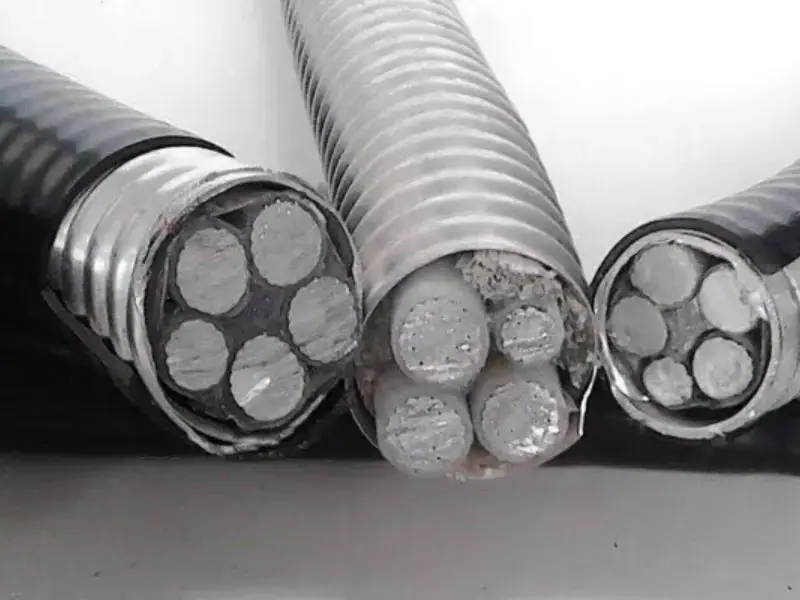
Cable foil is used for shielding and protection.
Applications:
- Communication cables
- Data cables
- Power cables
- Fiber optic cables
Advantages:
- Electromagnetic shielding
- Flexible structure
- Corrosion resistance
Battery Aluminum Foil
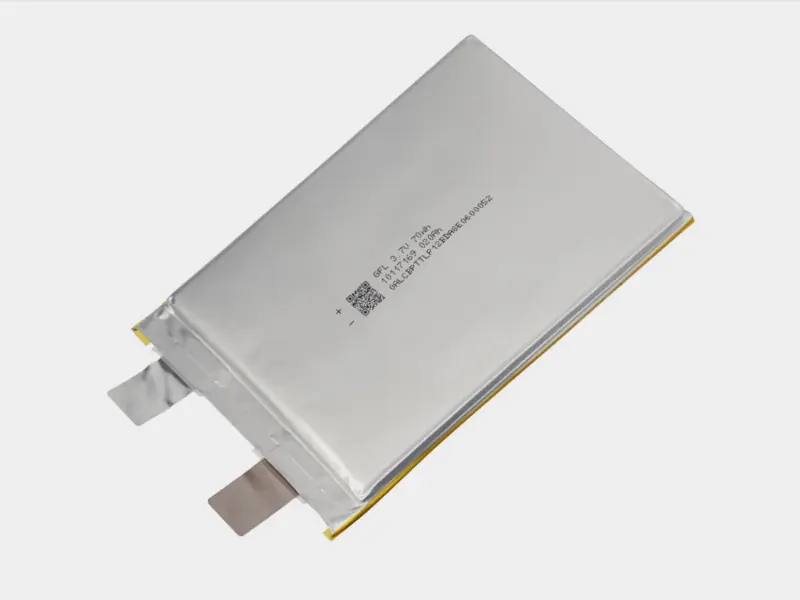
Battery foil is widely used in lithium battery production.
Common alloys:
| Alloy | Application |
|---|---|
| 1060 | Battery collector |
| 1070 | High conductivity |
| 1235 | Lithium battery foil |
Features:
- High conductivity
- Stable thickness
- Clean surface
- Good elongation
Applications:
- Electric vehicles
- Energy storage systems
- Consumer electronics
Pharmaceutical Aluminum Foil
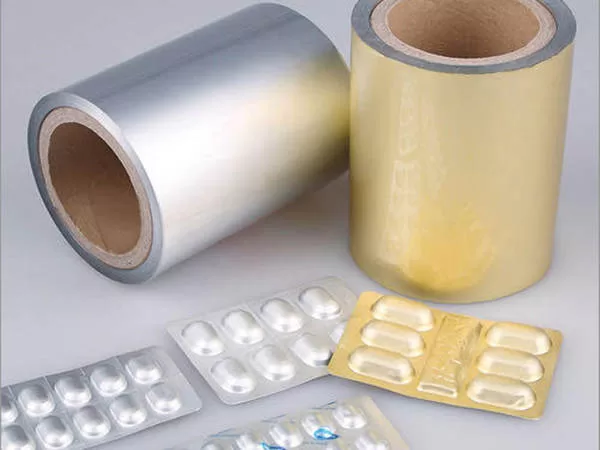
Pharmaceutical foil is used for medicine packaging.
Applications:
- Blister packaging
- Capsule packaging
- Medical sealing foil
Requirements:
- Clean surface
- Food-grade coating
- Strong sealing performance
Aluminum Foil for Insulation
Insulation foil is widely used in construction and HVAC systems.
Applications:
- Pipe insulation
- Air ducts
- Thermal insulation
- Building insulation
Benefits:
- Heat reflection
- Moisture protection
- Long service life
Common Aluminum Foil Alloys
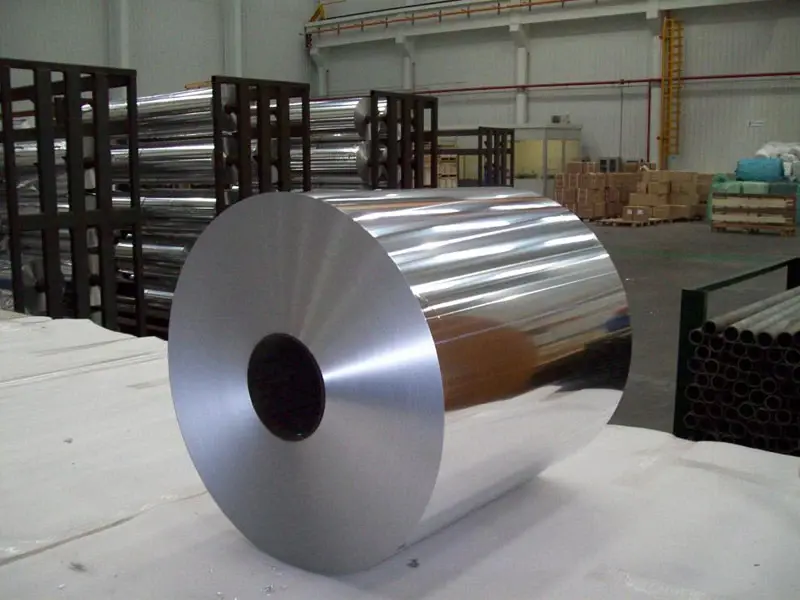
1235 Aluminum Foil
1235 is one of the most common foil alloys.
| Alloy | Feature |
|---|---|
| 1235 | High purity |
Applications:
- Flexible packaging
- Insulation foil
- Laminated foil
8011 Aluminum Foil
8011 foil is widely used for packaging applications.
Advantages:
- Better strength
- Good formability
- Stable performance
Applications:
- Bottle cap foil
- Food packaging
- Pharmaceutical foil
8079 Aluminum Foil
8079 alloy provides excellent flexibility.
Applications:
- Flexible packaging
- Pharmaceutical packaging
- Food packaging
3003 Aluminum Foil
3003 alloy has good corrosion resistance.
Applications:
- Heat exchangers
- HVAC systems
- Industrial insulation
Common Tempers of Aluminum Foil
Different tempers provide different performance.
| Temper | Feature |
|---|---|
| O | Soft temper |
| H18 | Hard temper |
| H22 | Semi-hard |
| H24 | Better forming |
Soft temper foil is widely used in packaging and insulation.
Aluminum Foil Thickness Range
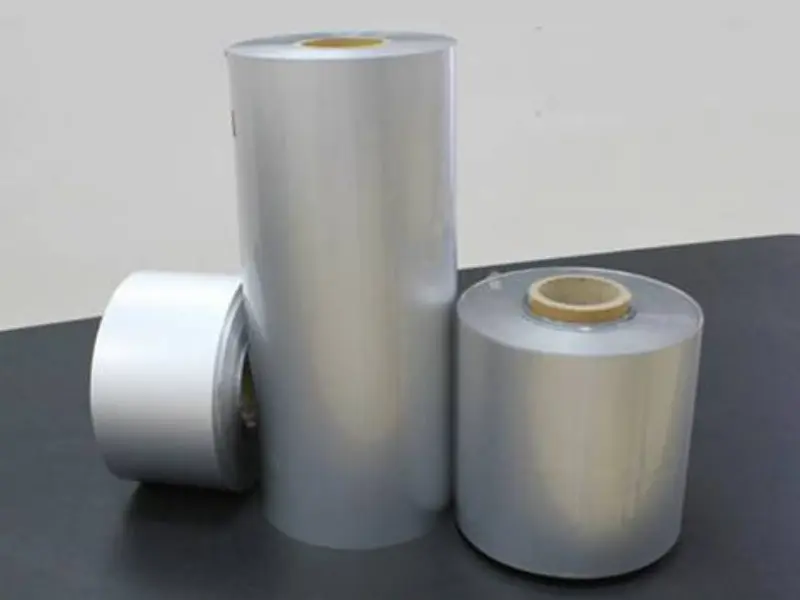
Thin Gauge Foil
| Thickness | Application |
|---|---|
| 0.006mm | Flexible packaging |
| 0.007mm | Household foil |
| 0.009mm | Laminated packaging |
Medium Thickness Foil
| Thickness | Application |
|---|---|
| 0.02mm | Battery foil |
| 0.03mm | Cable foil |
| 0.05mm | Insulation foil |
Heavy Gauge Foil
| Thickness | Application |
|---|---|
| 0.1mm | HVAC systems |
| 0.15mm | Heat shielding |
| 0.2mm | Industrial sealing |
Surface Treatment Options
Plain Aluminum Foil
Standard industrial foil without coating.
Applications:
- Packaging
- Insulation
- Cable wrapping
Coated Aluminum Foil
Coated foil improves sealing and corrosion resistance.
Types include:
- PE coated foil
- Heat sealing foil
- Protective coated foil
Embossed Aluminum Foil
Embossed foil improves decorative appearance and surface strength.
Applications:
- Insulation systems
- Refrigerator panels
- Decorative foil
Laminated Aluminum Foil
Laminated foil combines aluminum with other materials.
Laminating materials:
- PET film
- Kraft paper
- Plastic film
- Fiberglass cloth
Applications:
- Thermal insulation
- Flexible packaging
- Cable shielding
Aluminum Foil Roll Sizes
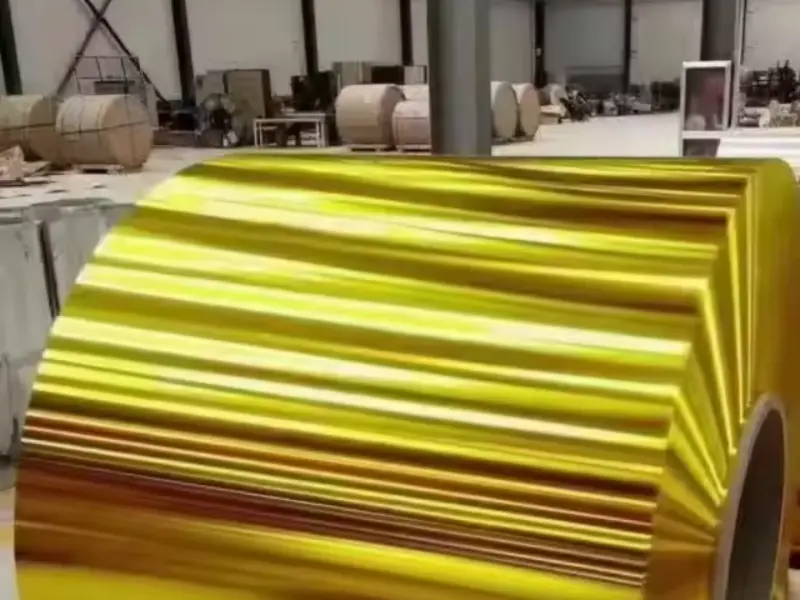
Common Roll Specifications
| Inner Core | Roll Weight |
|---|---|
| 76mm | 50–300kg |
| 152mm | 300–1000kg |
Custom roll sizes are available.
Aluminum Foil for Electronics
Electronic foil is widely used in technical industries.
Applications:
- Capacitors
- EMI shielding
- Flexible circuits
- Battery systems
Advantages:
- Good conductivity
- Thin structure
- Stable performance
Aluminum Foil for Heat Exchanger
Heat exchanger foil is used in cooling systems.
Applications:
- Air conditioners
- Automotive radiators
- Industrial cooling systems
Benefits:
- High thermal conductivity
- Corrosion resistance
- Lightweight structure
Aluminum Foil for Automotive Industry
Automotive foil applications include:
- Battery systems
- Heat shields
- Sound insulation
- Thermal insulation
Advantages:
- Weight reduction
- Fuel efficiency
- Heat resistance
Packaging Foil vs Cable Foil vs Battery Foil
| Property | Packaging Foil | Cable Foil | Battery Foil |
|—|—|—|
| Main Function | Barrier protection | Shielding | Conductivity |
| Surface Quality | Smooth | Flexible | Very clean |
| Conductivity | Medium | Good | Excellent |
| Thickness | Thin | Medium | Ultra-thin |
Different foil types are designed for different industries.
Aluminum Foil vs Plastic Film
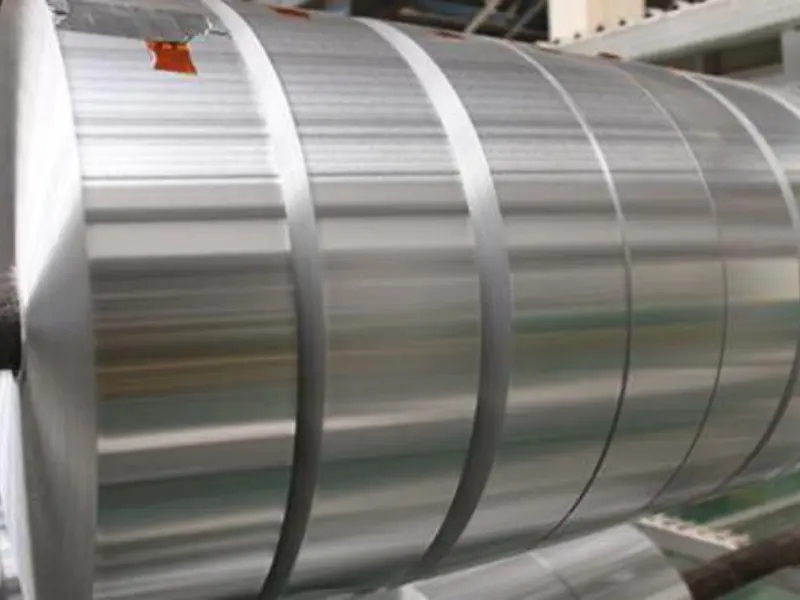
| Property | Aluminum Foil | Plastic Film |
|---|---|---|
| Barrier performance | Excellent | Medium |
| Heat resistance | Strong | Lower |
| Recyclability | Excellent | Lower |
| Moisture protection | Excellent | Medium |
Aluminum foil is preferred for high-performance packaging.
Production Process of Aluminum Foil
The production process usually includes:
- Aluminum melting
- Continuous casting
- Cold rolling
- Foil rolling
- Annealing
- Slitting
- Surface inspection
Quality Control
| Item | Requirement |
|---|---|
| Thickness tolerance | Stable |
| Surface quality | Smooth |
| Pinhole control | Low |
| Mechanical performance | Consistent |
Packaging and Export
Standard export packaging includes:
- Wooden cases
- Waterproof paper
- Plastic wrapping
- Export pallets
Main export markets:
- USA
- Germany
- UAE
- India
- Southeast Asia
- South America
Why Choose High Quality Aluminum Foil?
Advantages include:
- Excellent barrier performance
- Lightweight material
- Corrosion resistance
- Good conductivity
- Easy processing
- Recyclable material
High quality foil is suitable for modern industrial manufacturing.
High Quality Aluminum Foil Factory
A professional factory can provide:
- High-speed foil rolling
- Slitting service
- Laminating processing
- Embossing service
- Surface coating
- OEM packaging
WORTHWILL ALUMINUM supplies packaging foil, battery foil, cable foil, pharmaceutical foil, insulation foil, laminated foil, and industrial aluminum foil products for global customers.
Premium Aluminum Foil Solutions for Industrial and Commercial Use
High quality aluminum foil is a vital material in modern manufacturing. Whether you need reliable barriers for food, conductive layers for batteries, or shielding for cables, choosing the right grade is essential. Aluminum foil offers a unique combination of flexibility, strength, and conductivity that few other materials can match.
Diverse Aluminum Foil Alloys and Their Uses
Different industries require specific chemical compositions. We provide a wide range of alloys to ensure your project performs perfectly under pressure.
The 1xxx Series: High Purity and Conductivity
This series contains at least 99% aluminum. It is known for its excellent corrosion resistance and high thermal conductivity.
- 1235 Alloy: Often used for battery current collectors and thin packaging.
- 1060 and 1070 Alloy: Preferred for electrical components due to their superior conductivity.
The 3xxx Series: Strength and Stability
By adding manganese, this series gains higher strength while maintaining good workability.
- 3003 Alloy: A popular choice for food containers and heat exchangers. It stands up well to forming processes without cracking.
The 8xxx Series: The Packaging Standard
This series is specifically designed for high-performance packaging applications.
- 8011 Alloy: The most common alloy for household foil and pharmaceutical packaging.
- 8079 Alloy: Known for high tensile strength and elongation, making it ideal for complex laminate structures.
Technical Specifications by Application Type
To help you choose the right product, here is a breakdown of common specifications based on your specific industry needs.
Battery Grade Aluminum Foil Specifications
Battery foil requires a clean surface and high tensile strength to handle high-speed coating processes.
| Property | Specification Details |
|---|---|
| Alloy Type | 1060, 1070, 1235, 1050 |
| Temper | H18 (Hard) |
| Thickness Range | 0.009mm to 0.020mm |
| Width Range | 100mm to 1600mm |
| Tensile Strength | ≥150MPa |
| Surface Tension | ≥32dyne/cm |
Cable Shielding Aluminum Foil Specifications
Cable foil, often laminated with PET or EAA, provides an excellent electromagnetic barrier.
| Feature | Data Range |
|---|---|
| Alloy Type | 1100, 1235, 8011 |
| Temper | O (Soft) |
| Thickness Range | 0.006mm to 0.2mm |
| Structure | Bare foil or AL+PET Lamination |
| Core ID | 76mm or 152mm |
Flexible Packaging and Container Foil
Packaging foil must be pinhole-free to protect contents from light, moisture, and oxygen.
| Application | Common Alloy | Typical Thickness |
|---|---|---|
| Aseptic Packaging | 8079 / 8011 | 0.006mm to 0.009mm |
| Pharmaceutical Blister | 8011 | 0.02mm to 0.03mm |
| Food Containers | 3003 / 8011 | 0.03mm to 0.08mm |
| Household Foil | 8011 | 0.008mm to 0.025mm |
High Performance Battery Foil for Energy Storage
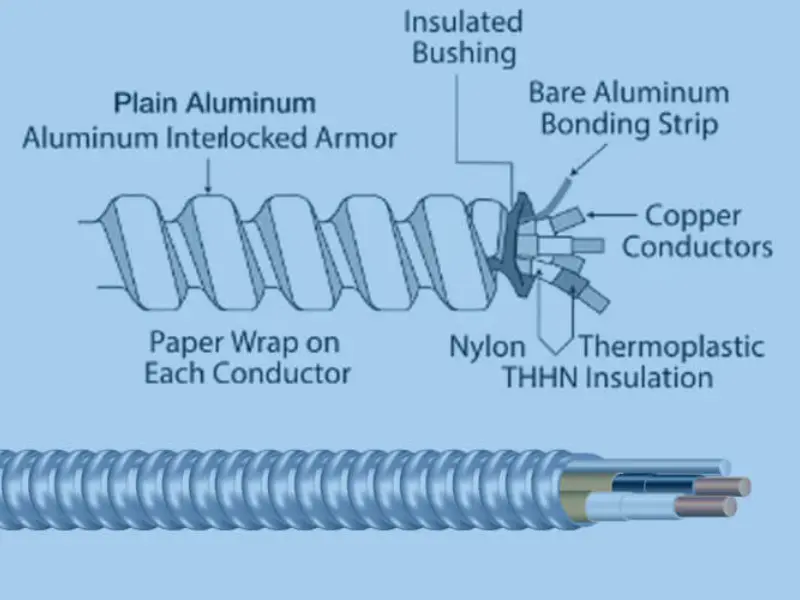
In the production of Lithium-ion batteries, aluminum foil serves as the cathode current collector. The quality of the foil directly impacts battery life and safety.
Surface Cleanliness
High-quality battery foil must be free of oil spots and dust. We use advanced cleaning systems to ensure the surface tension is high enough for active material adhesion.
Thickness Consistency
We maintain a thickness tolerance of within ±3%. This precision ensures uniform resistance across the entire battery cell, preventing localized overheating.
Mechanical Properties
The foil must be strong enough (H18 state) to withstand the tension of industrial coating machines. If the foil breaks, it stops the entire production line. Our materials are tested for high tensile strength and elongation.
Reliable Cable Foil for Data and Power Transmission
Aluminum foil plays a critical role in telecommunications. It acts as a shield to prevent electromagnetic interference (EMI).
Shielding Effectiveness
By wrapping wires in aluminum foil, signals remain clear and protected from external noise. This is vital for high-speed internet cables and industrial power lines.
Softness for Wrapping
We typically supply cable foil in the O (annealed) state. This makes the metal soft and flexible, allowing it to wrap tightly around copper wires without snapping.
Composite Options
- AL+PET: Aluminum foil bonded with polyester film for added tear resistance.
- AL+PET+AL: Double-sided shielding for maximum protection.
Packaging Solutions: Safety and Preservation
Aluminum foil is the ultimate barrier material. It blocks everything that could spoil a product: light, oxygen, moisture, and bacteria.
Pharmaceutical Foil
For medicine, safety is the priority. Our 8011 and 8079 alloys are non-toxic and compatible with heat-seal lacquers. This ensures that pills remain effective until the moment the consumer opens the blister pack.
Food Grade Quality
We ensure all food-contact foil meets international safety standards. The foil is sterilized during the high-temperature annealing process, making it safe for direct contact with food.
Heat Resistance
Unlike plastic, aluminum foil can handle high temperatures in ovens or grills without melting or releasing harmful chemicals. This makes it perfect for the food service industry.
Comparing Alloy Characteristics
Choosing between alloys like 1235, 8011, and 3003 depends on your mechanical requirements.
| Characteristic | 1235 Alloy | 8011 Alloy | 3003 Alloy |
|---|---|---|---|
| Al Content | ≥99.35% | ≈98% | ≈97% |
| Strength | Lower | Moderate | High |
| Ductility | Excellent | Good | Moderate |
| Best For | Thin Battery Foil | General Packaging | Rigid Containers |
Understanding Tempers: O vs. H18
The “Temper” describes the hardness and flexibility of the aluminum.
Soft Temper (O State)
- Process: The foil is fully annealed (heated and cooled slowly).
- Feel: Very soft and easy to bend.
- Best for: Complex food wrappers, cable wrapping, and cigarette packaging.
Hard Temper (H18 State)
- Process: Cold-rolled without annealing.
- Feel: Stiff and springy.
- Best for: Battery current collectors and some types of rigid packaging.
Precision Manufacturing and Quality Control
Quality is not just a word; it is a measurable standard. Every roll of aluminum foil undergoes strict testing.
Pinhole Detection
For very thin foils (under 0.010mm), pinholes can be an issue. We use laser detection systems to ensure the barrier remains perfect.
Surface Finish
We offer different finishes based on your needs:
- Double Side Bright (DSB): Both sides are shiny.
- Single Side Bright (SSB): One side is shiny, the other is matte.
Edge Quality
Cleanly slit edges are essential. Burrs or nicks on the edge can cause the foil to tear when it is being unwound at high speeds in your factory.
Why Choose High Quality Aluminum Foil?
Using premium materials reduces waste in your production line. High-quality foil leads to:
- Fewer breaks: Durable foil handles machine tension better.
- Better adhesion: Clean surfaces allow glues and coatings to stick perfectly.
- Longer shelf life: A perfect barrier protects your final product for years.
- Environmental impact: Aluminum is 100% recyclable, helping you meet sustainability goals.
Whether you are in the energy sector, the food industry, or electronics, we provide the specific aluminum foil specifications you need to succeed.
FAQ
What is aluminum foil used for?
It is used for packaging, batteries, cable shielding, insulation, electronics, and pharmaceutical products.
Which alloy is commonly used for aluminum foil?
1235, 8011, 8079, and 3003 are widely used.
What thickness is available?
Thickness ranges from 0.006mm to 0.2mm or more.
What is battery aluminum foil?
Battery foil is aluminum foil used as a current collector in lithium batteries.
What temper is used for soft foil?
O temper is commonly used for flexible aluminum foil.
Can laminated foil be customized?
Yes. Different laminated structures are available.
Is custom size available?
Yes. Width, thickness, alloy, and roll weight can be customized.
Leave a Comment
You must be logged in to post a comment.