Aluminium Foil for Kitchen
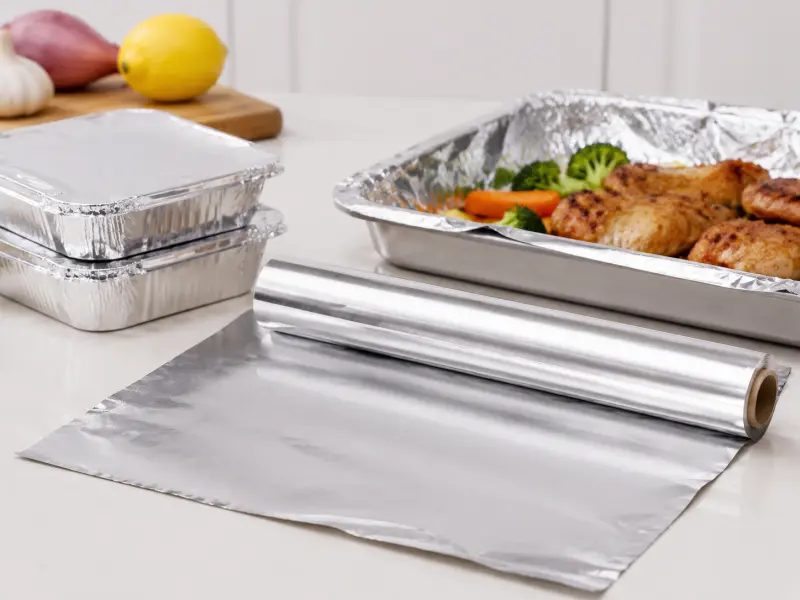
Aluminium foil is one of the most useful tools in any kitchen. It covers dishes, wraps leftovers, lines baking trays, and protects food on the grill. Home cooks use it daily. Professional chefs run through rolls of it every hour. The right foil saves time, cuts cleanup, and keeps food fresh.
Why Kitchens Run on Aluminium Foil
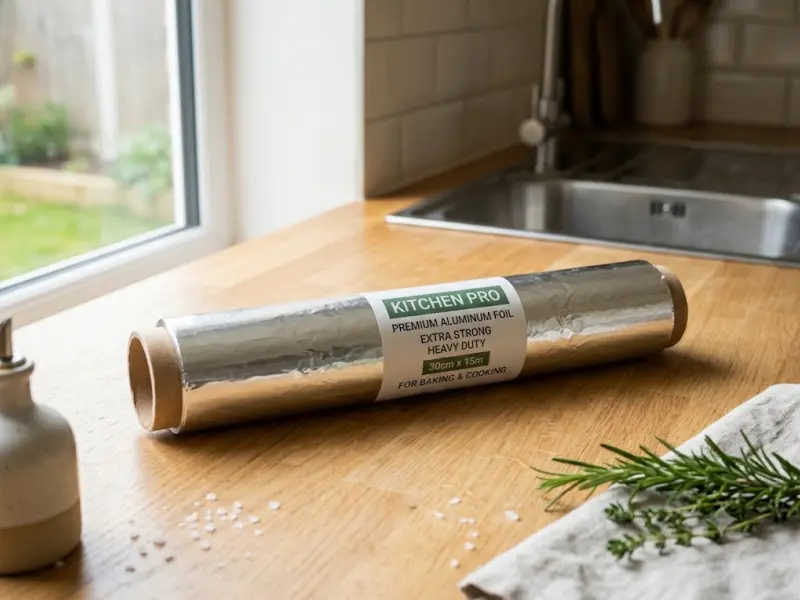
Heat moves fast through aluminium. That means food cooks evenly when you wrap it. The metal blocks air and moisture. That keeps a casserole warm or a sandwich cold. It bends around any shape. You can tear it by hand or cut it clean with a box cutter.
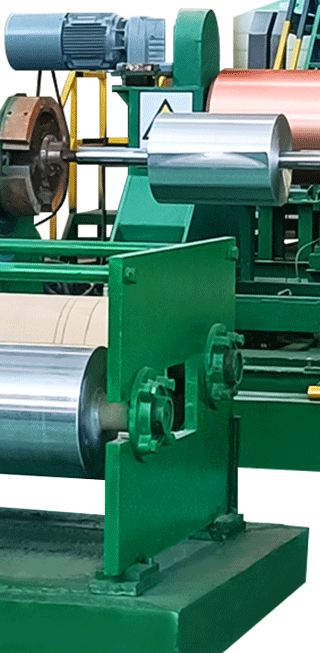
Kitchen foil starts as a large aluminium slab. Mills roll it thinner and thinner until it reaches kitchen grade. Then they anneal it to soften the metal. Finally, they wind it onto cardboard cores or cut it into sheets. The result is a paper-thin shield that handles temperatures from deep freezers to hot ovens.
Types of Kitchen Foil You Can Buy
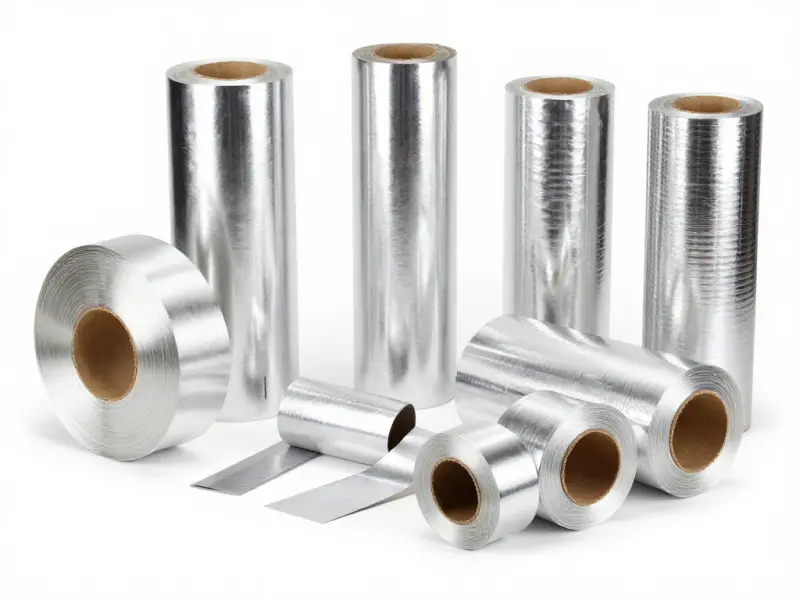
Not every roll in the aisle is the same. Here is how the main types break down.
Standard Household Foil
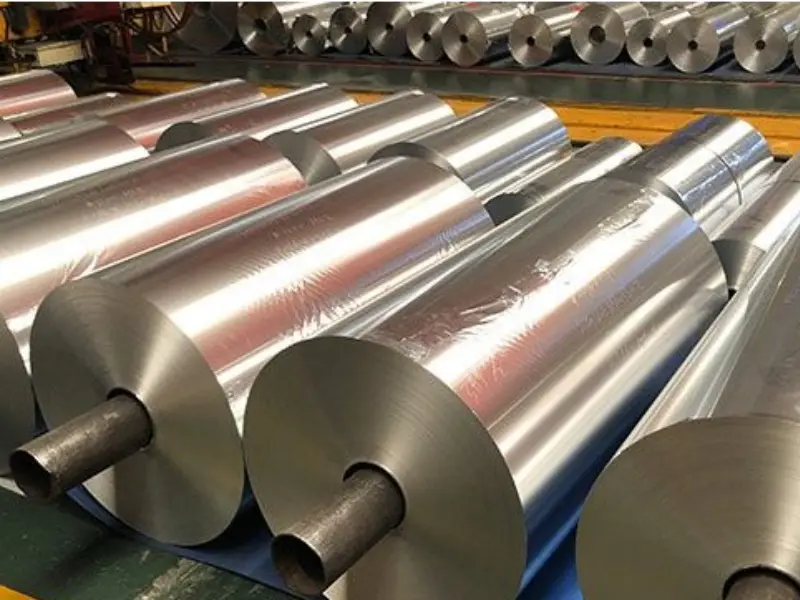
This is the thin silver roll most families keep in the drawer. It works for covering bowls, wrapping sandwiches, and light baking. It tears easily. The price is low. It is the all-rounder of the kitchen.
Typical thickness: 10 to 14 microns
Typical width: 300 mm to 450 mm
Common length: 10 m to 75 m
Heavy Duty Kitchen Foil
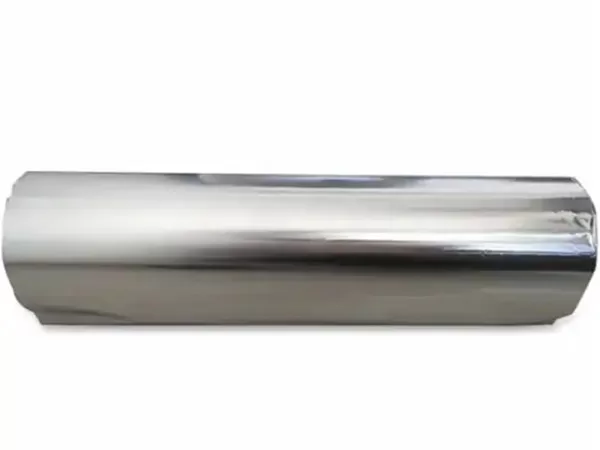
Heavy duty foil is almost twice as thick as standard foil. It resists tearing when you wrap sharp bones or heavy roasts. You can reuse a sheet for multiple batches on the grill. It costs more per meter, but you use less because one layer is enough.
Typical thickness: 18 to 24 microns
Typical width: 300 mm to 450 mm
Common length: 5 m to 30 m
Non-Stick Coated Foil
One side of this foil carries a food-safe silicone or resin coating. Food slides right off. Cookies do not stick. Cheese does not fuse to the metal. You pay a premium, but you save on scrubbing pans.
Typical thickness: 15 to 20 microns
Coating: Silicone or QP coating on one side
Best for: Baking, roasting sticky marinades
Pre-Cut Foil Sheets
These are individual squares pulled from a flat box. Each sheet is the same size. Caterers love them for wrapping burgers or lining baskets. Home cooks use them for packed lunches. No tearing, no waste.
Typical size: 230 mm x 270 mm to 300 mm x 300 mm
Pack count: 200 to 500 sheets per box
Thickness: 12 to 16 microns
Pop-Up Foil Sheets
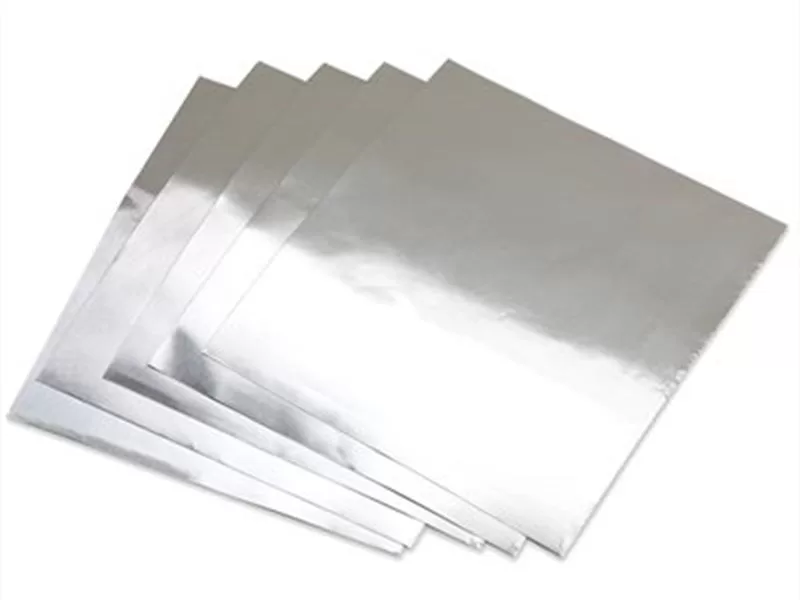
Pop-up boxes work like tissue boxes. You pull one sheet and the next pops up ready. They sit flat on the counter. The interfold design means each sheet separates cleanly. They are popular in delis and fast-casual restaurants.
Typical size: 230 mm x 275 mm to 280 mm x 300 mm
Pack count: 200 to 1000 sheets
Thickness: 11 to 15 microns
Embossed Foil
Embossed foil has tiny raised patterns pressed into the surface. The bumps create air pockets. That helps heat circulate under a roast. It also gives the foil more grip so wrapped items do not slide apart.
Typical thickness: 15 to 22 microns
Pattern: Diamond or dot embossing
Best for: Meat wrapping, insulated food covers
Grill and BBQ Foil
Grill foil handles open flame and high heat. It is thick and often has a slightly higher alloy content to resist burning. Some brands sell it in extra-wide rolls to cover large grill racks.
Typical thickness: 20 to 30 microns
Typical width: 450 mm to 600 mm
Heat rating: Up to 300°C
Freezer-Safe Foil
Freezer foil resists moisture and blocks freezer burn better than standard rolls. It is often slightly thicker and has a tighter surface structure. You can wrap meat and leave it for months without ice crystals forming inside.
Typical thickness: 16 to 22 microns
Best for: Long-term meat storage, batch cooking
Catering Foil Rolls
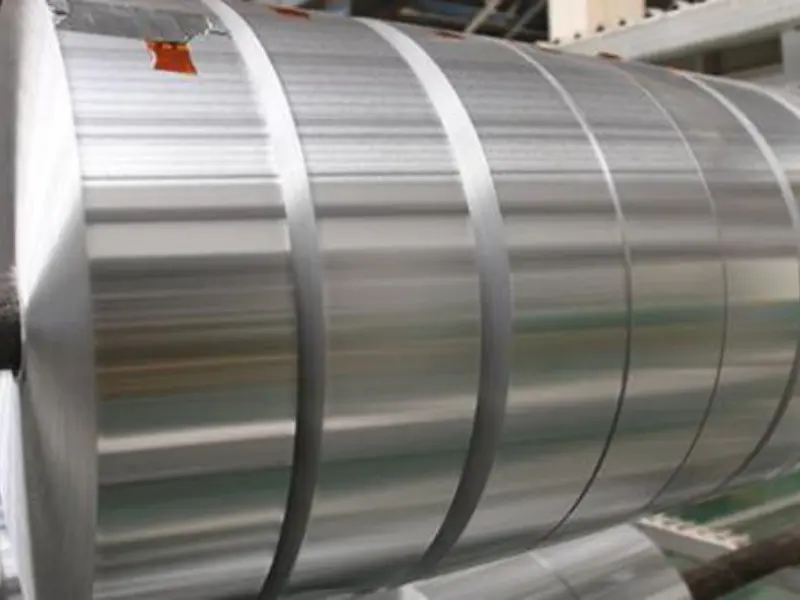
These are the giant rolls you see in restaurant supply stores. They are wide and long. A single roll might last a commercial kitchen a week. The core is heavy cardboard or plastic to survive rough handling.
Typical width: 450 mm to 600 mm
Typical length: 100 m to 300 m
Thickness: 14 to 20 microns
Alloy Breakdown: What Goes Into Food-Grade Foil
The aluminium alloy decides how the foil behaves in heat, how easily it tears, and whether it is safe for food contact. Here is a clear comparison of the alloys used in kitchen foil.
| Alloy | Aluminium Content | Key Traits | Best For |
|---|---|---|---|
| 1235 | 99.35% | Very soft, excellent formability, high purity | Standard household foil, pre-cut sheets |
| 1145 | 99.45% | Slightly harder than 1235, good barrier properties | Light-duty wrapping, flexible pouches |
| 8011 | 98.00% | Iron and silicon added, stronger, better tear resistance | Heavy duty foil, grill foil, embossed foil |
| 8006 | 98.00% | Higher strength than 8011, good for deep drawing | Catering rolls, structural kitchen trays |
| 3003 | 98.00% | Manganese added, stiffer, less common in pure foil | Foil-laminated containers, rigid lids |
Alloy 1235 is the classic choice for soft household foil. It wraps around a potato without springing back. Alloy 8011 is the workhorse for heavy duty and grill foil because it survives higher mechanical stress.
Temper and State: Soft vs Hard Kitchen Foil
After rolling, aluminium gets a temper label. This tells you how the metal will feel and fold.
O Temper (Soft Annealed)
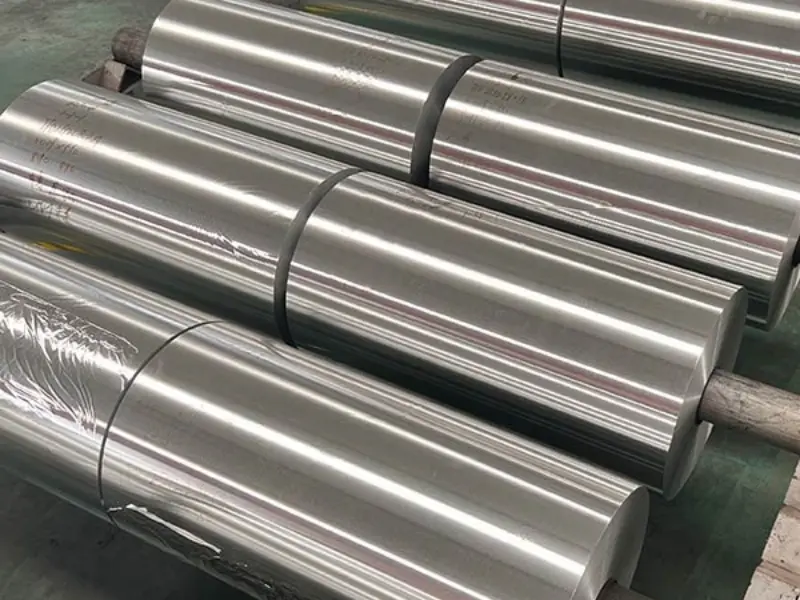
O temper foil is fully softened. You can crush it in your hand and it stays crushed. It wraps around odd shapes without fighting back. Most household foil uses O temper because it is easy to tear and mold.
Typical use: Standard rolls, pre-cut sheets, pop-ups
Alloys: 1235-O, 1145-O
H24 Temper (Half Hard)
H24 foil holds its shape better. It springs back slightly when you bend it. That makes it useful for lids and covers that need to sit flat on a dish. It is less common in consumer kitchens but appears in catering and food service.
Typical use: Foil lids, rigid tray covers
Alloys: 8011-H24, 8006-H24
H18 Temper (Full Hard)
H18 foil is stiff. It feels almost like thin sheet metal. You see it in disposable foil pans and oven trays, not in rolls. It holds a crease and supports weight.
Typical use: Foil baking pans, tart shells
Alloys: 3003-H18, 8011-H18
Thickness Guide: Microns That Matter
Thickness changes everything. Thin foil is cheap and light. Thick foil is strong and reusable. Here is how kitchen foil thickness maps to real jobs.
| Thickness | Foil Grade | Typical Uses | Tear Resistance |
|---|---|---|---|
| 9 – 11 microns | Extra light | Chocolate wrapping, decorative covers | Low |
| 12 – 14 microns | Standard household | Sandwich wraps, bowl covers, light baking | Moderate |
| 15 – 17 microns | Standard plus | General roasting, lining trays | Moderate |
| 18 – 22 microns | Heavy duty | Grilling, freezing meat, covering large roasts | High |
| 23 – 30 microns | Extra heavy duty | BBQ over open flame, repeated use, sharp bones | Very high |
| 35 – 50 microns | Semi-rigid | Foil pans, pie dishes, oven containers | Rigid |
Most home cooks do fine with 12 to 16 microns. If you grill every weekend, step up to 20 microns or more.
Surface Finish: Shiny Side vs Dull Side
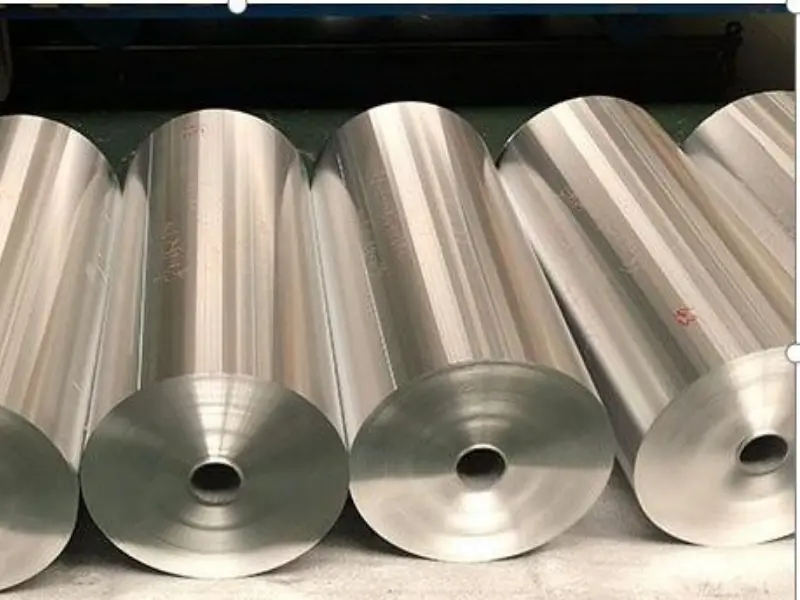
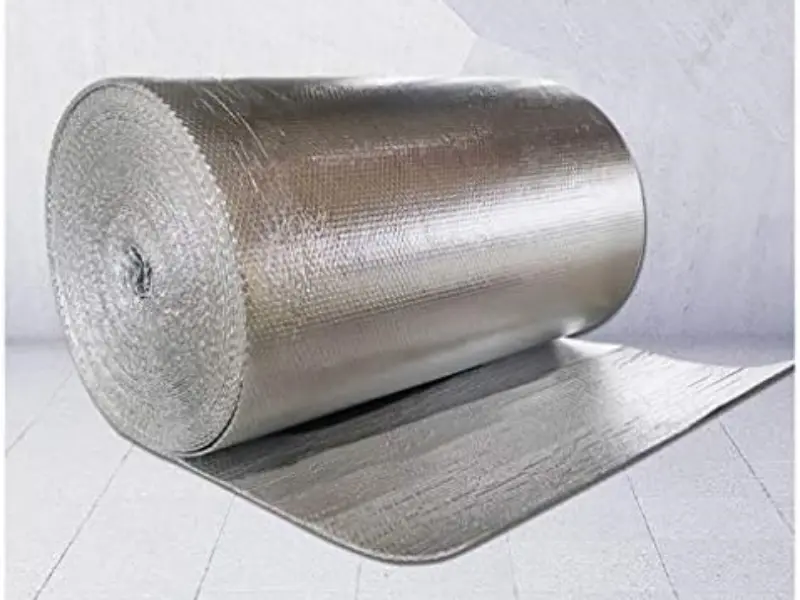
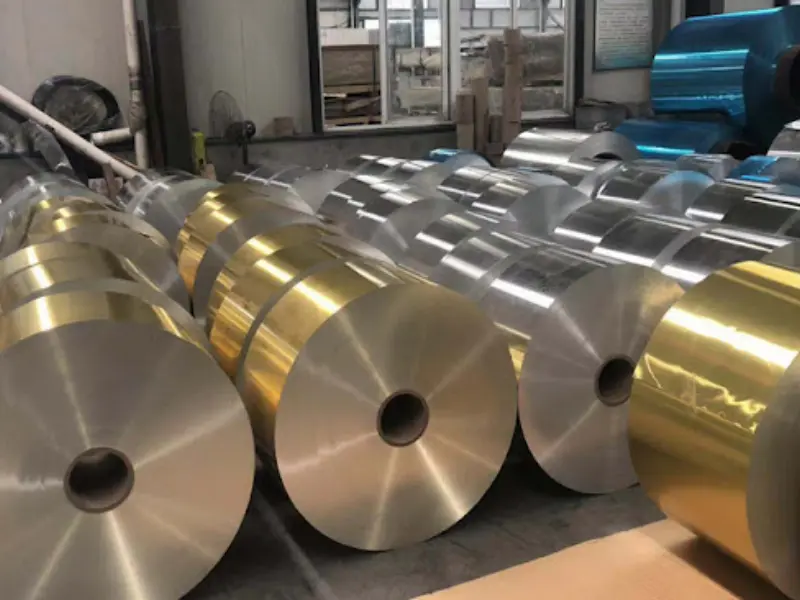
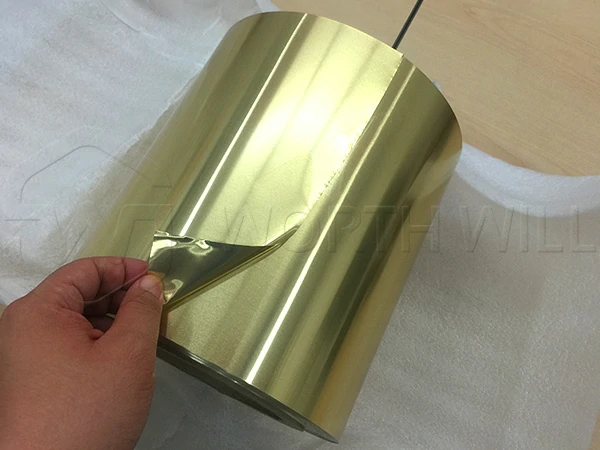
Kitchen foil has two faces. One is shiny. One is dull. This happens because the final rolling uses two sheets pressed together. The sides touching the steel rollers turn shiny. The sides touching each other stay dull.
For cooking, the difference is tiny. Heat reflects slightly better off the shiny side. The dull side absorbs a bit more. In practice, either side works. If you want to reflect heat away from a turkey breast, place the shiny side up. If you want to absorb heat into a casserole, place the dull side out.
Household Foil vs Commercial Kitchen Foil
Home kitchens and professional kitchens use foil differently. The specs drift apart.
| Feature | Household Foil | Commercial Kitchen Foil |
|---|---|---|
| Roll width | 300 – 450 mm | 450 – 600 mm |
| Roll length | 10 – 75 m | 100 – 300 m |
| Thickness | 10 – 18 microns | 14 – 24 microns |
| Core material | Light cardboard | Heavy cardboard or plastic |
| Packaging | Printed retail box | Plain shrink wrap or bulk case |
| Price per meter | Higher | Lower |
| Alloy focus | 1235, 8011 | 8011, 8006, 3003 |
Commercial buyers care about cost per meter and roll durability. Home buyers care about easy tearing and compact storage.
Plain Foil vs Coated Foil: Which Cooks Better
Coated foil changes the game for sticky foods. Here is the split.
| Aspect | Plain Aluminium Foil | Coated Non-Stick Foil |
|---|---|---|
| Food release | Fair | Excellent |
| Oven heat limit | 300°C+ | 220°C to 260°C |
| Cost | Low | Higher |
| Best for | General wrapping, roasting vegetables | Cookies, cheese, sugary glazes |
| Cleaning pans | Still needed | Rarely needed |
If you bake macaroons or roast glazed chicken, coated foil pays for itself. For a baked potato, plain foil is fine.
Heavy Duty vs Regular Duty: A Side-by-Side Look
This is the choice most shoppers face in the store aisle.
| Test | Regular Duty (12–14 microns) | Heavy Duty (20–24 microns) |
|---|---|---|
| Wraps a rib roast without puncture | Often tears on bone tips | Handles bones easily |
| Reuse on the grill | No | Yes, 2–3 times |
| Covers a turkey in the oven | Needs double layer | Single layer is enough |
| Freezer storage | Good for 1–2 months | Good for 6+ months |
| Price per roll | Lower | Higher |
| Best user | Light home cooking | Frequent grillers, meal preppers |
Buy regular duty for sandwiches and light baking. Buy heavy duty if you cook meat, freeze in bulk, or use the grill weekly.
Oven-Safe Foil vs Grill Foil vs Freezer Foil
Some brands label foil by job. Here is what those labels mean.
Oven-Safe Foil
Any standard or heavy duty foil works in the oven. The label “oven-safe” usually just confirms the alloy and temper handle typical baking heat. Most kitchen foil survives up to 300°C without issue.
Grill Foil
Grill foil is thicker and often wider. It may have a slightly different alloy mix to resist carbon buildup. The extra thickness prevents flare-ups from burning holes through the sheet.
Freezer Foil
Freezer foil is about moisture blocking. It is slightly thicker and sometimes has a tighter roll to reduce air gaps. The goal is to stop freezer burn on meat and fish.
Width and Length: Roll Sizes Explained
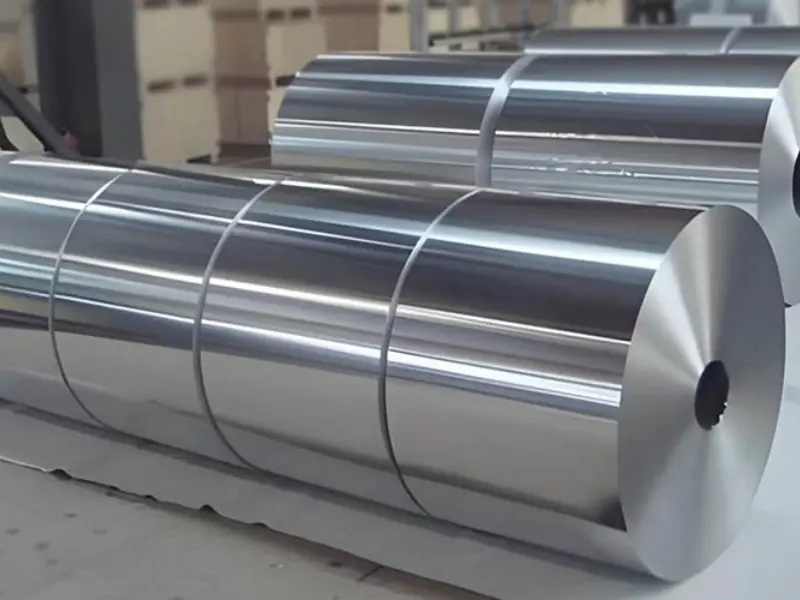
Roll size changes how you work. A narrow roll is easy to handle. A wide roll covers big trays in one pull.
| Width | Best For |
|---|---|
| 300 mm | Small home ovens, sandwich wrapping |
| 350 mm | Standard baking trays, medium roasts |
| 450 mm | Large ovens, catering, turkey pans |
| 600 mm | Commercial grills, buffet lines, wide trays |
Length is about storage and value. A 10-meter roll fits a small kitchen drawer. A 75-meter roll needs a wall dispenser but costs less per meter.
How to Choose the Right Foil for Your Kitchen
Picking foil is simple if you ask four questions.
What are you wrapping? — Light foods like bread need thin foil. Heavy foods with bones need thick foil.
What heat will it face? — Oven baking uses standard foil. Open flame on a grill needs heavy duty.
How long will it sit? — Overnight in the fridge works with any foil. Six months in the freezer needs thicker, tighter foil.
How much do you use? — Casual cooks buy small rolls. Daily cooks buy long rolls or bulk boxes of pre-cut sheets.
Applications: Where Kitchen Foil Shows Up
Kitchen foil is everywhere. Here are the main jobs it does.
- Lining baking trays — Catches drips. You throw the foil away instead of scrubbing the pan.
- Wrapping leftovers — Blocks air and keeps food fresh in the fridge.
- Covering dishes in the oven — Stops the top from burning while the inside cooks through.
- Grilling fish and vegetables — Creates a sealed packet that steams food over open flame.
- Freezing meat and bread — Prevents ice crystals and freezer odor.
- Resting meat — Wrap a steak after cooking. The foil holds heat while juices settle.
- Making foil packets for camping — Cook an entire meal over coals without pots or pans.
- Shielding pie crust edges — Wrap strips of foil around the rim to stop burning while the filling bakes.
- Scrubbing grills — Crumple foil into a ball. It scrapes grates without scratching metal.
- Keeping bananas fresh — Wrap the stem. It slows ethylene release and keeps the bunch yellow longer.
Storage Tips That Keep Foil Fresh
Foil lasts years if you store it right. Keep rolls dry. Humidity does not rust aluminium, but it can corrode the cardboard core and stain the first few meters. Keep rolls away from strong acids like vinegar or lemon juice. Acid eats aluminium over time.
Store pre-cut sheets in their original box. Once the box gets crushed, sheets crumple and attract dust. If you buy a jumbo catering roll, invest in a wall-mounted dispenser. It stops the roll from unspooling across the floor.
FAQ
Is aluminium foil safe for cooking?
Yes. Food-grade kitchen foil meets strict safety standards. The aluminium does not leach into food in harmful amounts under normal cooking heat. Acidic foods like tomatoes can draw out tiny traces of metal if they sit in foil for hours. For long storage of acidic dishes, use glass or ceramic.
Which side of the foil should face the food?
Either side works. The shiny side reflects a little more heat. The dull side absorbs slightly more. For most recipes, the difference is too small to notice. If you want to reflect heat away from food, keep the shiny side out. If you want to trap heat in, keep the shiny side in.
Can I put aluminium foil in the microwave?
No. Microwaves bounce off metal and can spark. Foil arcs and may start a fire. Some small foil shields are used in commercial microwave ovens under strict guidelines, but home cooks should never microwave aluminium foil.
What is the difference between 8011 and 1235 alloy?
Alloy 1235 is almost pure aluminium. It is very soft and wraps easily. Alloy 8011 contains iron and silicon. It is stronger and tears less. Most standard household foil uses 1235. Heavy duty and grill foil usually uses 8011.
How thick should kitchen foil be?
For wrapping sandwiches and covering bowls, 12 to 14 microns is enough. For roasting meat and lining trays, 15 to 18 microns works well. By grilling and freezing, choose 20 microns or thicker.
Can aluminium foil go in the freezer?
Yes. Standard foil works for short freezer storage. For meat that sits longer than two months, use heavy duty foil or double-wrap. That blocks air and prevents freezer burn.
Is heavy duty foil better for grilling?
Yes. Heavy duty foil resists tearing on grill grates and survives higher direct heat. Thin foil can burn through or rip when you flip food. A 20-micron sheet or thicker is the smart choice for BBQ.
Why does foil sometimes turn black in the oven?
This happens when foil touches reactive metals or acidic foods. Aluminium reacts with sulphur in onions, garlic, or eggs. The dark stain is harmless aluminium sulphide. It does not mean the foil is dirty or dangerous.
Can I recycle used kitchen foil?
Yes, if it is clean. Rinse off food residue. Crumple clean foil into a ball. Most recycling centres accept it. Foil with heavy food grease or burnt carbon may be rejected. Check your local rules.
What is the best width for a kitchen foil roll?
A 300 mm roll suits small households. A 450 mm roll covers large baking trays without seams. Commercial kitchens often use 600 mm rolls to match grill and buffet sizes. Match the width to your largest pan.
Leave a Comment
You must be logged in to post a comment.