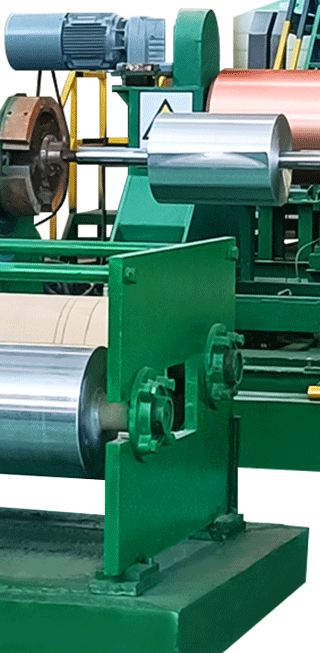
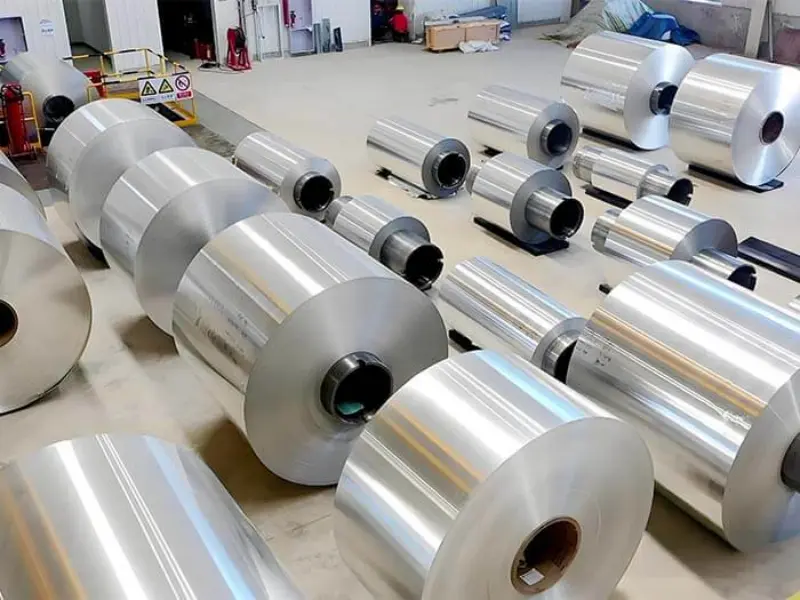
Aluminum Foil for Lithium Battery Factory
The global demand for clean energy is growing fast. At the heart of this revolution is the lithium-ion battery. For any aluminum foil for lithium battery factory, providing high-quality current collectors is the top priority. Aluminum foil serves as the essential cathode current collector, ensuring efficient electron flow and structural integrity.
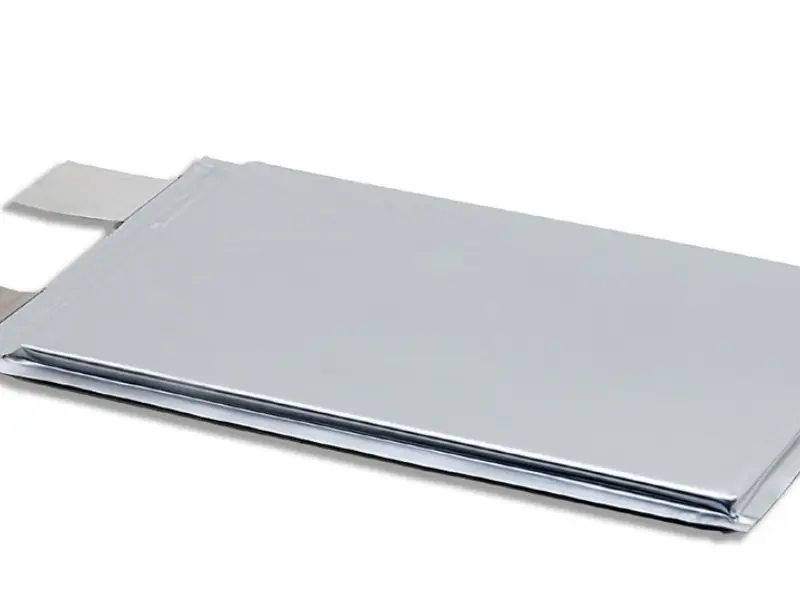
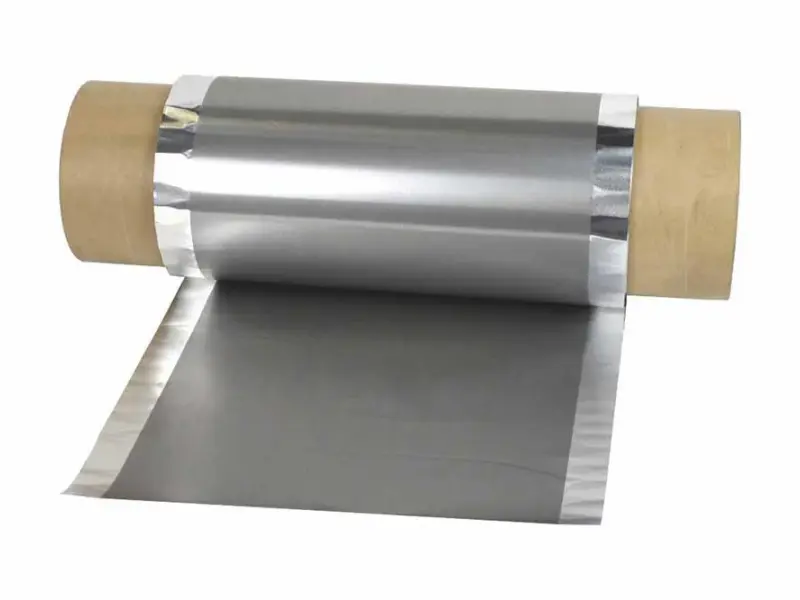
Why Aluminum Foil is Essential for Lithium Batteries
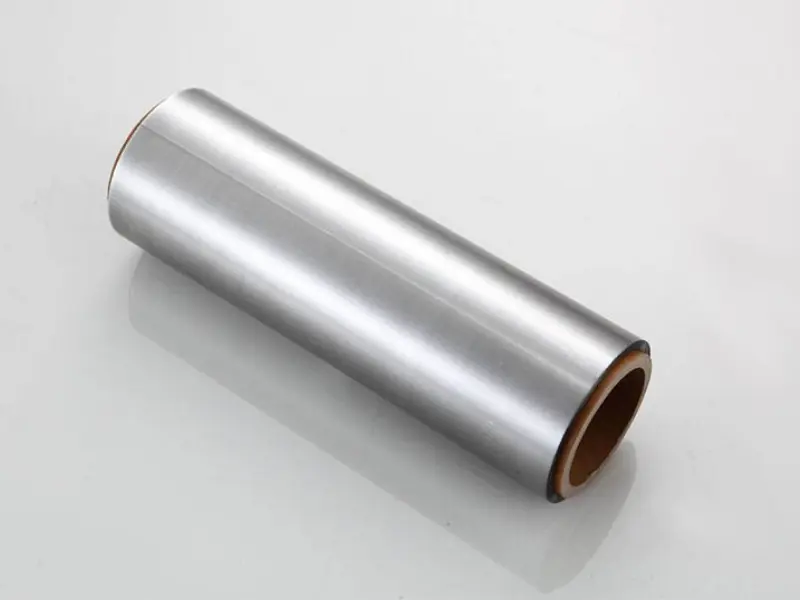
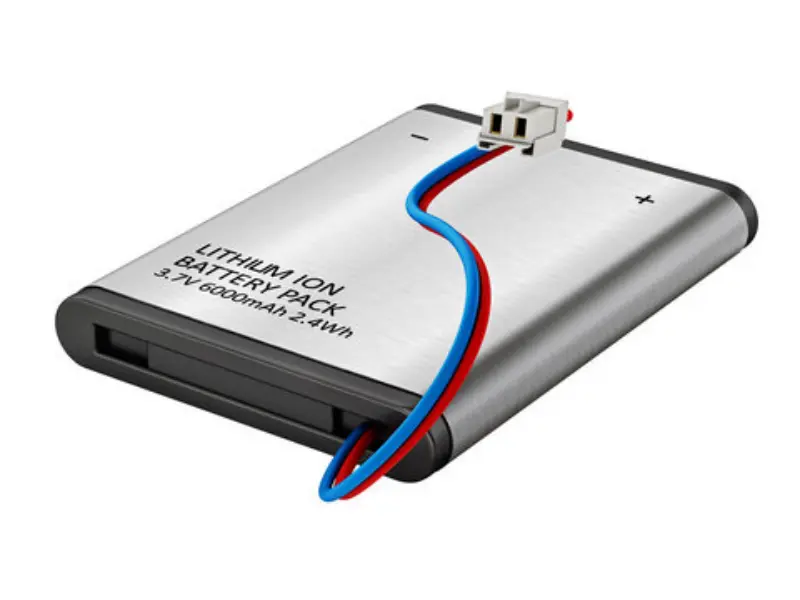
In a lithium-ion battery, the cathode (positive electrode) requires a material that is conductive, lightweight, and stable at high voltages. Aluminum foil is the perfect choice.
Key Benefits for Factories:
- High Conductivity: It allows electricity to move quickly.
- Oxidation Resistance: Aluminum forms a protective layer that survives the harsh chemical environment inside a battery.
- Cost-Effective: Compared to other metals like silver or gold, aluminum is affordable for mass production.
- Lightweight: It helps increase the energy density of the battery pack.
Technical Specifications: Alloy and Temper
A professional aluminum foil for lithium battery factory uses specific alloys to ensure the foil doesn’t tear during the coating process.
Alloy and State Table
| Property | Specification Details |
|---|---|
| Common Alloys | Alloy 1060, 1070, 1100, 1235 |
| Aluminum Content | From 99.0% to 99.7% |
| Temper (State) | H18 (Hard State) |
| Tensile Strength | \ge 150 to 200 MPa |
| Elongation | \ge 1.0% to 2.5% |
Thickness and Dimensions
Factories require very thin foil to save space and weight.
| Type | Thickness (Microns) | Common Width (mm) |
|---|---|---|
| Standard Battery Foil | 10\mu m to 20\mu m | 300mm to 1300mm |
| Ultra-Thin Foil | 8\mu m to 9\mu m | Custom Slitting |
| Heavy Duty Foil | 25\mu m to 40\mu m | Custom Slitting |
Different Types of Battery Aluminum Foil
Depending on the final use, an aluminum foil for lithium battery factory produces different variations of the product.
1. Plain Battery Foil
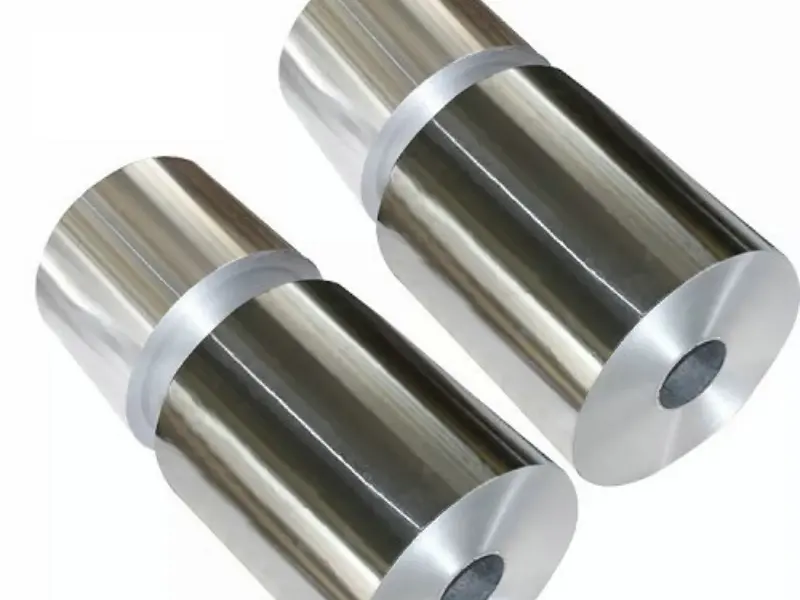
This is the standard high-purity foil. It is cleaned to remove all oils. This ensures that the cathode paste (active material) sticks perfectly to the surface.
2. Carbon-Coated Aluminum Foil
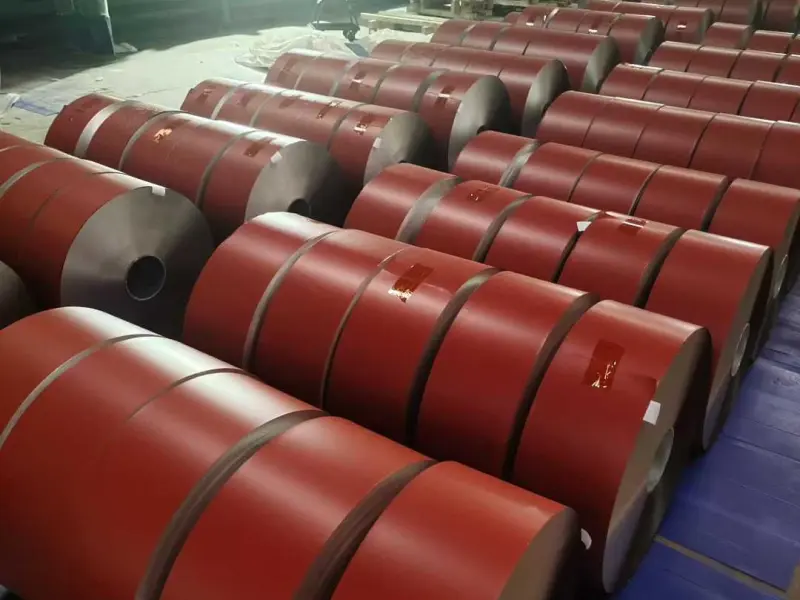
This is a premium product. A thin layer of conductive carbon (like graphene or graphite) is applied to both sides.
- Better Adhesion: The active material stays on the foil longer.
- Lower Resistance: It reduces the internal heat of the battery.
- Faster Charging: It allows for higher discharge rates.
3. Surface-Treated (Etched) Foil
The surface is roughened using chemicals or electricity. This increases the surface area, allowing more active material to bond with the foil.
Major Applications in the Battery Industry
The role of an aluminum foil for lithium battery factory extends across many sectors. Here is where these products are used:
1. Electric Vehicles (EV)
The EV market is the largest consumer of battery foil.
- Passenger Cars: Large quantities of $$12\mu m$$ to $$15\mu m$$ foil are used in Tesla, BYD, and VW battery cells.
- Electric Buses: Require heavy-duty batteries with high thermal stability.
- Electric Trucks: Need thick current collectors to handle massive power loads.
2. Energy Storage Systems (ESS)
As we move toward solar and wind power, we need big batteries to store energy.
- Grid Storage: Massive battery containers use aluminum foil to maintain long-term stability.
- Home Energy Walls: Compact batteries for residential solar systems.
- Uninterruptible Power Supplies (UPS): Used in data centers to prevent power loss.
3. Consumer Electronics
The gadgets we use every day rely on ultra-thin aluminum foil.
- Smartphones: Use $$9\mu m$$ to $$12\mu m$$ foil to keep the phone slim.
- Laptops and Tablets: High-capacity foil ensures long battery life.
- Wearables: Smartwatches and fitness trackers use tiny, specialized foil cuts.
4. Electric Micromobility
This sector is booming in urban areas.
- E-Bikes and E-Scooters: Require lightweight but vibration-resistant batteries.
- Electric Motorcycles: Demand high-discharge foil for fast acceleration.
5. Specialized Industrial Tools
- Cordless Power Tools: Drills and saws need batteries that can release a lot of energy at once.
- Drones and UAVs: High-performance lithium-polymer (Li-Po) batteries use aluminum foil to achieve high power-to-weight ratios.
Quality Standards for Battery Factories
When choosing an aluminum foil for lithium battery factory, quality control is everything. Small defects can lead to battery failure or fires.
1. Surface Cleanliness
The foil must be free from “oil spots” or dust. Any contamination prevents the cathode material from sticking, creating “dead spots” in the battery.
2. Dyne Value
The surface tension (measured in Dyne) must be high ($$ \ge 30 $$ to $$ 32 $$ Dyne). This ensures the water-based or solvent-based slurry spreads evenly.
3. Pinhole Control
High-end factories use laser detectors to ensure there are zero pinholes. Even a tiny hole can cause the foil to break during high-speed winding.
4. Slitting Precision
The edges of the foil must be perfectly smooth. “Burrs” (sharp edges) can pierce the battery separator and cause a short circuit.
The Manufacturing Process in a Nutshell
How does a factory produce this specialized foil?
- Casting: Melting aluminum ingots into large slabs.
- Hot Rolling: Reducing the thickness of the slab.
- Cold Rolling: Using precision rollers to reach the final micron thickness.
- Annealing: Heat treatment to achieve the H18 temper.
- Slitting: Cutting the large “Jumbo Rolls” into the specific widths needed by battery makers.
- Cleaning: Removing all rolling oils to meet battery-grade standards.
Frequently Asked Questions
Why is Alloy 1060 used more than Alloy 8011 in batteries?
Alloy 1060 has higher aluminum purity ($$ \ge 99.6% $$). This provides better electrical conductivity and chemical stability at high voltages compared to 8011.
Can aluminum foil be used for the anode?
No. In lithium-ion batteries, aluminum foil is used for the cathode. Copper foil is used for the anode because aluminum reacts with lithium at low potentials.
What is the typical shelf life of battery foil?
If stored in a dry, temperature-controlled environment, it can last for $$6$$ to $$12$$ months. High humidity can cause the surface to oxidize.
aluminum foil for lithium battery factory for Buyers
| Goal | Recommended Product |
|---|---|
| High Energy Density | $$10\mu m$$ to $$12\mu m$$ Plain Foil |
| Fast Charging / High Power | Carbon-Coated Aluminum Foil |
| Low Cost / Small Electronics | Alloy 1235 Standard Foil |
| Large Scale ESS | $$15\mu m$$ to $$20\mu m$$ Alloy 1060 Foil |
Finding a reliable aluminum foil for lithium battery factory is the key to producing safe and efficient energy products. By focusing on high-purity alloys like 1060 and maintaining strict cleanliness standards, factories can support the global shift toward green energy. Contact us for technical support and bulk pricing on your next project.
Leave a Comment
You must be logged in to post a comment.